Department of Molecular Medicine, Qazvin University of Medical Sciences, Qazvin, Iran.
Department of Endocrinology and Female Infertility, Reproductive Biomedicine Research Center, Royan Institute for Reproductive Biomedicine, ACECR, Tehran, Iran.
J Cell Mol Med. 2021 Jun;25(11):5138-5149. doi: 10.1111/jcmm.16506. Epub 2021 May 3.
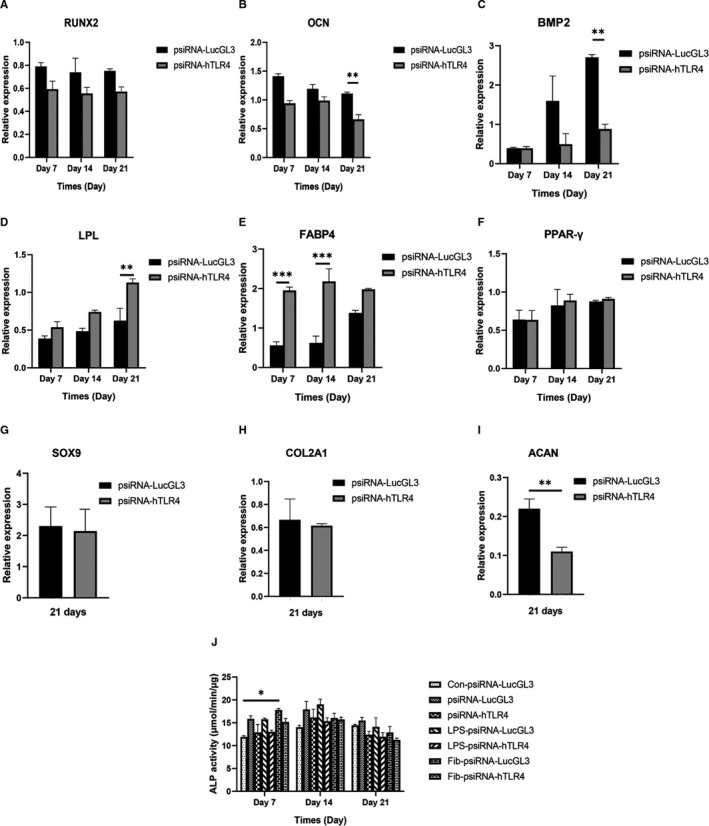
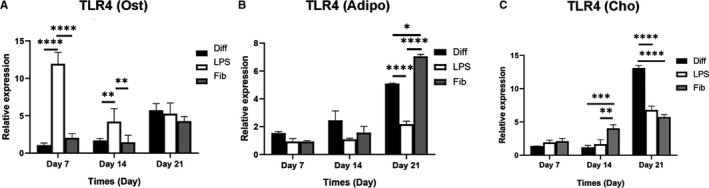
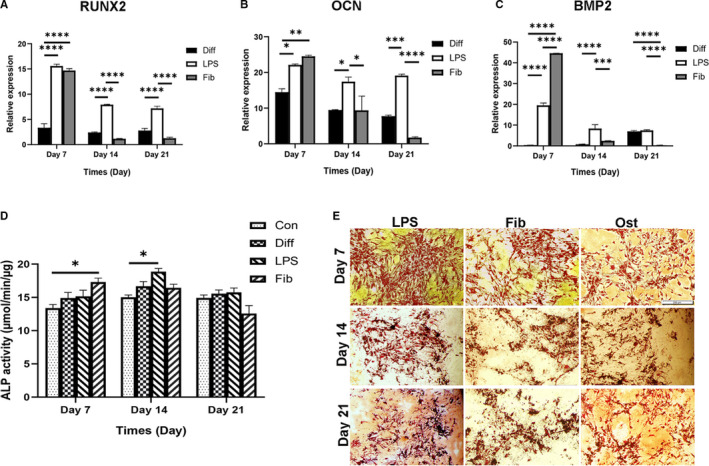
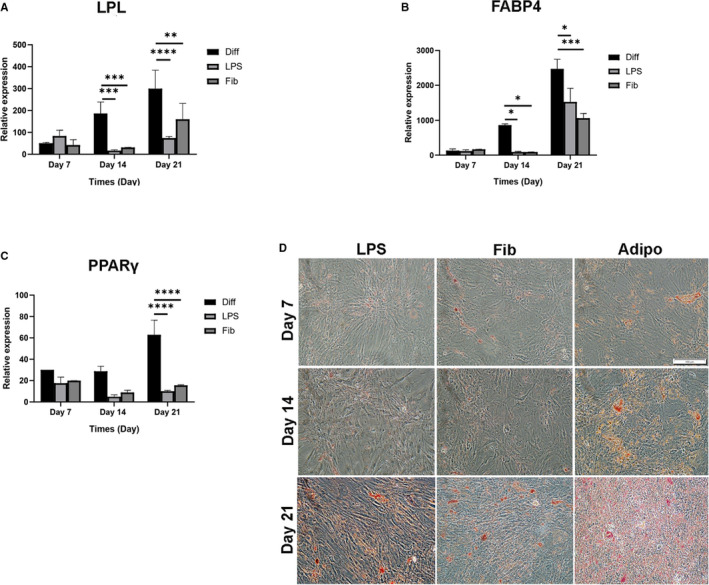
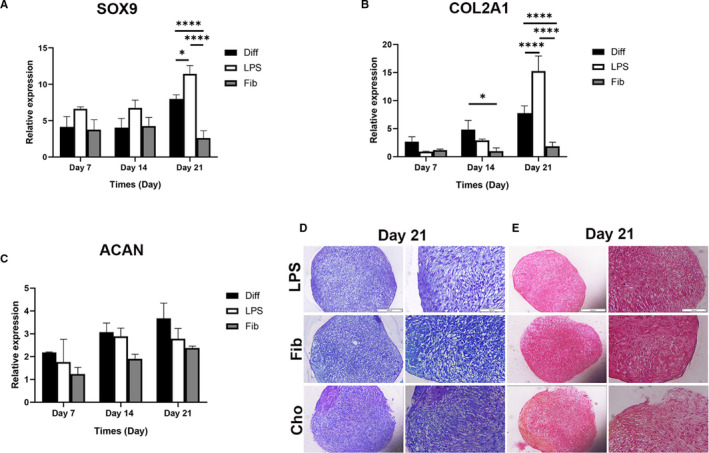
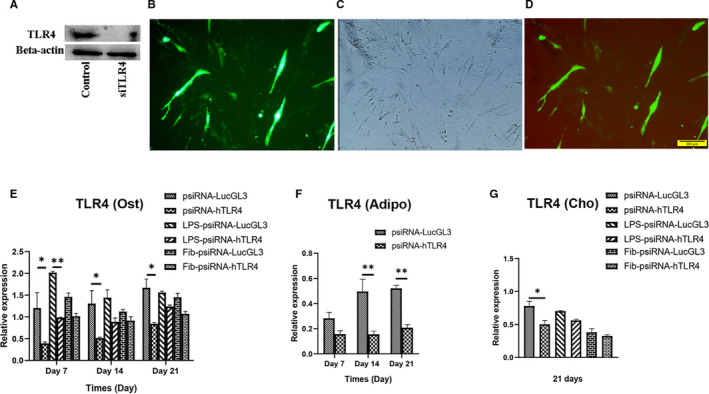
Multipotent human bone marrow-derived mesenchymal stem cells (hMSCs) are promising candidates for bone and cartilage regeneration. Toll-like receptor 4 (TLR4) is expressed by hMSCs and is a receptor for both exogenous and endogenous danger signals. TLRs have been shown to possess functional differences based on the species (human or mouse) they are isolated from therefore, the effects of knockdown of TLR4 were evaluated in humans during the differentiation of MSCs into bone, fat and chondrocyte cells in vitro. We investigated the expression profile of TLR4 during the differentiation of hMSCs into three different lineages on days 7, 14 and 21 and assessed the differentiation potential of the cells in the presence of lipopolysaccharide (LPS, as an exogenous agonist) and fibronectin fragment III-1c (FnIII-1c, as an endogenous agonist). TLR4 expression increased following the induction of hMSC differentiation into all three lineages. Alkaline phosphatase activity revealed that FnIII-1c accelerated calcium deposition on day 7, whereas LPS increased calcium deposition on day 14. Chondrogenesis increased in the presence of LPS; however, FnIII-1c acted as a reducer in the late stage. TLR4 silencing led to decreased osteogenesis and increased adipogenesis. Furthermore, Wnt5a expression was inversely related to chondrogenesis during the late stage of differentiation. We suggest that understanding the functionality of TLR4 (in the presence of pathogen or stress signal) during the differentiation of hMSCs into three lineages would be useful for MSC-based treatments.
多能性人骨髓间充质干细胞(hMSCs)是骨和软骨再生的有前途的候选物。Toll 样受体 4(TLR4)由 hMSCs 表达,是外源性和内源性危险信号的受体。已经表明 TLR 根据它们分离的物种(人或鼠)具有功能差异,因此,在体外将 MSC 分化为骨、脂肪和软骨细胞的过程中,评估了 TLR4 敲低对人类的影响。我们研究了 TLR4 在 hMSC 分化为三种不同谱系的第 7、14 和 21 天的表达谱,并评估了在脂多糖(LPS,作为外源性激动剂)和纤维连接蛋白片段 III-1c(FnIII-1c,作为内源性激动剂)存在的情况下细胞的分化潜力。TLR4 的表达在 hMSC 分化为所有三种谱系后增加。碱性磷酸酶活性表明 FnIII-1c 加速了第 7 天钙的沉积,而 LPS 增加了第 14 天钙的沉积。在 LPS 的存在下软骨生成增加;然而,FnIII-1c 在晚期起还原剂作用。TLR4 沉默导致成骨减少和脂肪生成增加。此外,Wnt5a 的表达在分化的晚期与软骨生成呈负相关。我们建议,了解 TLR4 在 hMSC 分化为三种谱系过程中的功能(在病原体或应激信号存在的情况下)对于基于 MSC 的治疗将是有用的。