Institute of Environment and Sustainable Development, Banaras Hindu University, Varanasi 221005, India.
Institute for Atmospheric and Earth System Research (INAR)/Physics, Faculty of Science, University of Helsinki, 00014 Helsinki, Finland.
Sci Total Environ. 2021 Jun 15;773:145525. doi: 10.1016/j.scitotenv.2021.145525. Epub 2021 Feb 1.
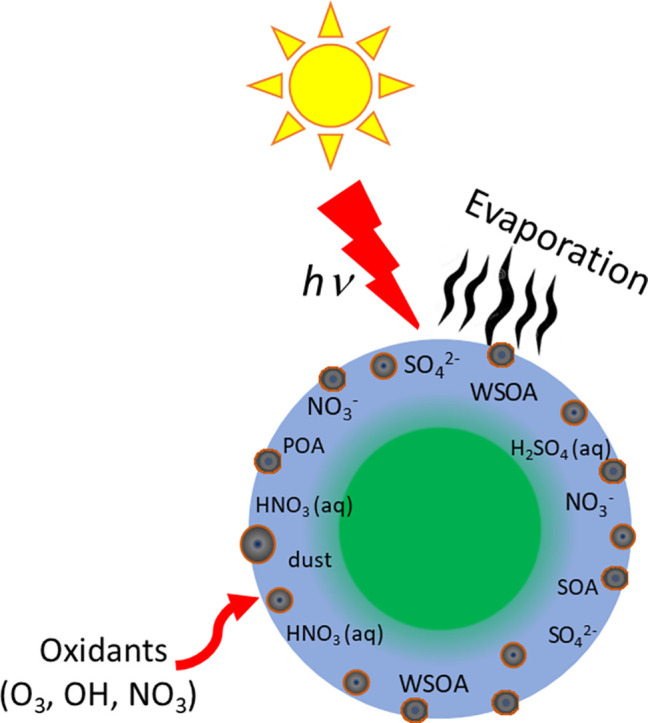
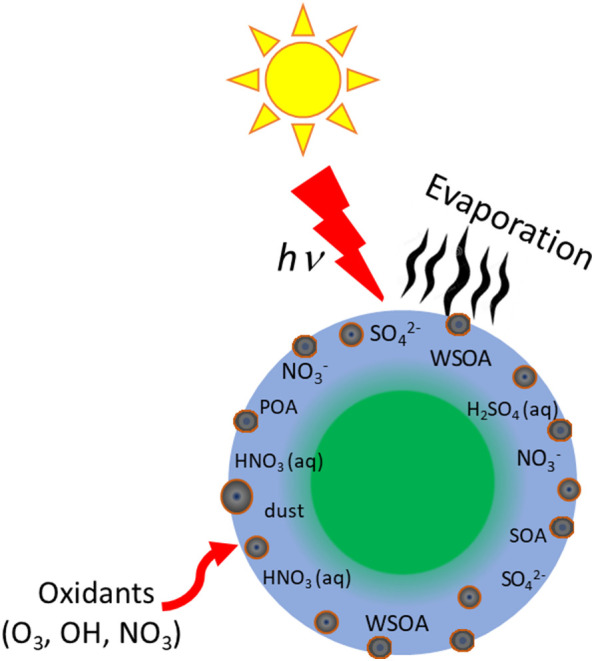
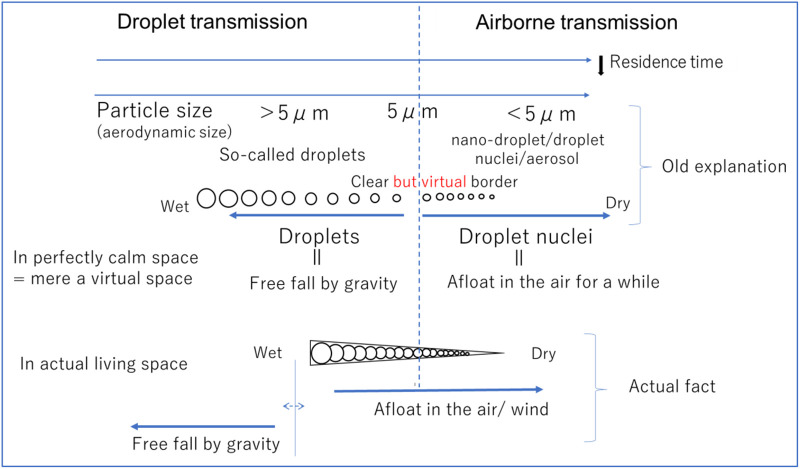
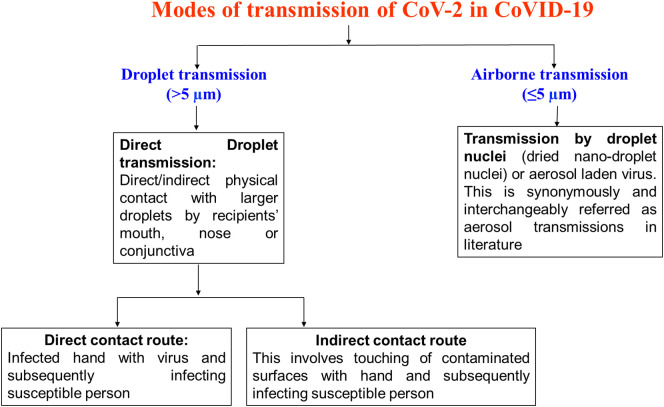
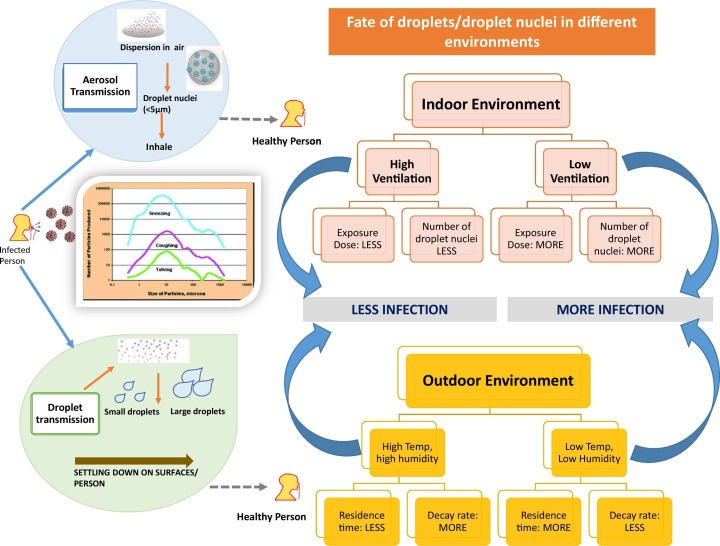
Airborne transmission is one of the routes for the spread of COVID-19 which is caused by inhalation of smaller droplets containing SARS-CoV-2 (i.e., either virus-laden particulate matter: PM and/or droplet nuclei) in an indoor environment. Notably, a significant fraction of the small droplets, along with respiratory droplets, is produced by both symptomatic and asymptomatic individuals during expiratory events such as breathing, sneezing, coughing and speaking. When these small droplets are exposed to the ambient environment, they may interact with PM and may remain suspended in the atmosphere even for several hours. Therefore, it is important to know the fate of these droplets and processes (e.g., physical and chemical) in the atmosphere to better understand airborne transmission. Therefore, we reviewed existing literature focussed on the transmission of SARS-CoV-2 in the spread of COVID-19 and present an environmental perspective on why airborne transmission hasn't been very conclusive so far. In addition, we discuss various environmental factors (e.g., temperature, humidity, etc.) and sampling difficulties, which affect the conclusions of the studies focussed on airborne transmission. One of the reasons for reduced emphasis on airborne transmission could be that the smaller droplets have less number of viruses as compared to larger droplets. Further, smaller droplets can evaporate faster, exposing SARS-CoV-2 within the small droplets to the environment, whose viability may further reduce. For example, these small droplets containing SARS-CoV-2 might also physically combine with or attach to pre-existing PM so that their behaviour and fate may be governed by PM composition. Thus, the measurement of their infectivity and viability is highly uncertain due to a lack of robust sampling system to separately collect virions in the atmosphere. We believe that the present review will help to minimize the gap in our understanding of the current pandemic and develop a robust epidemiological method for mortality assessment.
空气传播是 COVID-19 传播的途径之一,由在室内环境中吸入含有 SARS-CoV-2 的较小飞沫(即含有病毒的颗粒物:PM 和/或液核)引起。值得注意的是,在呼气事件(如呼吸、打喷嚏、咳嗽和说话)期间,有相当一部分的小飞沫以及呼吸飞沫是由有症状和无症状个体产生的。当这些小飞沫暴露于环境中时,它们可能与 PM 相互作用并可能在大气中悬浮数小时。因此,了解这些飞沫在大气中的命运和过程(例如物理和化学过程)对于更好地理解空气传播非常重要。因此,我们回顾了现有的关于 SARS-CoV-2 在 COVID-19 传播中的空气传播的文献,并从环境角度探讨了为什么迄今为止空气传播还没有非常明确的结论。此外,我们还讨论了影响空气传播研究结论的各种环境因素(例如温度、湿度等)和采样困难。减少对空气传播关注的原因之一可能是较小的飞沫中病毒数量比较大的飞沫少。此外,较小的飞沫可以更快地蒸发,使小飞沫内的 SARS-CoV-2 暴露于环境中,其存活能力可能进一步降低。例如,这些含有 SARS-CoV-2 的小飞沫可能与预先存在的 PM 物理结合或附着,从而使它们的行为和命运可能受到 PM 成分的控制。因此,由于缺乏能够单独收集大气中病毒的强大采样系统,因此它们的感染性和存活能力的测量具有高度不确定性。我们相信,本综述将有助于缩小我们对当前大流行的理解差距,并开发出用于死亡率评估的稳健流行病学方法。