Kinder Institute for Urban Research, Rice University, Kraft Hall, 6100 Main Street, Suite 305, Houston, TX, 77005-1892, USA.
Popul Health Metr. 2021 May 3;19(1):23. doi: 10.1186/s12963-021-00255-2.
Self-rated health (SRH) is one of the most commonly used summary measures of overall health and well-being available to population scientists due to its ease of administration in large-scale surveys and to its efficacy in predicting mortality. This paper assesses the extent to which SRH is affected by its placement before or after questions about bodyweight on a survey, and whether differences in placement on the questionnaire affects SRH's predictive validity.
I assessed the validity of SRH in predicting the risk of mortality by comparing outcomes of sample members who were asked to rate their health before reporting on their bodyweight (the control group) and sample members who were asked to rate their health after reporting on their bodyweight (the treatment group). Both the control and treatment group were randomly assigned via an experiment administered as a module in a nationally representative sample of adults in the USA in 2019 (N = 2523).
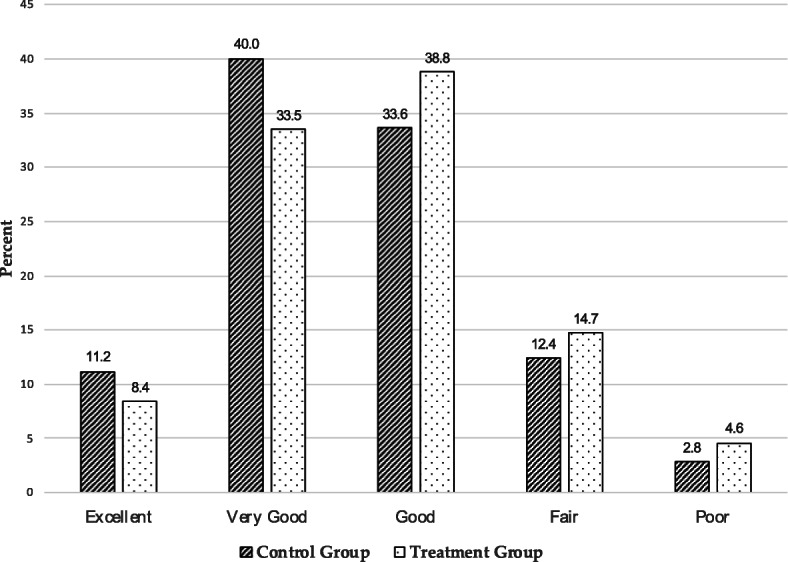
The odds of reporting a more favorable appraisal of health are 30% lower for sample members who were in the treatment group when compared with the control group. Additionally, the SRH of treatment group members is significantly associated with their risk of mortality, while the SRH of control group members is not.
The findings from this study suggest that for researchers to maximize the utility of SRH, closer attention needs to be paid to the context of the survey within which it asked. SRH is highly sensitive to the questions that precede it, and this sensitivity may in turn mischaracterize the true health of the population that the survey is intending to measure.
自感健康(SRH)是一种最常用于衡量人群健康和幸福感的综合指标,由于其在大规模调查中易于管理,并且能够有效地预测死亡率,因此深受人口科学家的青睐。本文评估了在调查中体重问题之前或之后询问 SRH 对其产生的影响,以及问卷中位置的差异是否会影响 SRH 的预测有效性。
我通过比较在报告体重之前(对照组)和之后(治疗组)被要求评估健康状况的样本成员的结果,评估了 SRH 预测死亡率风险的有效性。对照组和治疗组都是通过 2019 年在美国进行的一项全国性成年人代表性样本中的一项实验(N=2523)随机分配的。
与对照组相比,治疗组报告更健康评估的可能性低 30%。此外,治疗组成员的 SRH 与他们的死亡风险显著相关,而对照组成员的 SRH 则没有。
本研究的结果表明,为了使研究人员最大限度地利用 SRH,需要更加关注其在调查中提出的背景。SRH 对其之前的问题非常敏感,这种敏感性可能会反过来扭曲调查试图衡量的人群的真实健康状况。