Department of Neuroscience, Baylor College of Medicine, Houston, United States.
Elife. 2021 May 4;10:e66112. doi: 10.7554/eLife.66112.
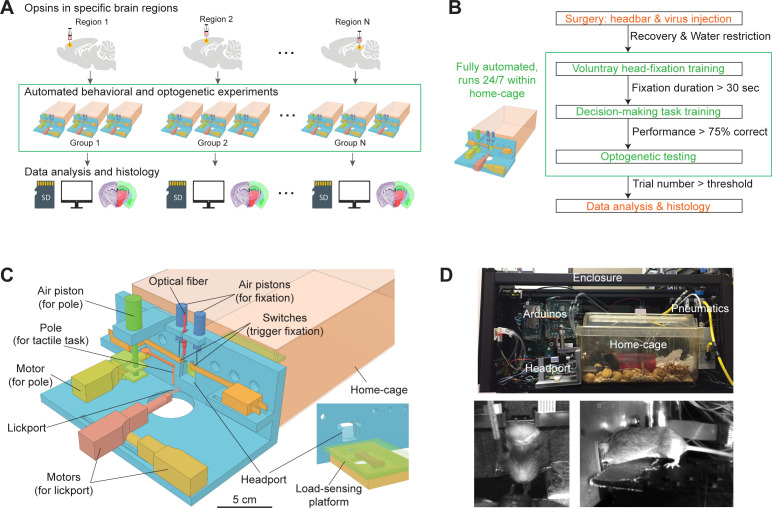
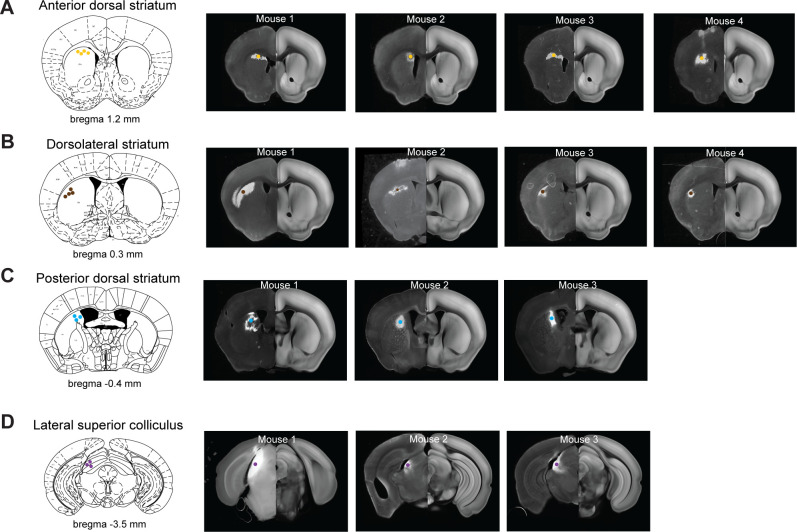
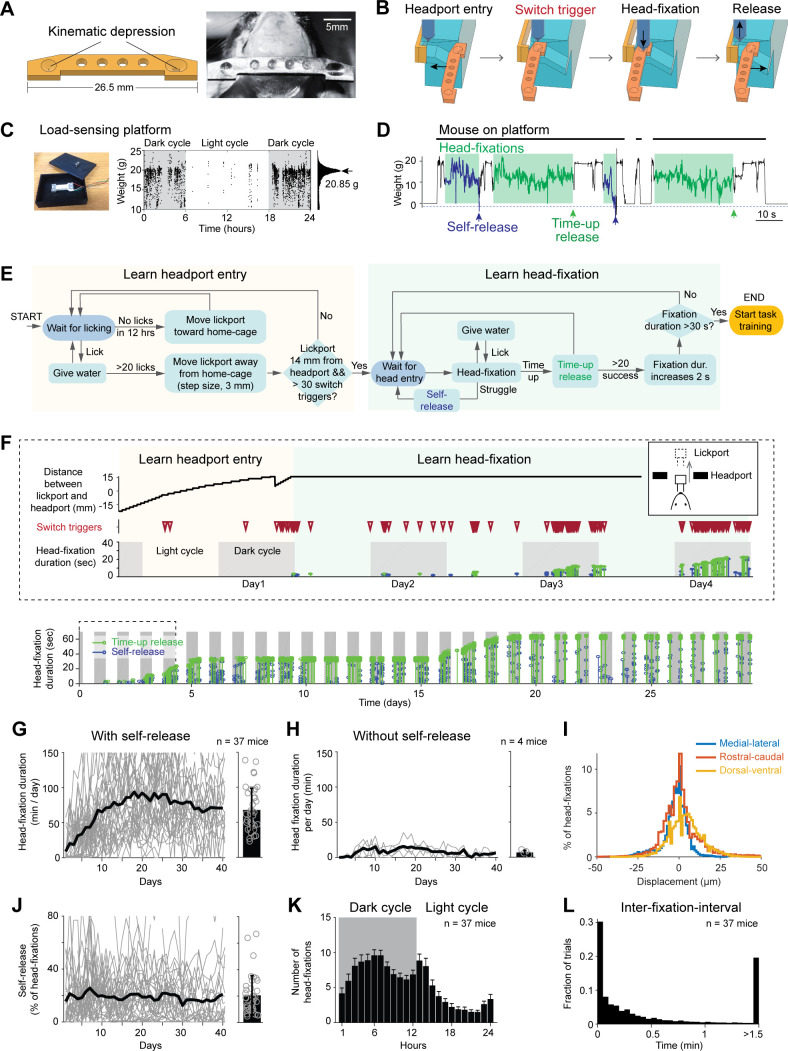
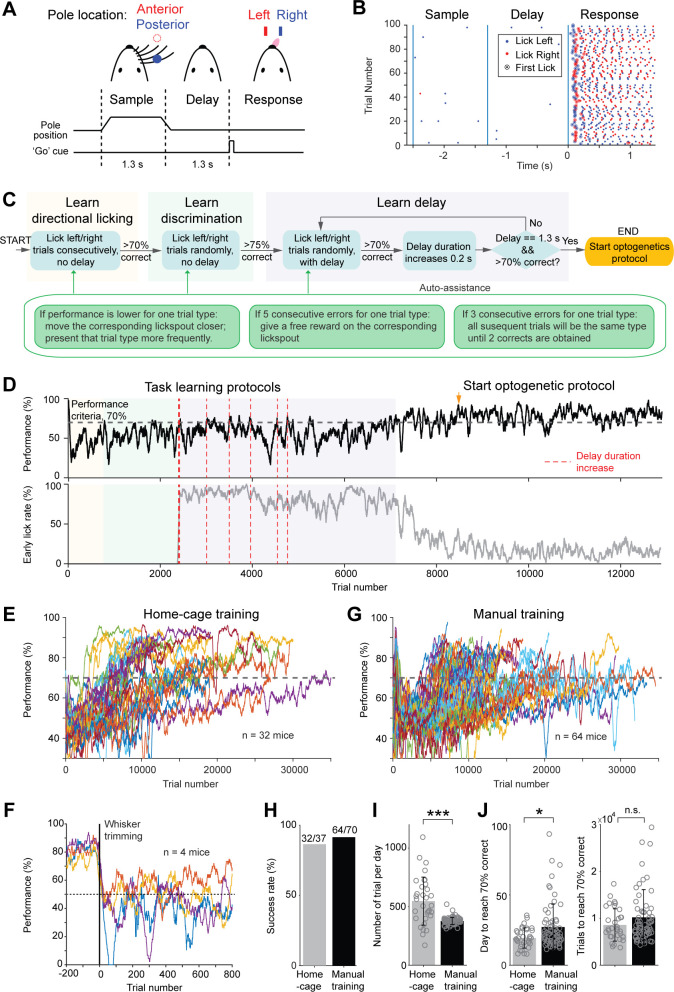
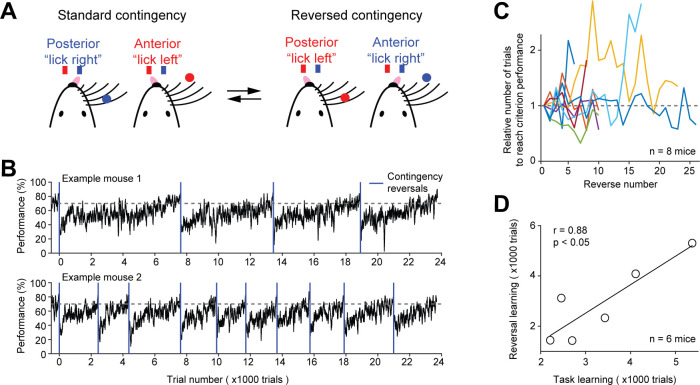
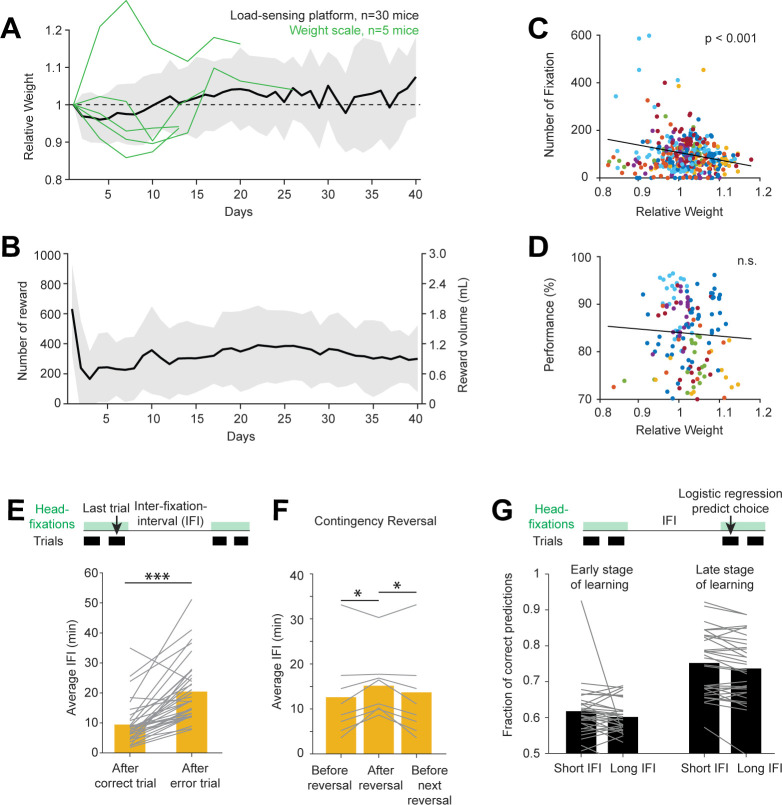
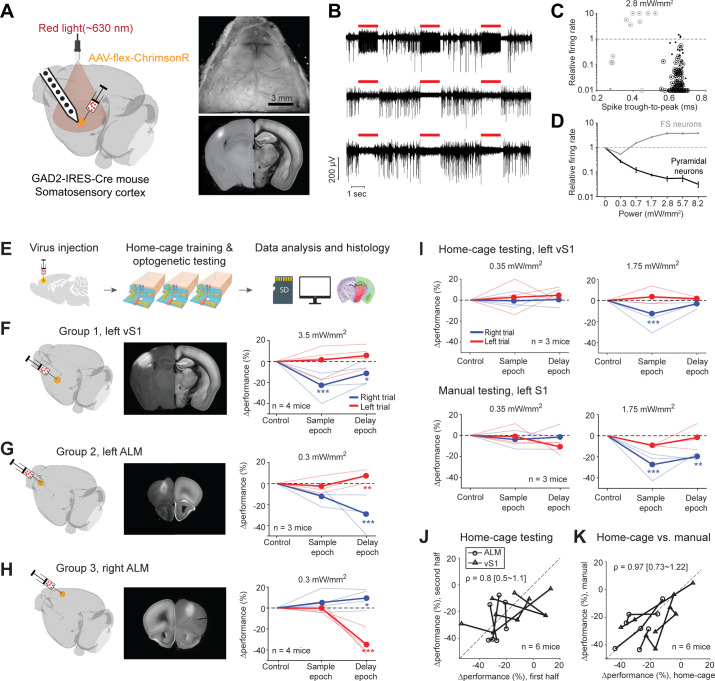
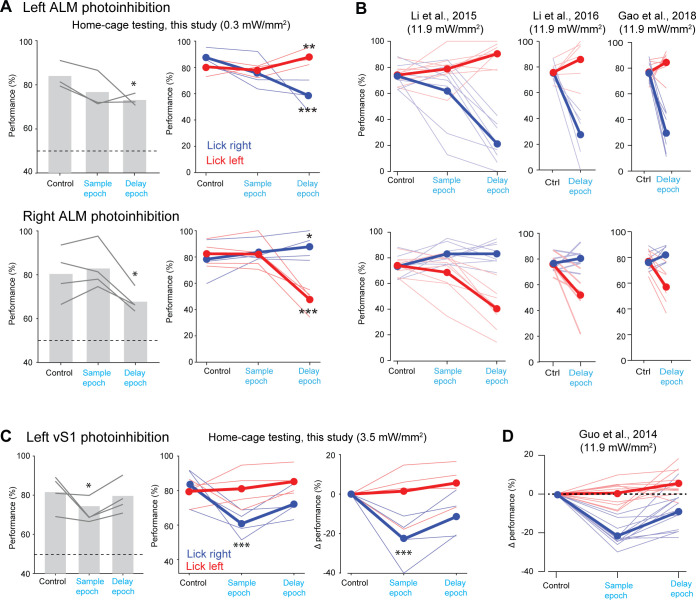
Goal-directed behaviors involve distributed brain networks. The small size of the mouse brain makes it amenable to manipulations of neural activity dispersed across brain areas, but existing optogenetic methods serially test a few brain regions at a time, which slows comprehensive mapping of distributed networks. Laborious operant conditioning training required for most experimental paradigms exacerbates this bottleneck. We present an autonomous workflow to survey the involvement of brain regions at scale during operant behaviors in mice. Naive mice living in a home-cage system learned voluntary head-fixation (>1 hr/day) and performed difficult decision-making tasks, including contingency reversals, for 2 months without human supervision. We incorporated an optogenetic approach to manipulate activity in deep brain regions through intact skull during home-cage behavior. To demonstrate the utility of this approach, we tested dozens of mice in parallel unsupervised optogenetic experiments, revealing multiple regions in cortex, striatum, and superior colliculus involved in tactile decision-making.
目标导向行为涉及分布式大脑网络。老鼠的大脑体积较小,因此易于对分散在大脑区域的神经活动进行操作,但现有的光遗传学方法一次只能测试少数几个脑区,这减缓了对分布式网络的全面映射。大多数实验范式都需要进行繁琐的操作性条件作用训练,这进一步加剧了这一瓶颈。我们提出了一种自动化工作流程,可以在小鼠的操作性行为中大规模地调查大脑区域的参与情况。生活在笼内系统中的未经过训练的老鼠学会了自愿的头部固定(每天>1 小时),并在没有人为监督的情况下进行了长达 2 个月的困难决策任务,包括条件逆转。我们结合了光遗传学方法,在笼内行为期间通过完整的颅骨来操纵深部脑区的活动。为了证明这种方法的实用性,我们在无人监督的光遗传学实验中并行测试了数十只老鼠,揭示了在触手可及的决策中涉及大脑皮层、纹状体和上丘的多个区域。