Division of Chemical Biology and Medicinal Chemistry, Eshelman School of Pharmacy, University of North Carolina at Chapel Hill, Chapel Hill, NC, 27599, USA.
Lineberger Comprehensive Cancer Center, University of North Carolina School of Medicine, Chapel Hill, NC, 27599, USA.
Adv Mater. 2021 Jun;33(23):e2007603. doi: 10.1002/adma.202007603. Epub 2021 May 4.
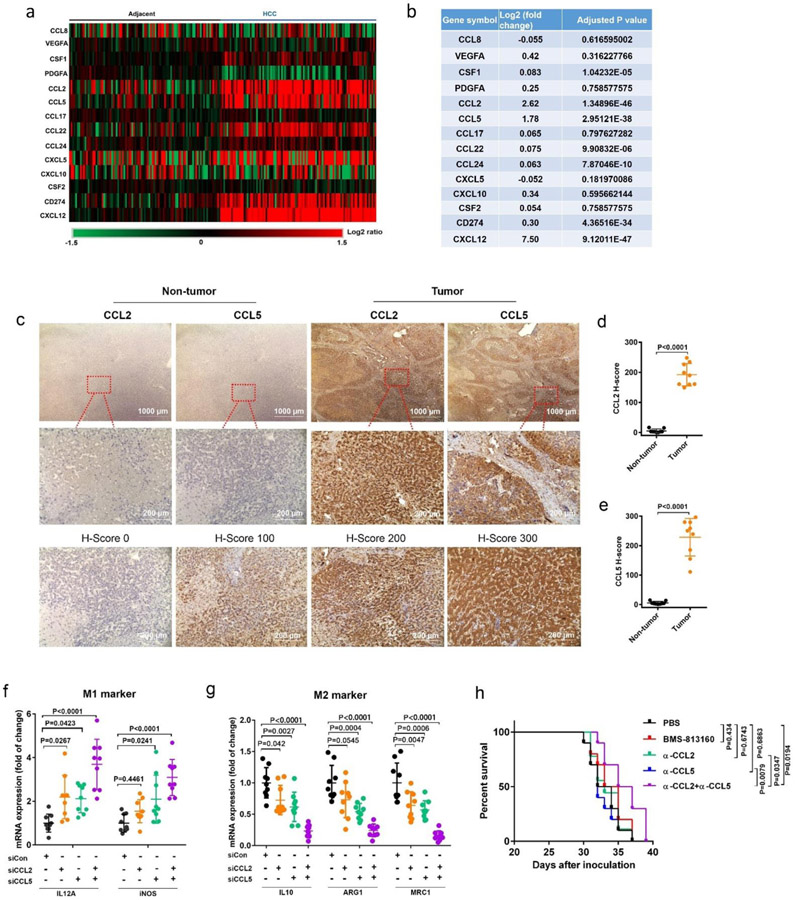
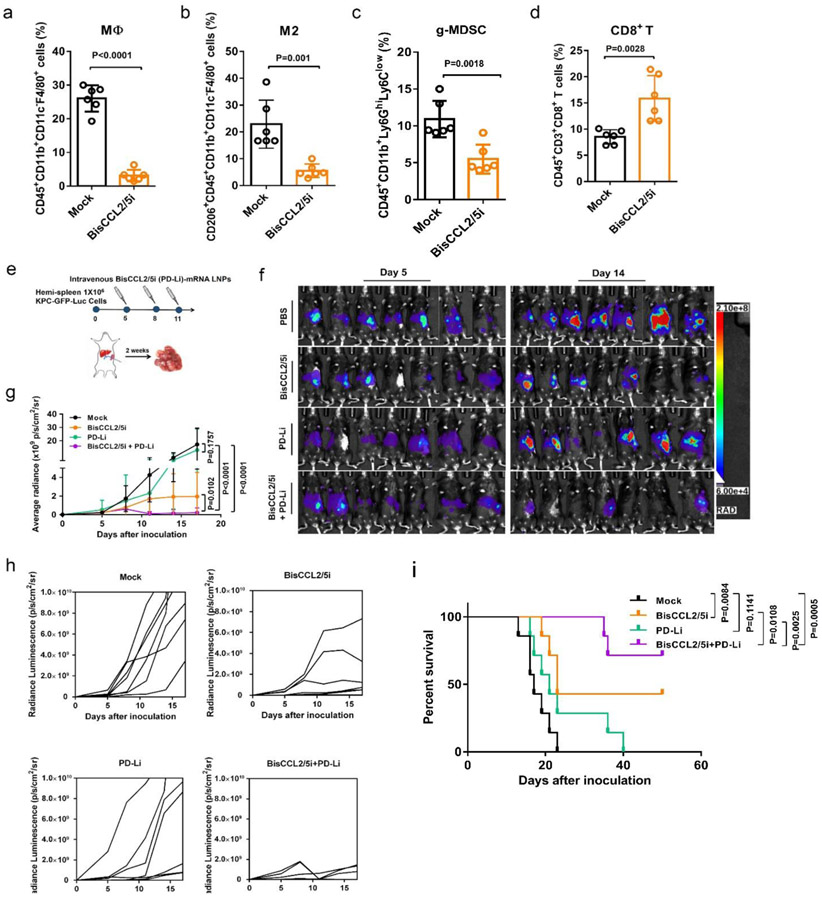
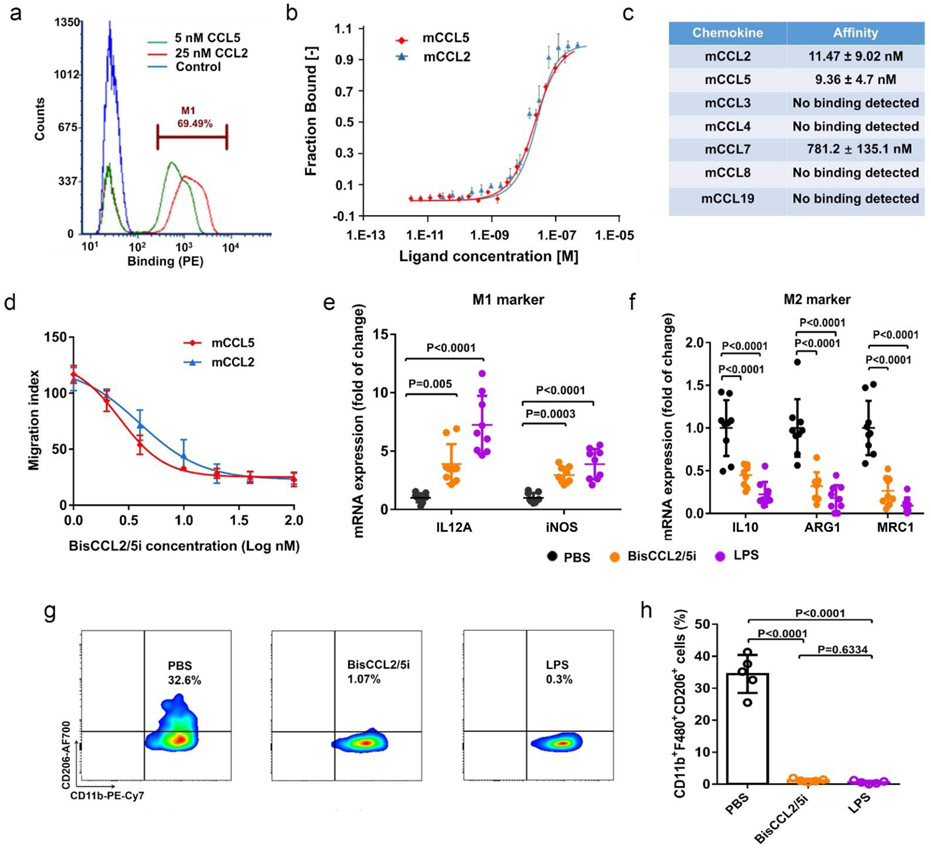
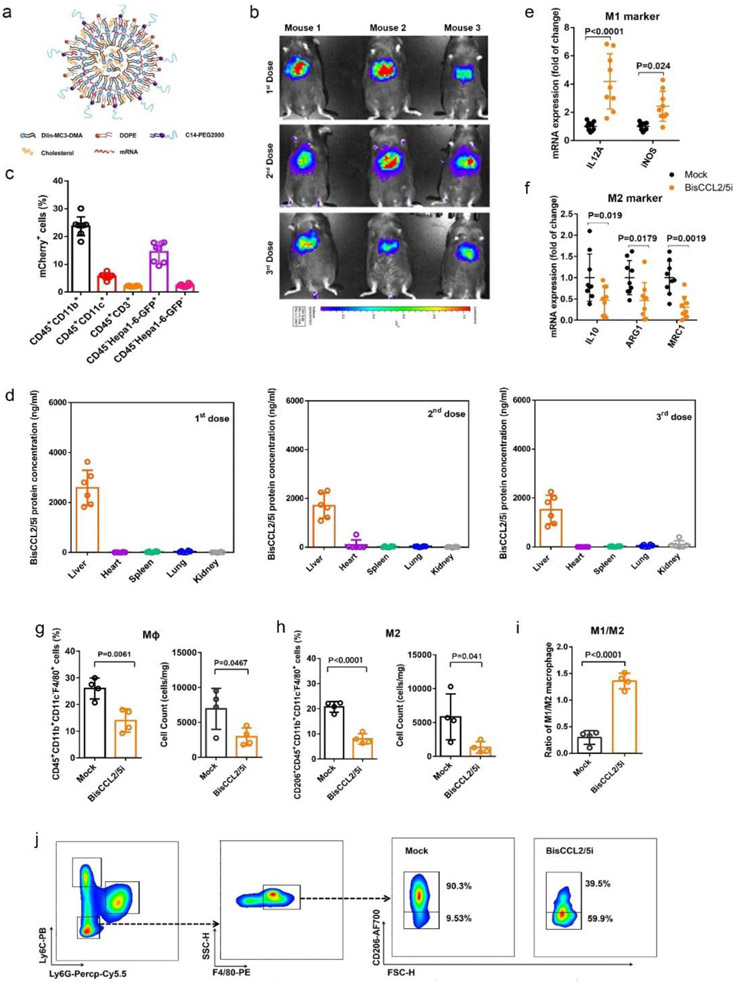
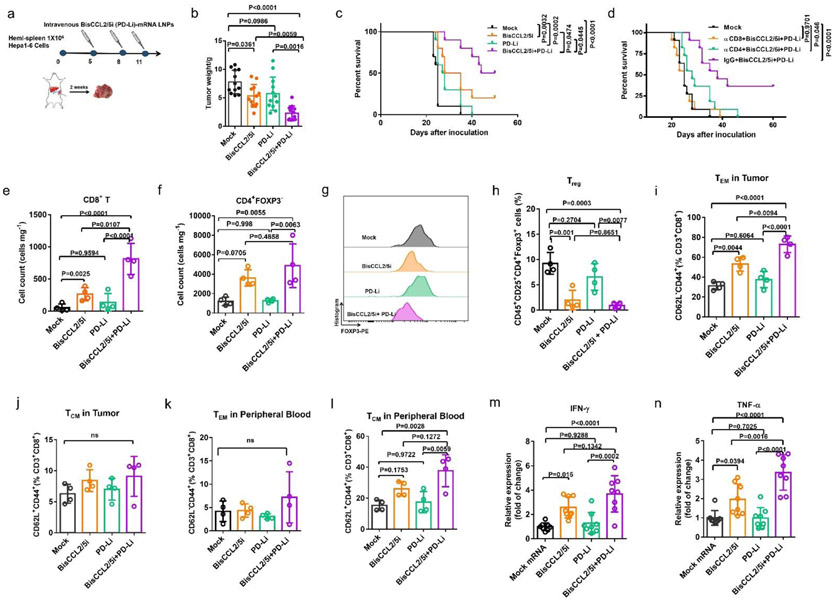
Liver malignancies are among the tumor types that are resistant to immune checkpoint inhibition therapy. Tumor-associated macrophages (TAMs) are highly enriched and play a major role in inducing immunosuppression in liver malignancies. Herein, CCL2 and CCL5 are screened as two major chemokines responsible for attracting TAM infiltration and inducing their polarization toward cancer-promoting M2-phenotype. To reverse this immunosuppressive process, an innovative single-domain antibody that bispecifically binds and neutralizes CCL2 and CCL5 (BisCCL2/5i) with high potency and specificity is directly evolved. mRNA encoding BisCCL2/5i is encapsulated in a clinically approved lipid nanoparticle platform, resulting in a liver-homing biomaterial that allows transient yet efficient expression of BisCCL2/5i in the diseased organ in a multiple dosage manner. This BisCCL2/5i mRNA nanoplatform significantly induces the polarization of TAMs toward the antitumoral M1 phenotype and reduces immunosuppression in the tumor microenvironment. The combination of BisCCL2/5i with PD-1 ligand inhibitor (PD-Li) achieves long-term survival in mouse models of primary liver cancer and liver metastasis of colorectal and pancreatic cancers. The work provides an effective bispecific targeting strategy that could broaden the PD-Li therapy to multiple types of malignancies in the human liver.
肝脏恶性肿瘤是对免疫检查点抑制治疗有抗性的肿瘤类型之一。肿瘤相关巨噬细胞(TAMs)高度丰富,并在诱导肝脏恶性肿瘤中的免疫抑制中发挥主要作用。在此,CCL2 和 CCL5 被筛选为负责吸引 TAM 浸润并诱导其向促进癌症的 M2 表型极化的两种主要趋化因子。为了逆转这种免疫抑制过程,直接进化出一种具有高亲和力和特异性的双特异性单域抗体,该抗体可同时结合并中和 CCL2 和 CCL5(BisCCL2/5i)。BisCCL2/5i 的 mRNA 被包裹在临床批准的脂质纳米颗粒平台中,产生一种肝脏归巢生物材料,可在多个剂量方式下在病变器官中短暂但有效地表达 BisCCL2/5i。这种 BisCCL2/5i mRNA 纳米平台显著诱导 TAMs 向抗肿瘤 M1 表型极化,并减少肿瘤微环境中的免疫抑制。BisCCL2/5i 与 PD-1 配体抑制剂(PD-Li)的联合使用可实现原发性肝癌和结直肠癌及胰腺癌肝转移的小鼠模型的长期存活。这项工作提供了一种有效的双特异性靶向策略,可将 PD-Li 治疗扩展到人类肝脏中的多种恶性肿瘤。