Ostasevicius Vytautas, Karpavicius Paulius, Paulauskaite-Taraseviciene Agne, Jurenas Vytautas, Mystkowski Arkadiusz, Cesnavicius Ramunas, Kizauskiene Laura
Institute of Mechatronics, Kaunas University of Technology, Studentu 56, LT-51424 Kaunas, Lithuania.
Department of Applied Informatics, Kaunas University of Technology, Studentu 50-214, LT-51368 Kaunas, Lithuania.
Sensors (Basel). 2021 Apr 30;21(9):3137. doi: 10.3390/s21093137.
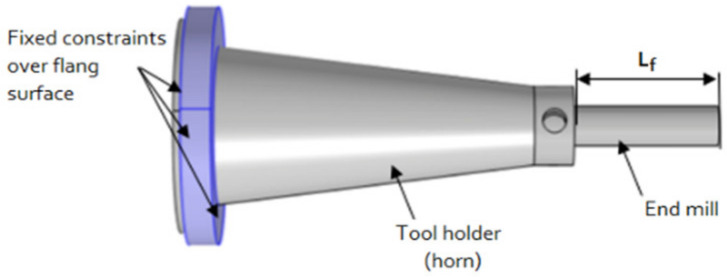
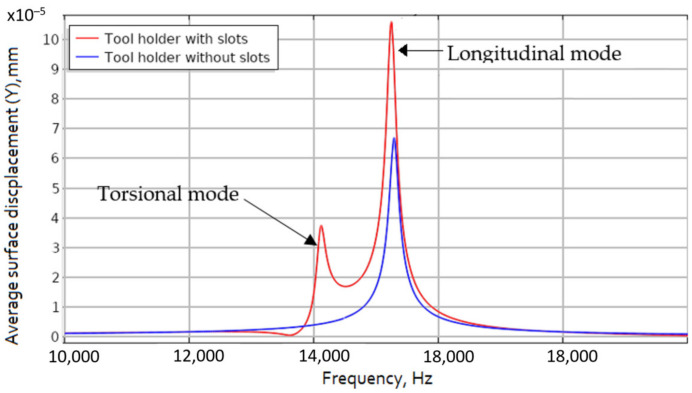
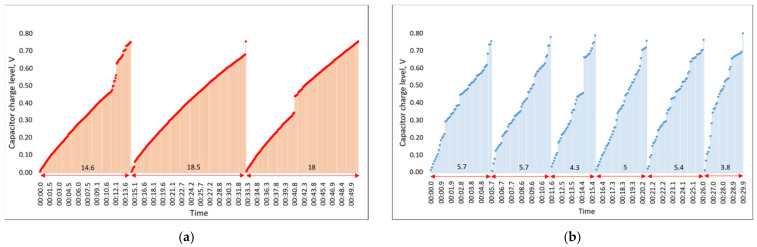
There are many tool condition monitoring solutions that use a variety of sensors. This paper presents a self-powering wireless sensor node for shank-type rotating tools and a method for real-time end mill wear monitoring. The novelty of the developed and patented sensor node is that the longitudinal oscillations, which directly affect the intensity of the energy harvesting, are significantly intensified due to the helical grooves cut onto the conical surface of the tool holder horn. A wireless transmission of electrical impulses from the capacitor is proposed, where the collected electrical energy is charged and discharged when a defined potential is reached. The frequency of the discharge pulses is directly proportional to the wear level of the tool and, at the same time, to the surface roughness of the workpiece. By employing these measures, we investigate the support vector machine (SVM) approach for wear level prediction.
有许多使用各种传感器的刀具状态监测解决方案。本文提出了一种用于刀柄式旋转刀具的自供电无线传感器节点以及一种用于实时监测立铣刀磨损的方法。所开发并获得专利的传感器节点的新颖之处在于,由于在刀架变幅杆的圆锥表面上切割出螺旋槽,直接影响能量收集强度的纵向振荡显著增强。提出了一种从电容器进行电脉冲的无线传输方式,当达到规定电位时,收集到的电能进行充电和放电。放电脉冲的频率与刀具的磨损程度直接成正比,同时与工件的表面粗糙度也成正比。通过采用这些措施,我们研究了支持向量机(SVM)方法用于磨损程度预测。