Department of Microbiology and Immunology, Indiana University School of Medicine-South Bend, RCH122, 1234 N. Notre Dame Ave., South Bend, IN, 46617, USA.
Division of Endocrinology, Diabetes and Metabolism, Department of Internal Medicine, University of Cincinnati, Cincinnati, OH, USA.
Sci Rep. 2021 May 4;11(1):9477. doi: 10.1038/s41598-021-88928-8.
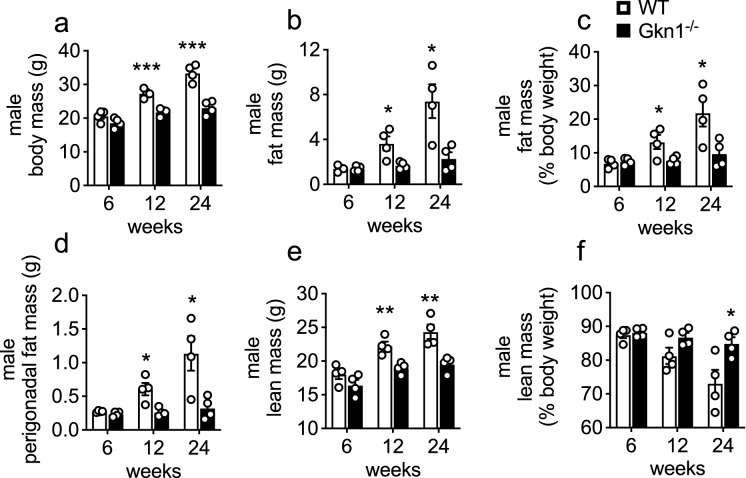
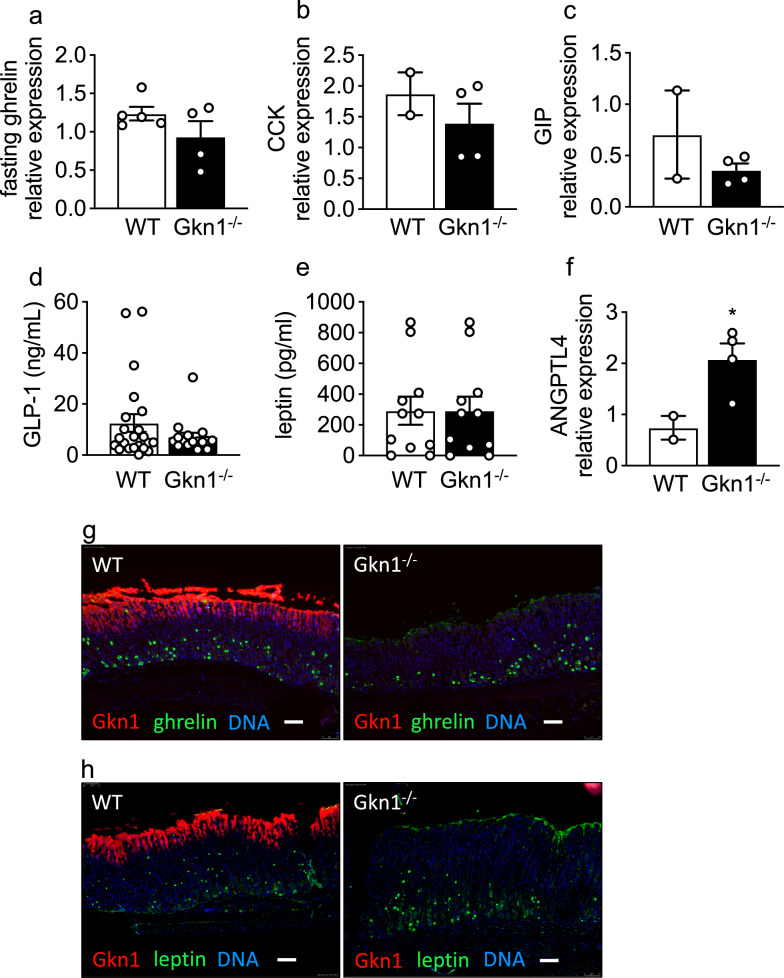
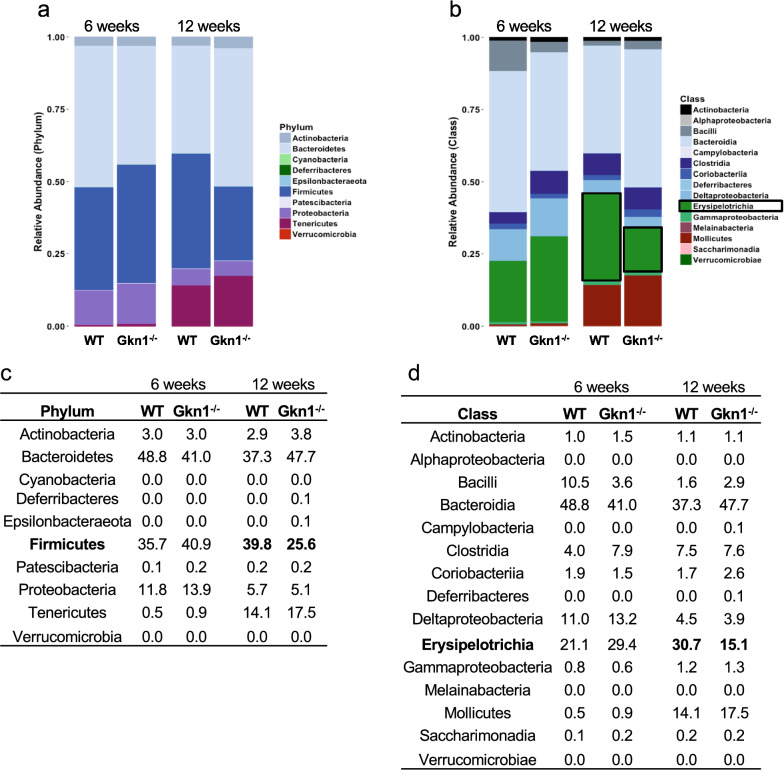
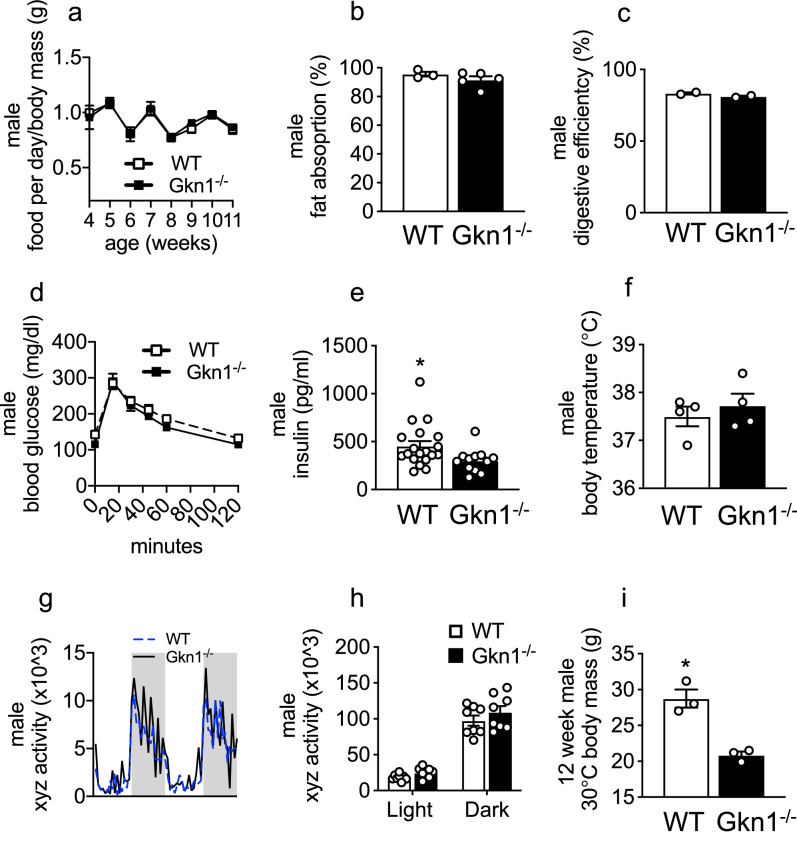
Obesity and its sequelae have a major impact on human health. The stomach contributes to obesity in ways that extend beyond its role in digestion, including through effects on the microbiome. Gastrokine-1 (GKN1) is an anti-amyloidogenic protein abundantly and specifically secreted into the stomach lumen. We examined whether GKN1 plays a role in the development of obesity and regulation of the gut microbiome. Gkn1 mice were resistant to diet-induced obesity and hepatic steatosis (high fat diet (HFD) fat mass (g) = 10.4 ± 3.0 (WT) versus 2.9 ± 2.3 (Gkn1) p < 0.005; HFD liver mass (g) = 1.3 ± 0.11 (WT) versus 1.1 ± 0.07 (Gkn1) p < 0.05). Gkn1 mice also exhibited increased expression of the lipid-regulating hormone ANGPTL4 in the small bowel. The microbiome of Gkn1 mice exhibited reduced populations of microbes implicated in obesity, namely Firmicutes of the class Erysipelotrichia. Altered metabolism consistent with use of fat as an energy source was evident in Gkn1 mice during the sleep period. GKN1 may contribute to the effects of the stomach on the microbiome and obesity. Inhibition of GKN1 may be a means to prevent obesity.
肥胖及其后遗症对人类健康有重大影响。胃对肥胖的影响超出了其在消化中的作用,包括对微生物组的影响。胃激肽-1(GKN1)是一种抗淀粉样蛋白的蛋白质,大量且特异性地分泌到胃腔中。我们研究了 GKN1 是否在肥胖的发展和肠道微生物组的调节中发挥作用。Gkn1 小鼠对饮食诱导的肥胖和肝脂肪变性具有抗性(高脂肪饮食(HFD)脂肪质量(g)= 10.4 ± 3.0(WT)与 2.9 ± 2.3(Gkn1)p < 0.005;HFD 肝脏质量(g)= 1.3 ± 0.11(WT)与 1.1 ± 0.07(Gkn1)p < 0.05)。Gkn1 小鼠的小肠中脂质调节激素 ANGPTL4 的表达也增加了。Gkn1 小鼠的微生物组中与肥胖有关的微生物丰度降低,即 Firmicutes 类的 Erysipelotrichia。在 Gkn1 小鼠睡眠期间,明显存在与脂肪作为能量来源一致的代谢改变。GKN1 可能有助于胃对微生物组和肥胖的影响。抑制 GKN1 可能是预防肥胖的一种手段。