State Key Laboratory of Oncogenes and Related Genes, School of Medicine and School of Biomedical Engineering, Renji Med-X Clinical Stem Cell Research Center, Ren Ji Hospital, Shanghai Jiao Tong University, Shanghai, China.
School of Biomedical Engineering and Med-X Research Institute, Shanghai Jiao Tong University, Shanghai, China.
Cell Prolif. 2021 Jun;54(6):e13045. doi: 10.1111/cpr.13045. Epub 2021 May 5.
Cutaneous wound healing is one of the major medical problems worldwide. Epigenetic modifiers have been identified as important players in skin development, homeostasis and wound repair. SET domain-containing 2 (SETD2) is the only known histone H3K36 tri-methylase; however, its role in skin wound healing remains unclear.
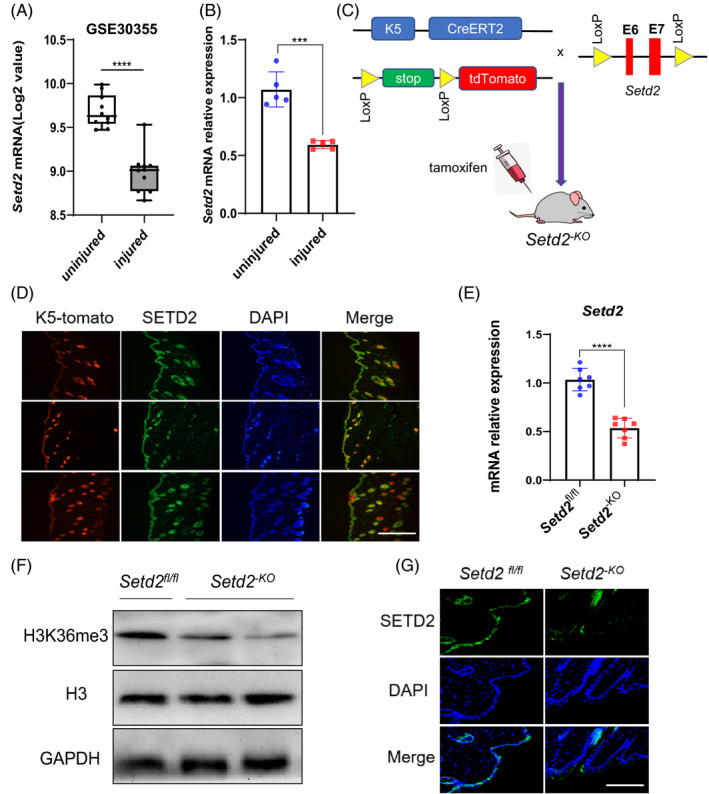
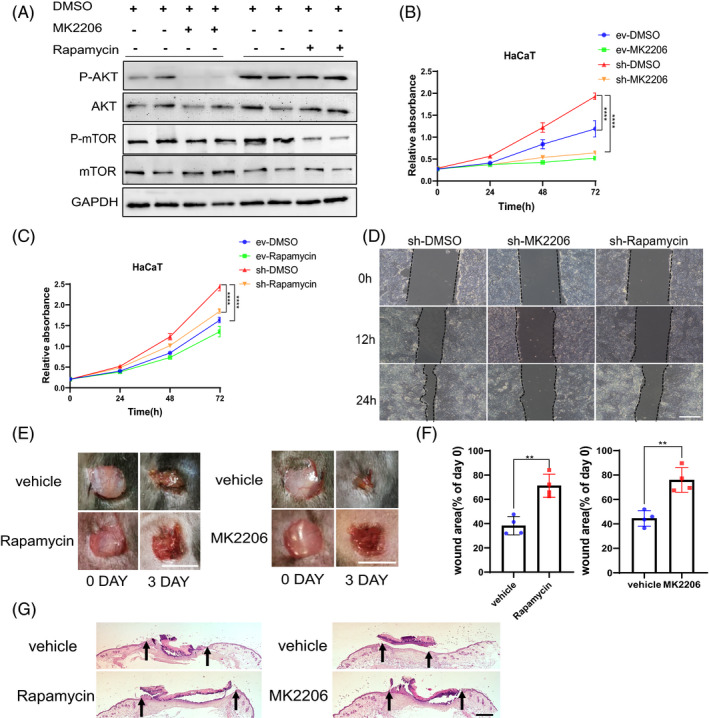
To elucidate the biological role of SETD2 in wound healing, conditional gene targeting was used to generate epidermis-specific Setd2-deficient mice. Wound-healing experiments were performed on the backs of mice, and injured skin tissues were collected and analysed by haematoxylin and eosin (H&E) and immunohistochemical staining. In vitro, CCK8 and scratch wound-healing assays were performed on Setd2-knockdown and Setd2-overexpression human immortalized keratinocyte cell line (HaCaT). In addition, RNA-seq and H3K36me3 ChIP-seq analyses were performed to identify the dysregulated genes modulated by SETD2. Finally, the results were validated in functional rescue experiments using AKT and mTOR inhibitors (MK2206 and rapamycin).
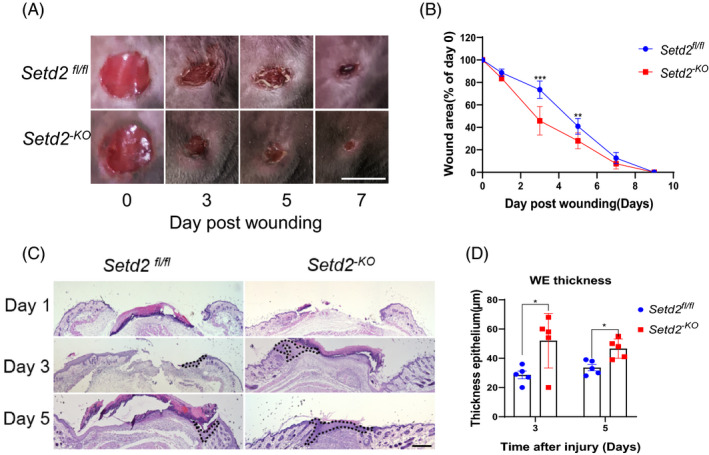
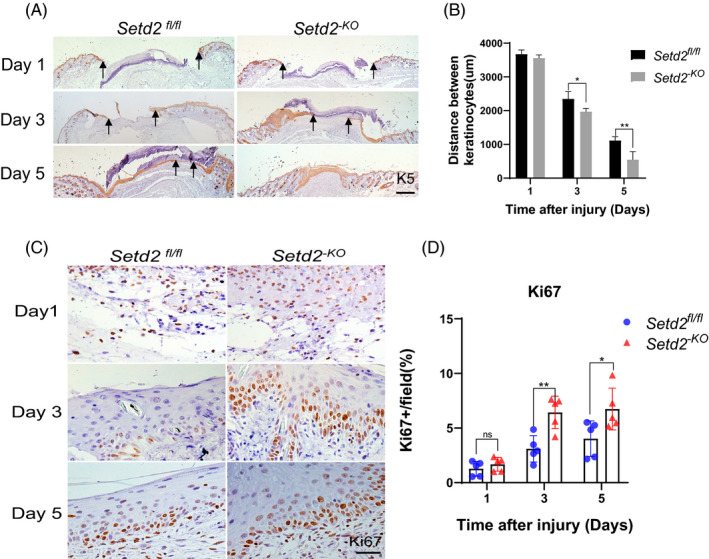
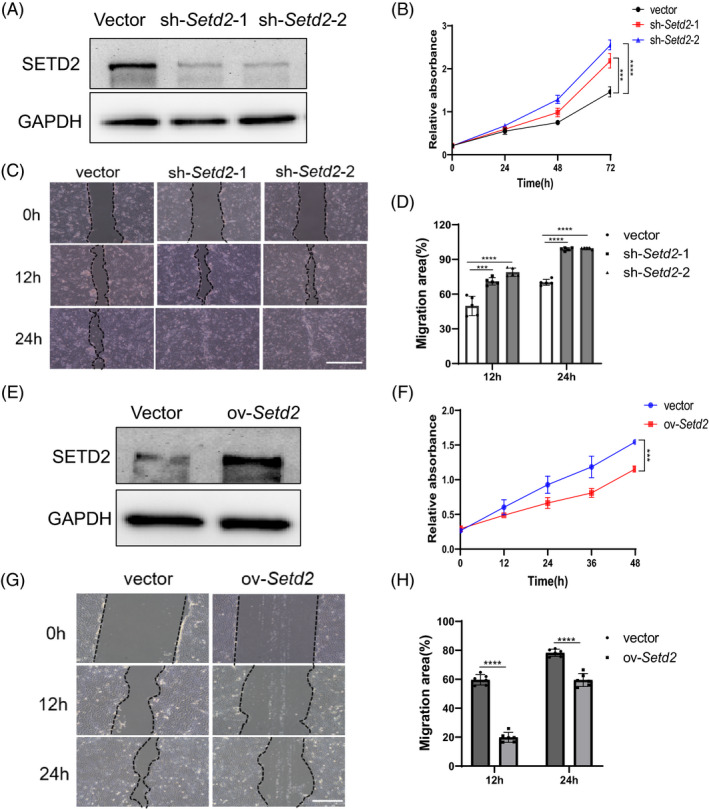
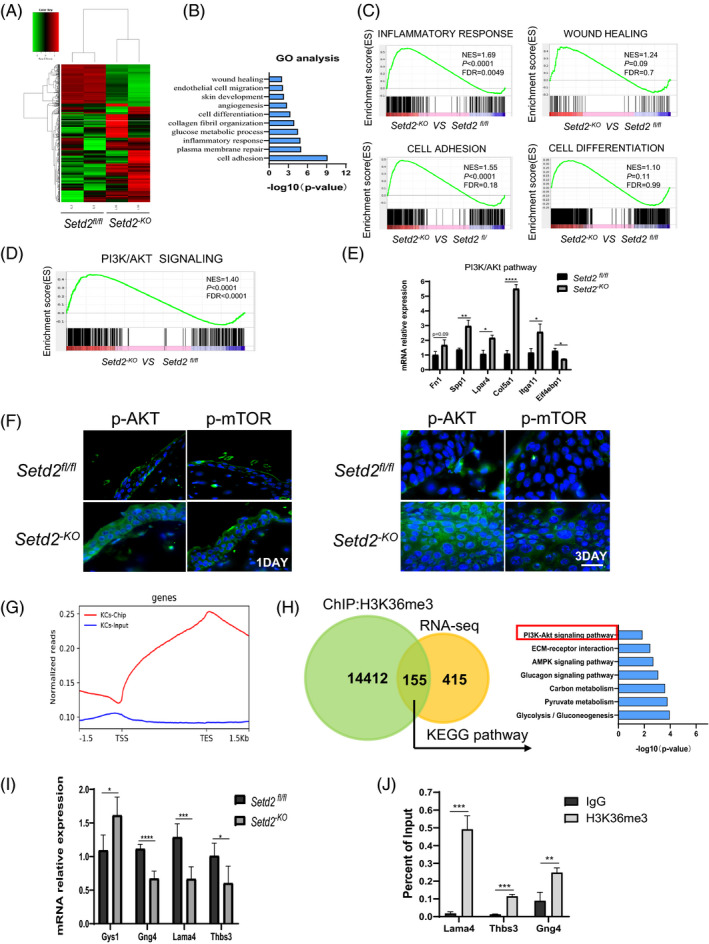
Epidermis-specific Setd2-deficient mice were successfully established, and SETD2 deficiency resulted in accelerated re-epithelialization during cutaneous wound healing by promoting keratinocyte proliferation and migration. Furthermore, the loss of SETD2 enhanced the scratch closure and proliferation of keratinocytes in vitro. Mechanistically, the deletion of Setd2 resulted in the activation of AKT/mTOR signalling pathway, while the pharmacological inhibition of AKT and mTOR with MK2206 and rapamycin, respectively, delayed wound closure.
Our results showed that SETD2 loss promoted cutaneous wound healing via the activation of AKT/mTOR signalling.
皮肤创伤愈合是全球主要的医学问题之一。表观遗传修饰物已被确定为皮肤发育、内稳态和伤口修复的重要参与者。SET 结构域包含蛋白 2(SETD2)是唯一已知的组蛋白 H3K36 三甲基转移酶;然而,其在皮肤伤口愈合中的作用尚不清楚。
为了阐明 SETD2 在伤口愈合中的生物学作用,使用条件性基因靶向技术生成了表皮特异性 Setd2 缺陷型小鼠。在小鼠背部进行伤口愈合实验,收集和分析受伤皮肤组织的苏木精和伊红(H&E)和免疫组织化学染色。在体外,使用 Setd2 敲低和 Setd2 过表达的人永生化角质形成细胞系(HaCaT)进行 CCK8 和划痕伤口愈合实验。此外,进行 RNA-seq 和 H3K36me3 ChIP-seq 分析,以鉴定受 SETD2 调节的失调基因。最后,使用 AKT 和 mTOR 抑制剂(MK2206 和雷帕霉素)在功能挽救实验中验证结果。
成功建立了表皮特异性 Setd2 缺陷型小鼠,SETD2 缺陷导致皮肤伤口愈合过程中角质形成细胞增殖和迁移加速,从而促进再上皮化。此外,体外 SETD2 的缺失增强了划痕闭合和角质形成细胞的增殖。机制上,Setd2 的缺失导致 AKT/mTOR 信号通路的激活,而分别使用 MK2206 和雷帕霉素抑制 AKT 和 mTOR,可延迟伤口闭合。
我们的结果表明,SETD2 的缺失通过激活 AKT/mTOR 信号促进皮肤伤口愈合。