Department of Colorectal and Anal Surgery, The First Hospital of Jilin University, Changchun, China.
Department of Endocrinology and Metabolism, The First Hospital of Jilin University, Changchun, China.
J Cell Mol Med. 2021 Jun;25(12):5811-5822. doi: 10.1111/jcmm.16547. Epub 2021 May 5.
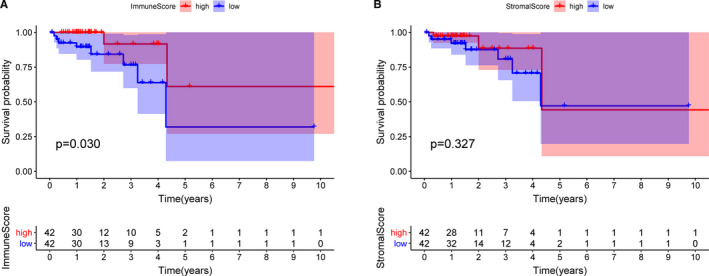
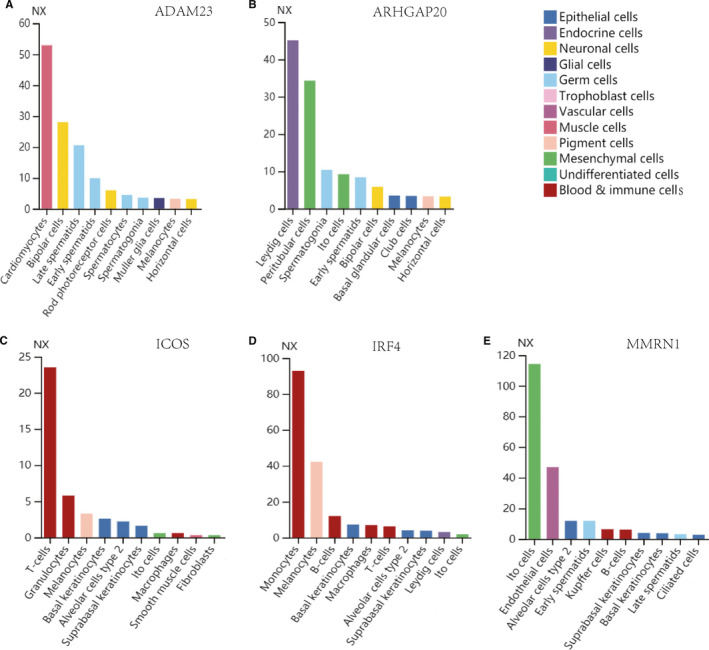
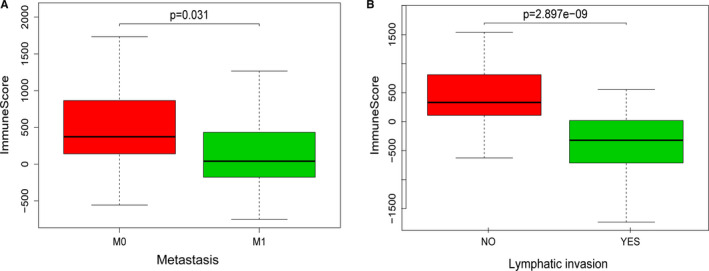
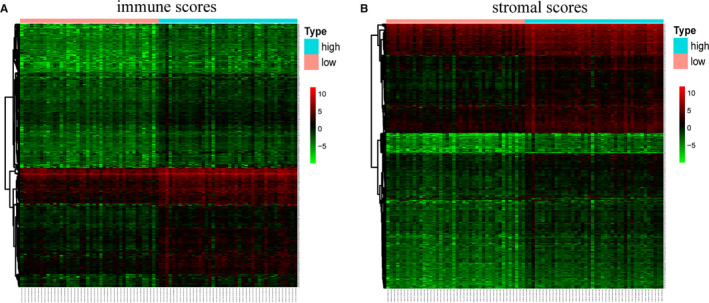
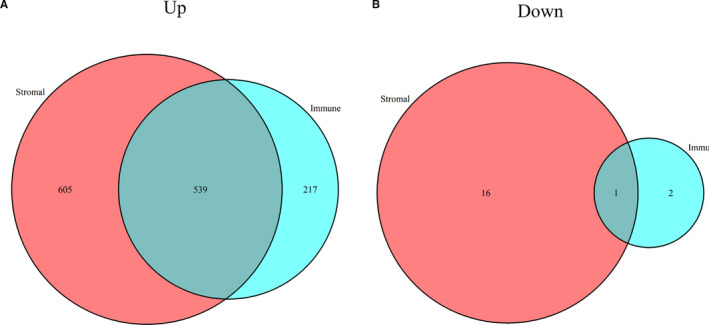
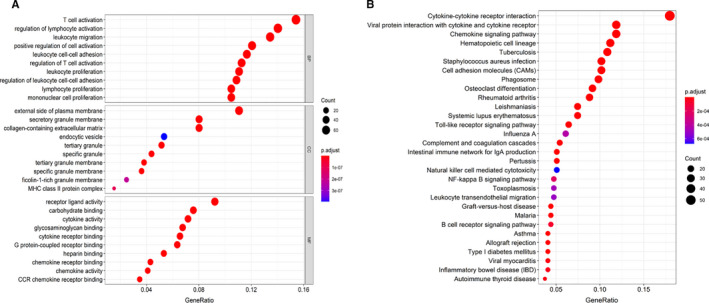
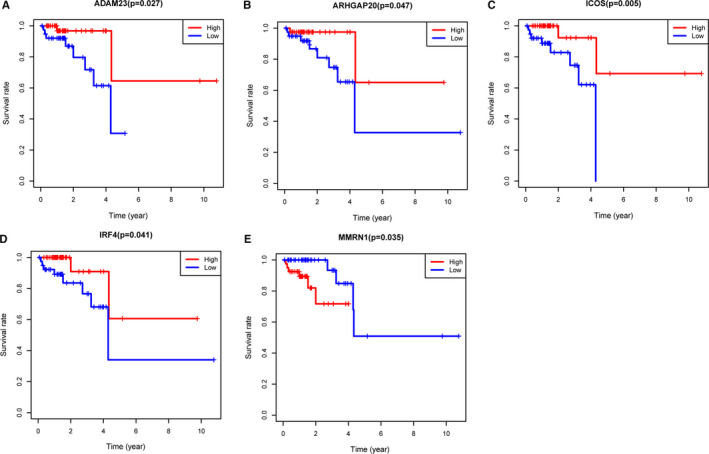
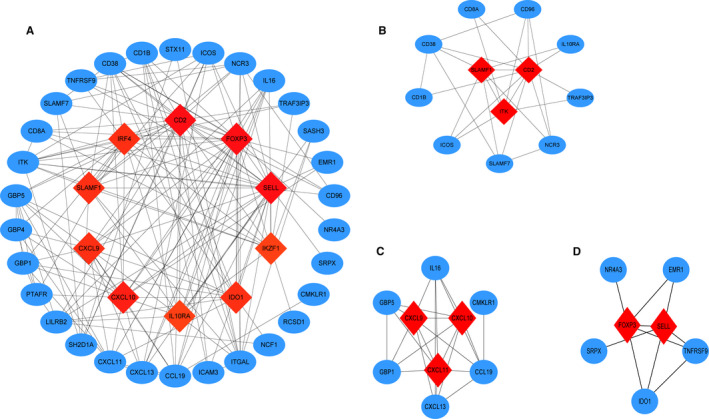
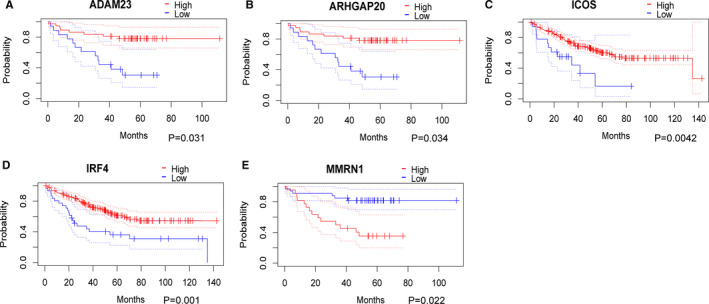
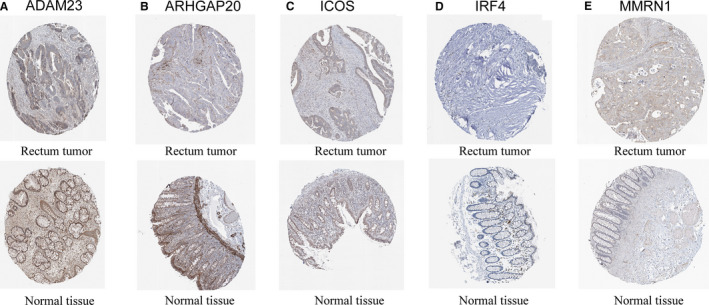
Rectal cancer is a common malignant tumour and the progression is highly affected by the tumour microenvironment (TME). This study intended to assess the relationship between TME and prognosis, and explore prognostic genes of rectal cancer. The gene expression profile of rectal cancer was obtained from TCGA and immune/stromal scores were calculated by Estimation of Stromal and Immune cells in Malignant Tumors using Expression data (ESTIMATE) algorithm. The correlation between immune/stromal scores and survival time as well as clinical characteristics were evaluated. Differentially expressed genes (DEGs) were identified according to the stromal/immune scores, and the functional enrichment analyses were conducted to explore functions and pathways of DEGs. The survival analyses were conducted to clarify the DEGs with prognostic value, and the protein-protein interaction (PPI) network was performed to explore the interrelation of prognostic DEGs. Finally, we validated prognostic DEGs using data from the Gene Expression Omnibus (GEO) database by PrognoScan, and we verified these genes at the protein levels using the Human Protein Atlas (HPA) databases. We downloaded gene expression profiles of 83 rectal cancer patients from The Cancer Genome Atlas (TCGA) database. The Kaplan-Meier plot demonstrated that low-immune score was associated with worse clinical outcome (P = .034), metastasis (M1 vs. M0, P = .031) and lymphatic invasion (+ vs. -, P < .001). A total of 540 genes were screened as DEGs with 539 up-regulated genes and 1 down-regulated gene. In addition, 60 DEGs were identified associated with overall survival. Functional enrichment analyses and PPI networks showed that the DEGs are mainly participated in immune process, and cytokine-cytokine receptor interaction. Finally, 19 prognostic genes were verified by GSE17536 and GSE17537 from GEO, and five genes (ADAM23, ARHGAP20, ICOS, IRF4, MMRN1) were significantly different in tumour tissues compared with normal tissues at the protein level. In summary, our study demonstrated the associations between TME and prognosis as well as clinical characteristics of rectal cancer. Moreover, we explored and verified microenvironment-related genes, which may be the potential key prognostic genes of rectal cancer. Further clinical samples and functional studies are needed to validate this finding.
直肠癌是一种常见的恶性肿瘤,其进展受肿瘤微环境(TME)的高度影响。本研究旨在评估 TME 与预后的关系,并探索直肠癌的预后基因。从 TCGA 获得直肠癌的基因表达谱,并使用表达数据(ESTIMATE)算法计算免疫/基质评分。评估免疫/基质评分与生存时间和临床特征的相关性。根据基质/免疫评分确定差异表达基因(DEGs),并进行功能富集分析以探索 DEGs 的功能和途径。进行生存分析以阐明具有预后价值的 DEGs,并进行蛋白质-蛋白质相互作用(PPI)网络分析以探索预后 DEGs 的相互关系。最后,我们使用来自基因表达综合(GEO)数据库的 PrognoScan 数据验证预后 DEGs,并使用人类蛋白质图谱(HPA)数据库在蛋白质水平上验证这些基因。我们从癌症基因组图谱(TCGA)数据库下载了 83 例直肠癌患者的基因表达谱。Kaplan-Meier 图表明,低免疫评分与较差的临床结局相关(P=0.034)、转移(M1 与 M0,P=0.031)和淋巴浸润(+与-,P<0.001)。筛选出 540 个差异表达基因,其中 539 个上调基因和 1 个下调基因。此外,确定了 60 个与总生存相关的 DEGs。功能富集分析和 PPI 网络表明,DEGs 主要参与免疫过程和细胞因子-细胞因子受体相互作用。最后,通过 GEO 中的 GSE17536 和 GSE17537 验证了 19 个预后基因,并且在蛋白质水平上,5 个基因(ADAM23、ARHGAP20、ICOS、IRF4、MMRN1)在肿瘤组织与正常组织之间存在显著差异。总之,我们的研究表明 TME 与直肠癌的预后以及临床特征之间存在关联。此外,我们还探索并验证了与微环境相关的基因,这些基因可能是直肠癌潜在的关键预后基因。需要进一步的临床样本和功能研究来验证这一发现。