Hospital Pró-Cardíaco, Américas Serviços Médicos, United-Health Group, Rio de Janeiro, RJ, Brasil.
Fundação Oswaldo Cruz-Fiocruz, Instituto Oswaldo Cruz, Laboratório de Imunofarmacologia, Rio de Janeiro, RJ, Brasil.
Mem Inst Oswaldo Cruz. 2021 Apr 30;116:e200552. doi: 10.1590/0074-02760200552. eCollection 2021.
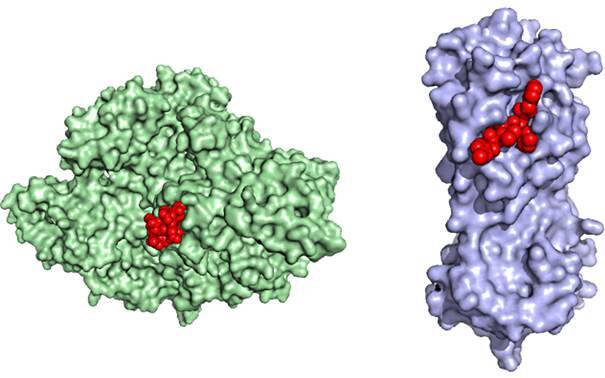
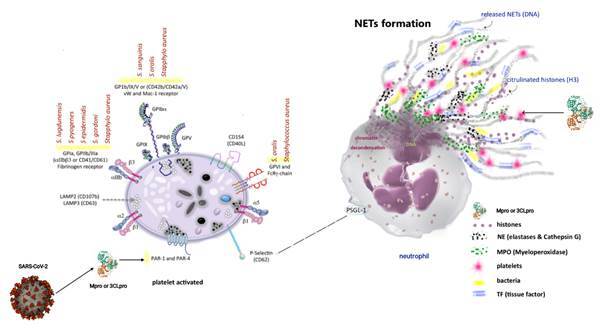
Coronaviruses can cause a diverse array of clinical manifestations, from fever with symptoms of the common cold to highly lethal severe acute respiratory syndrome (SARS) and middle east respiratory syndrome (MERS). SARS-CoV-2, the coronavirus discovered in Hubei province, China, at the end of 2019, became known worldwide for causing coronavirus disease 2019 (COVID-19). Over one year's time period, the scientific community has produced a large bulk of knowledge about this disease and countless reports about its immune-pathological aspects. This knowledge, including data obtained in postmortem studies, points unequivocally to a hypercoagulability state. However, the name COVID-19 tells us very little about the true meaning of the disease. Our proposal is more comprehensive; it intends to frame COVID-19 in more clinical terminology, making an analogy to viral haemorrhagic fever (VHF). Thus, we found irrefutable evidence in the current literature that COVID-19 is the first viral disease that can be branded as a viral thrombotic fever. This manuscript points out that SARS-CoV-2 goes far beyond pneumonia or SARS. COVID-19 infections promote remarkable interactions among the endothelium, coagulation, and immune response, building up a background capable of promoting a "thrombotic storm," much more than a "cytokine storm." The importance of a viral protease called main protease (Mpro) is highlighted as a critical component for its replication in the host cell. A deeper analysis of this protease and its importance on the coagulation system is also discussed for the first time, mainly because of its similarity with the thrombin and factor Xa molecules, as recently pointed out by structural comparison crystallographic structures.
冠状病毒可引起多种临床表现,从伴有普通感冒症状的发热到高致死性的严重急性呼吸综合征(SARS)和中东呼吸综合征(MERS)。2019 年底在中国湖北省发现的冠状病毒 SARS-CoV-2,因引起 2019 冠状病毒病(COVID-19)而闻名于世。在一年的时间里,科学界已经积累了大量关于这种疾病的知识,以及无数关于其免疫病理方面的报告。这些知识,包括尸检研究中获得的数据,明确指向一种高凝状态。然而,COVID-19 这个名称并没有告诉我们关于这种疾病的真正含义。我们的建议更加全面;它旨在用更临床的术语来描述 COVID-19,将其比作病毒性出血热(VHF)。因此,我们在当前文献中找到了无可争议的证据,证明 COVID-19 是第一种可被称为病毒性血栓性发热的病毒性疾病。本文指出,SARS-CoV-2 远不止是肺炎或 SARS。COVID-19 感染促进了内皮细胞、凝血和免疫反应之间的显著相互作用,为促进“血栓风暴”创造了背景,而不仅仅是“细胞因子风暴”。一种名为主要蛋白酶(Mpro)的病毒蛋白酶的重要性被强调为其在宿主细胞中复制的关键组成部分。本文首次深入分析了这种蛋白酶及其在凝血系统中的重要性,主要是因为它与凝血酶和因子 Xa 分子的相似性,正如最近的结构比较晶体结构所指出的。