Fungal Physiology, Westerdijk Fungal Biodiversity Institute & Fungal Molecular Physiology, Utrecht University, Utrecht, The Netherlands.
Appl Microbiol Biotechnol. 2021 May;105(10):4199-4211. doi: 10.1007/s00253-021-11311-0. Epub 2021 May 5.
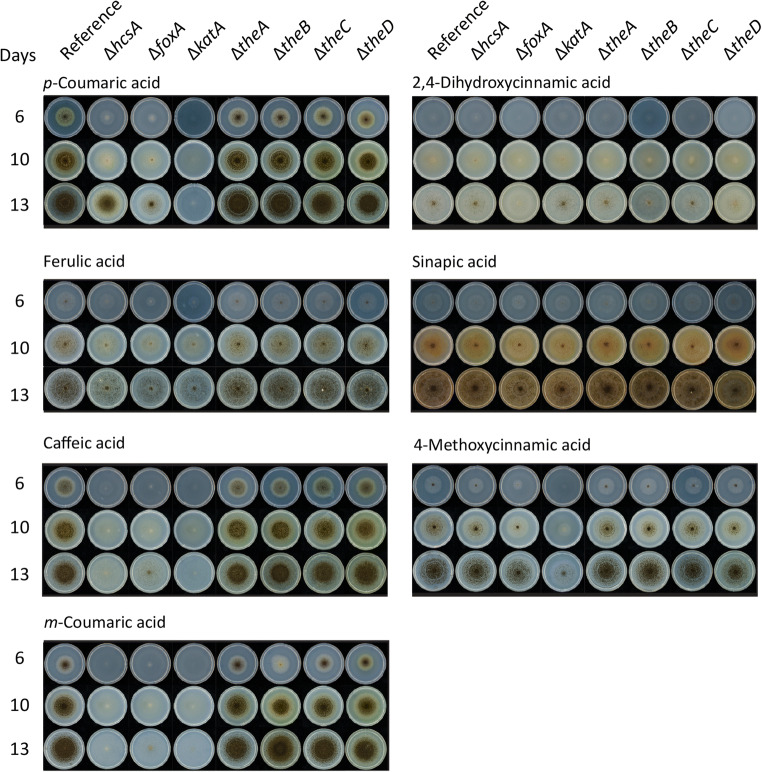
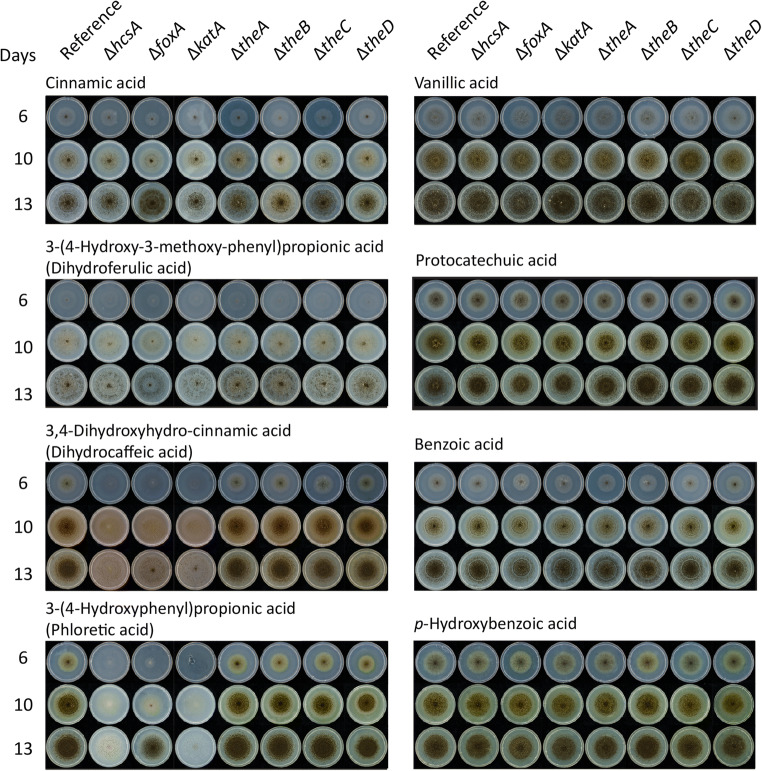
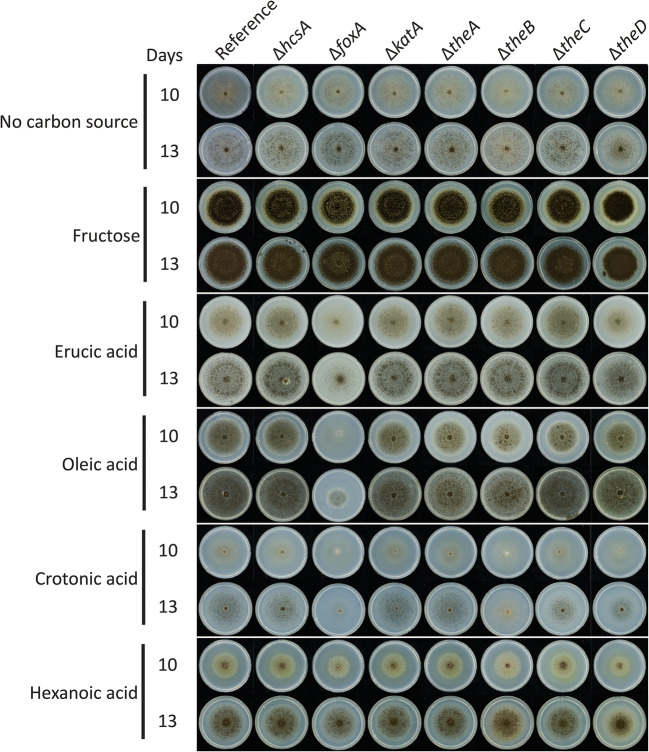
Aromatic compounds are important molecules which are widely applied in many industries and are mainly produced from nonrenewable sources. Renewable sources such as plant biomass are interesting alternatives for the production of aromatic compounds. Ferulic acid and p-coumaric acid, a precursor for vanillin and p-vinyl phenol, respectively, can be released from plant biomass by the fungus Aspergillus niger. The degradation of hydroxycinnamic acids such as caffeic acid, ferulic acid, and p-coumaric acid has been observed in many fungi. In A. niger, multiple metabolic pathways were suggested for the degradation of hydroxycinnamic acids. However, no genes were identified for these hydroxycinnamic acid metabolic pathways. In this study, several pathway genes were identified using whole-genome transcriptomic data of A. niger grown on different hydroxycinnamic acids. The genes are involved in the CoA-dependent β-oxidative pathway in fungi. This pathway is well known for the degradation of fatty acids, but not for hydroxycinnamic acids. However, in plants, it has been shown that hydroxycinnamic acids are degraded through this pathway. We identified genes encoding hydroxycinnamate-CoA synthase (hcsA), multifunctional β-oxidation hydratase/dehydrogenase (foxA), 3-ketoacyl CoA thiolase (katA), and four thioesterases (theA-D) of A. niger, which were highly induced by all three tested hydroxycinnamic acids. Deletion mutants revealed that these genes were indeed involved in the degradation of several hydroxycinnamic acids. In addition, foxA and theB are also involved in the degradation of fatty acids. HcsA, FoxA, and KatA contained a peroxisomal targeting signal and are therefore predicted to be localized in peroxisomes. KEY POINTS: • Metabolism of hydroxycinnamic acid was investigated in Aspergillus niger • Using transcriptome data, multiple CoA-dependent β-oxidative genes were identified. • Both foxA and theB are involved in hydroxycinnamate but also fatty acid metabolism.
芳香族化合物是一类重要的分子,广泛应用于许多行业,主要由不可再生资源生产。植物生物质等可再生资源是芳香族化合物生产的有趣替代品。阿魏酸和对香豆酸分别是香草醛和对乙烯基苯酚的前体,可以通过黑曲霉从植物生物质中释放出来。许多真菌都观察到了对羟基肉桂酸(如咖啡酸、阿魏酸和对香豆酸)的降解。在黑曲霉中,已经提出了多种代谢途径来降解羟基肉桂酸。然而,这些羟基肉桂酸代谢途径的基因尚未被鉴定。在这项研究中,使用黑曲霉在不同羟基肉桂酸上生长的全基因组转录组数据鉴定了几个途径基因。这些基因涉及真菌中 CoA 依赖性β-氧化途径。该途径因降解脂肪酸而广为人知,但不用于羟基肉桂酸。然而,在植物中,已经表明羟基肉桂酸通过该途径降解。我们鉴定了编码羟基肉桂酰辅酶 A 合酶(hcsA)、多功能β-氧化水合酶/脱氢酶(foxA)、3-酮酰辅酶 A 硫解酶(katA)和黑曲霉的四种硫酯酶(theA-D)的基因,这三种基因均受三种测试的羟基肉桂酸的高度诱导。缺失突变体表明,这些基因确实参与了几种羟基肉桂酸的降解。此外,foxA 和 theB 还参与了脂肪酸的降解。HcsA、FoxA 和 KatA 含有过氧化物酶体靶向信号,因此预计定位于过氧化物酶体中。关键点:·研究了黑曲霉中羟基肉桂酸的代谢·使用转录组数据鉴定了多个 CoA 依赖性β-氧化基因。·foxA 和 theB 都参与了羟基肉桂酸和脂肪酸的代谢。