Department of Psychology, Faculty of Arts, Comenius University, Bratislava, Slovakia.
Department of Psychology, Faculty of Arts, Comenius University, Bratislava, Slovakia.
Psychoneuroendocrinology. 2021 Jul;129:105245. doi: 10.1016/j.psyneuen.2021.105245. Epub 2021 Apr 27.
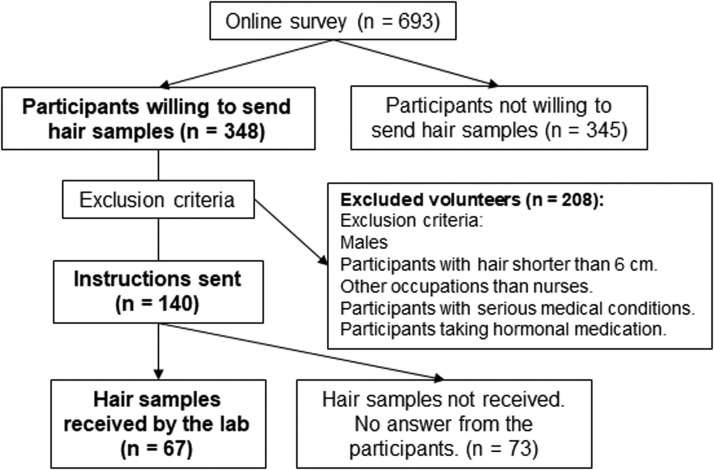
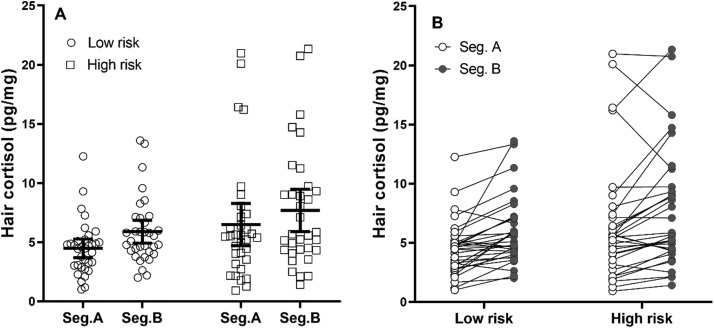
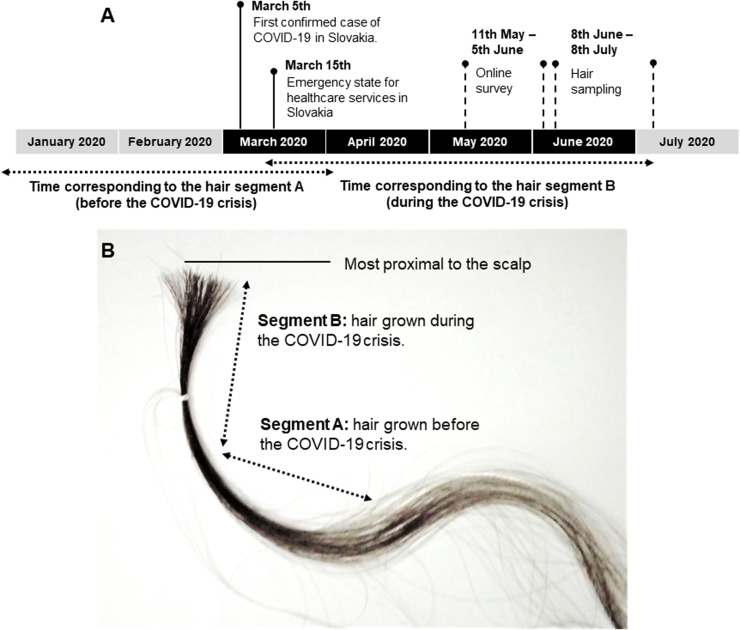
During the COVID-19 pandemic, frontline healthcare workers have been exposed to very stressful conditions. Measuring hair cortisol concentrations (HCCs), which reflect the integrated long-term cortisol levels, may elucidate the impact of COVID-19 related stress on healthcare professionals. In the current study, we investigated experienced stress in 693 healthcare workers, with hair samples for cortisol analysis collected from a subset of 67 female nurses. The HCCs in two 3 cm hair segments corresponding to periods before and during the peak of the first wave of COVID-19 were compared. To evaluate the effect of working in the first line, the sample was divided into two groups based on the COVID-19 risk estimated by the nurses. Covariates in the model included perceived stress (PSS), perceived social support (MSPSS), and quality of sleep (PSQI) measured via an online questionnaire. The data showed that more than 75% of healthcare workers agreed that COVID-19 led to increased stress at their workplace. The hair cortisol analysis showed higher HCCs in the hair segments corresponding to the time of the pandemic compared to hair corresponding to an earlier period (partial η = 0.123-0.397); in the same model, higher HCCs were also found in nurses from high-risk environments compared to low-risk ones (partial η = 0.002-0.176). None of the subjective questionnaire measures were significant predictors of HCCs. In conclusion, these data showed that HCCs reflect the increased stress among nurses during the COVID-19 pandemic as well as the difference in nurses between high- and low-risk environments.
在 COVID-19 大流行期间,一线医护人员面临着非常紧张的工作环境。测量头发皮质醇浓度(HCCs)可以反映长期皮质醇水平,这可能有助于阐明 COVID-19 相关压力对医护人员的影响。在当前研究中,我们调查了 693 名医护人员的体验性压力,其中 67 名女性护士的头发样本用于皮质醇分析。比较了对应 COVID-19 大流行第一波高峰期前后的两个 3cm 头发段的 HCCs。为了评估一线工作的影响,根据护士估计的 COVID-19 风险,将样本分为两组。模型中的协变量包括通过在线问卷测量的感知压力(PSS)、感知社会支持(MSPSS)和睡眠质量(PSQI)。数据显示,超过 75%的医护人员认为 COVID-19 导致工作场所压力增加。头发皮质醇分析显示,与早期相比,大流行期间的头发段中的 HCCs 更高(部分 η = 0.123-0.397);在相同模型中,来自高风险环境的护士的 HCCs 也高于低风险环境的护士(部分 η = 0.002-0.176)。主观问卷测量均未成为 HCCs 的显著预测因子。总之,这些数据表明,HCCs 反映了 COVID-19 大流行期间护士压力的增加,以及高风险和低风险环境中护士之间的差异。