Koyama Wataru, Hosomi Ryo, Matsuda Koji, Kawakami Koichi, Hibi Masahiko, Shimizu Takashi
Division of Biological Science, Graduate School of Science, Nagoya University, Nagoya, Aichi 464-8602, Japan.
Laboratory of Molecular and Developmental Biology, National Institute of Genetics, and Department of Genetics, Graduate University for Advanced Studies (SOKENDAI), Mishima, Shizuoka 411-8540, Japan.
eNeuro. 2021 Jun 4;8(3). doi: 10.1523/ENEURO.0507-20.2021. Print 2021 May-Jun.
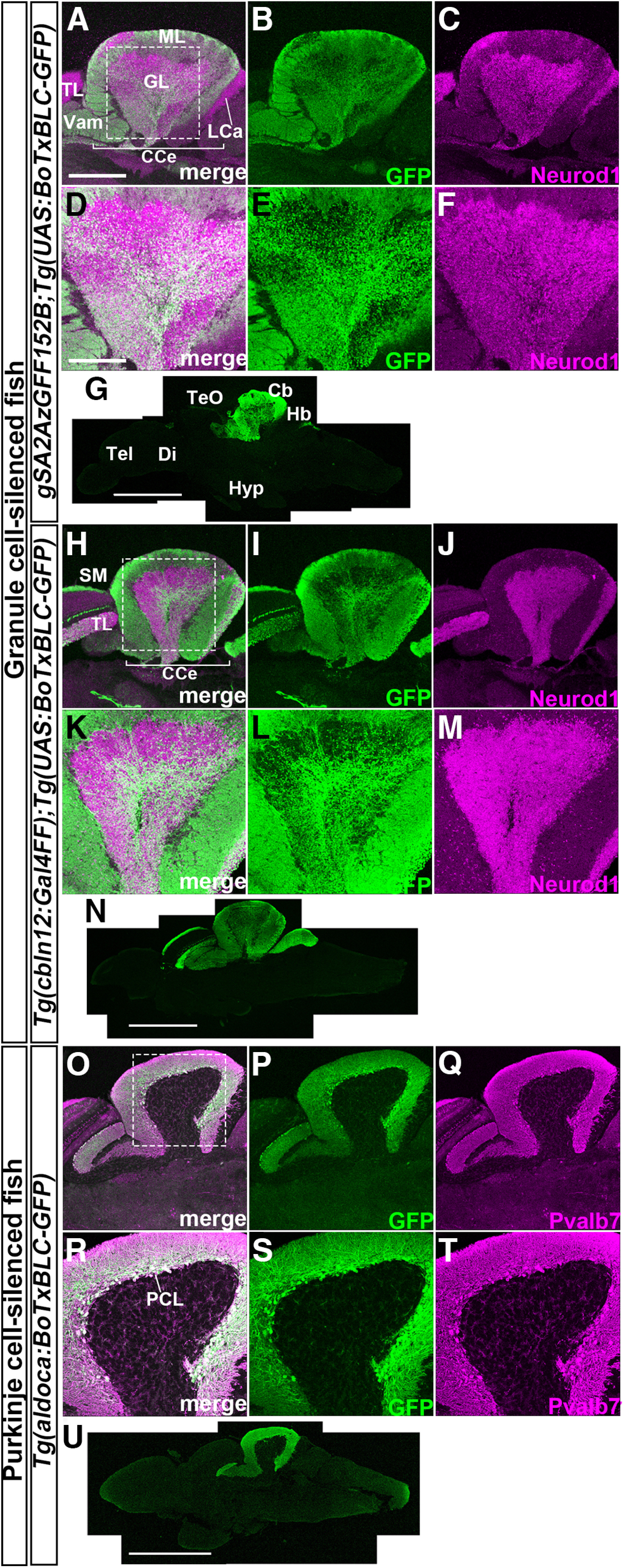
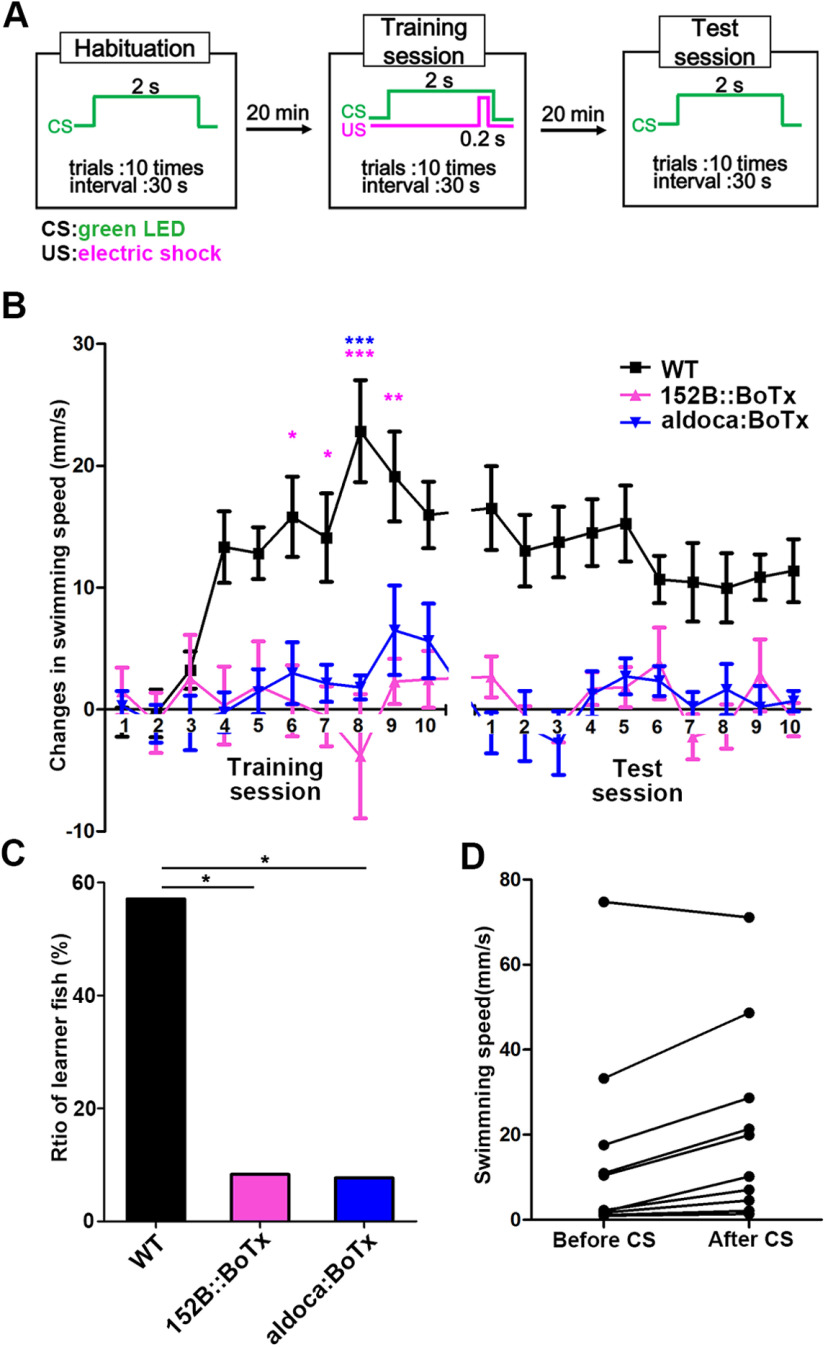
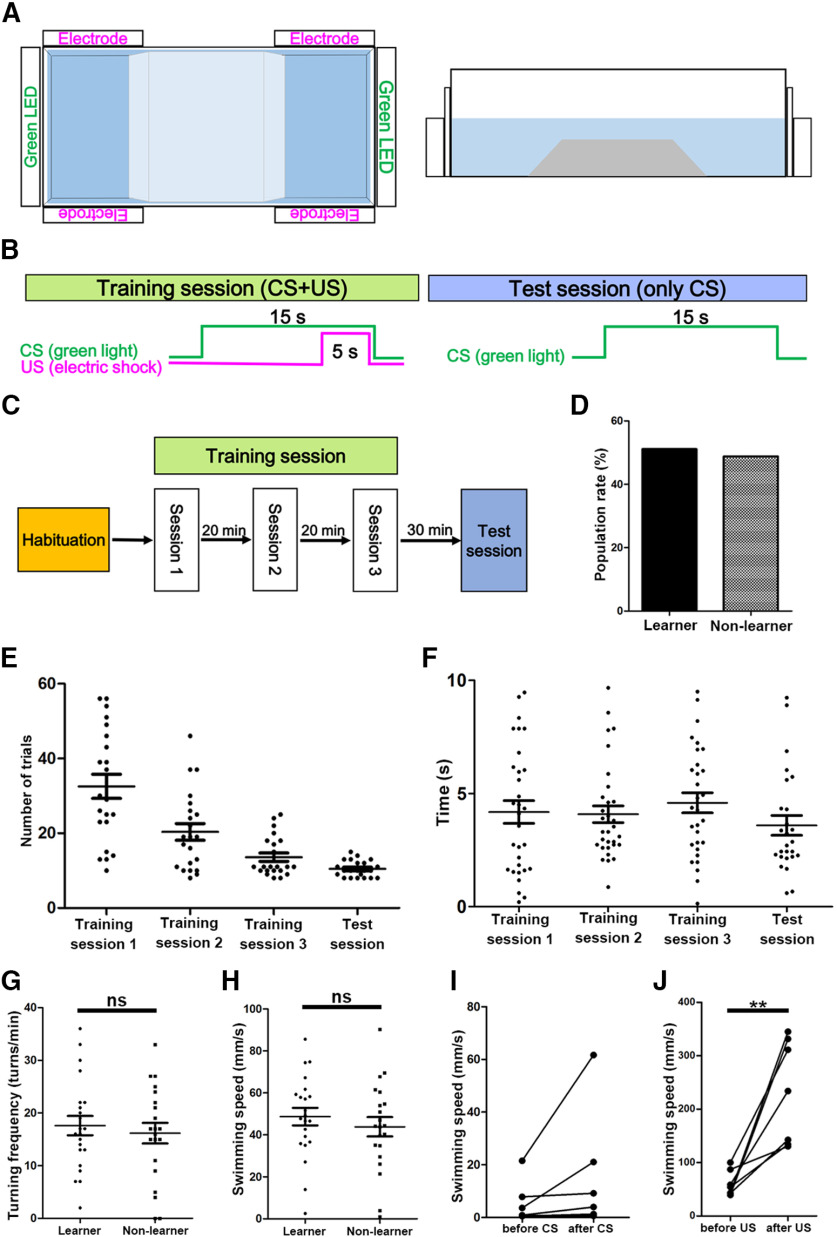
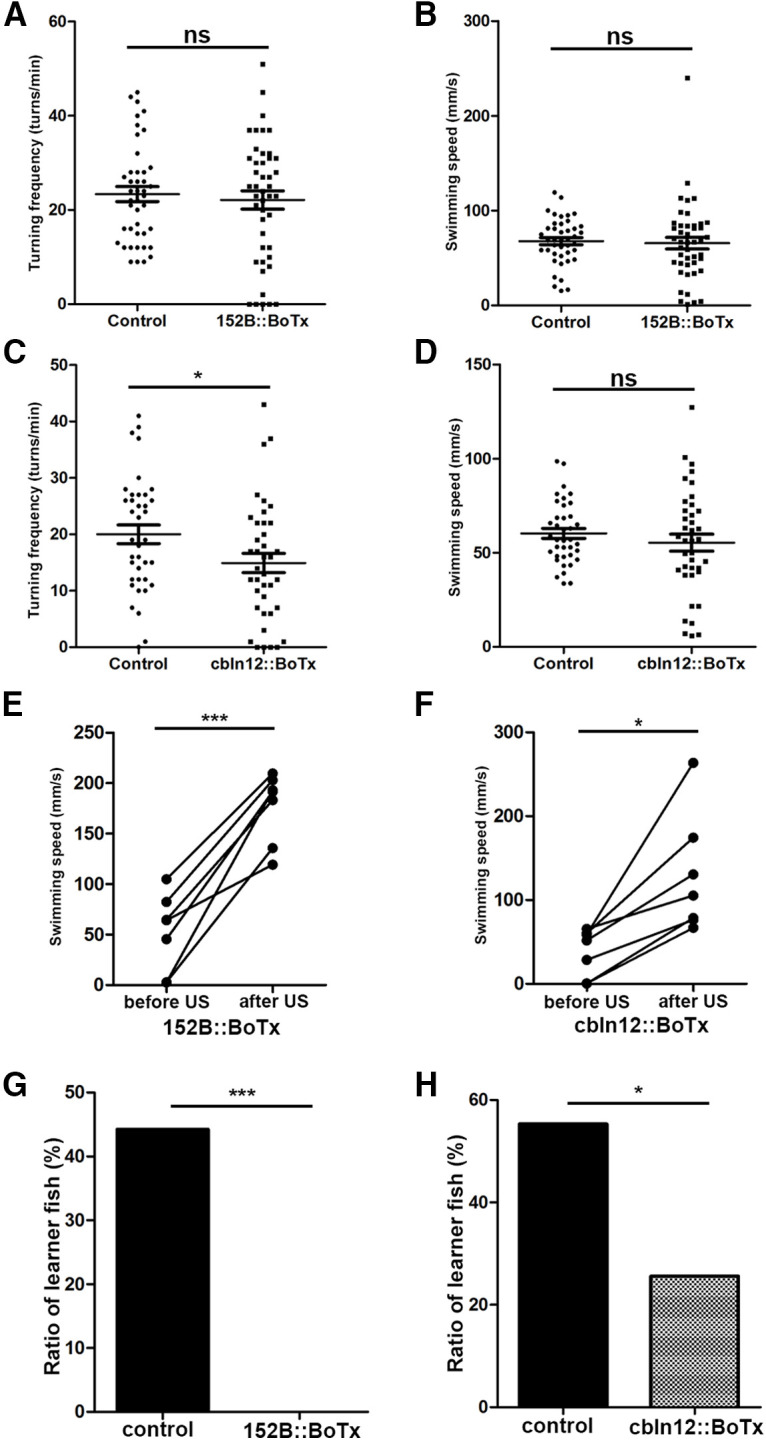
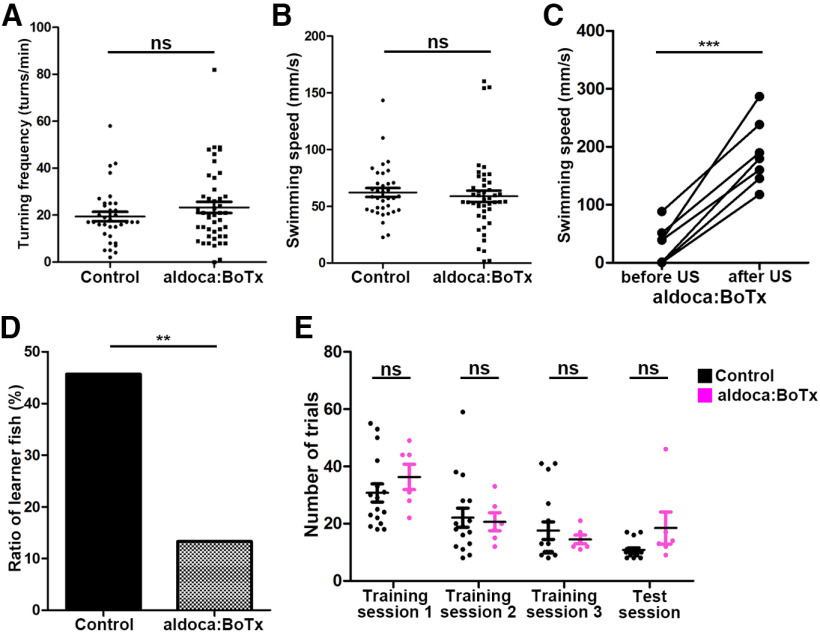
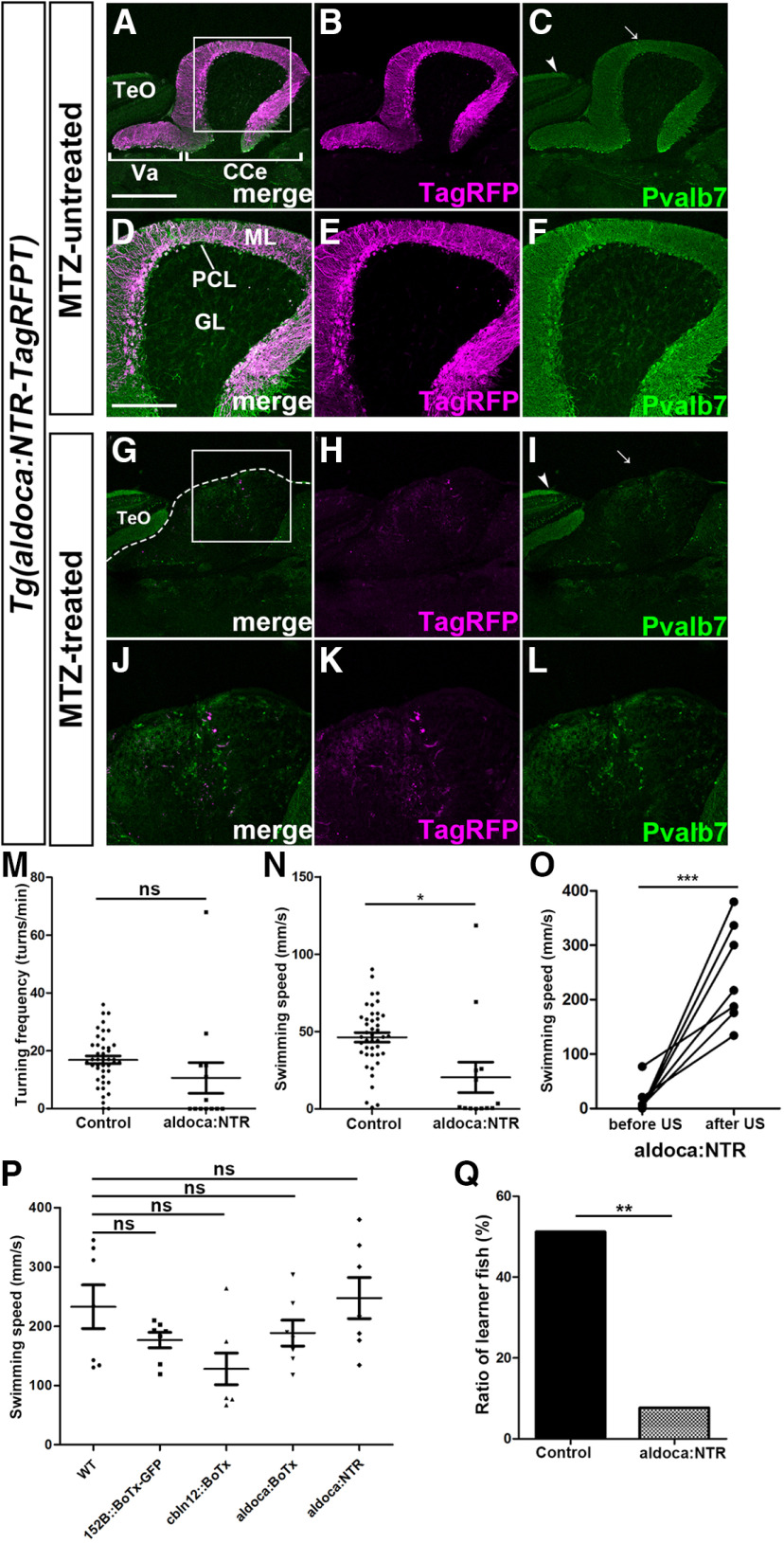
When animals repeatedly receive a combination of neutral conditional stimulus (CS) and aversive unconditional stimulus (US), they learn the relationship between CS and US, and show conditioned fear responses after CS. They show passive responses such as freezing or panic movements (classical or Pavlovian fear conditioning), or active behavioral responses to avoid aversive stimuli (active avoidance). Previous studies suggested the roles of the cerebellum in classical fear conditioning but it remains elusive whether the cerebellum is involved in active avoidance conditioning. In this study, we analyzed the roles of cerebellar neural circuits during active avoidance in adult zebrafish. When pairs of CS (light) and US (electric shock) were administered to wild-type zebrafish, about half of them displayed active avoidance. The expression of botulinum toxin, which inhibits the release of neurotransmitters, in cerebellar granule cells (GCs) or Purkinje cells (PCs) did not affect conditioning-independent swimming behaviors, but did inhibit active avoidance conditioning. Nitroreductase (NTR)-mediated ablation of PCs in adult zebrafish also impaired active avoidance. Furthermore, the inhibited transmission of GCs or PCs resulted in reduced fear-conditioned Pavlovian fear responses. Our findings suggest that the zebrafish cerebellum plays an active role in active avoidance conditioning.
当动物反复接受中性条件刺激(CS)和厌恶性非条件刺激(US)的组合时,它们会学习CS和US之间的关系,并在CS出现后表现出条件性恐惧反应。它们会表现出诸如僵住或惊恐动作等被动反应(经典或巴甫洛夫式恐惧条件反射),或者表现出主动行为反应以避免厌恶性刺激(主动回避)。先前的研究表明小脑在经典恐惧条件反射中发挥作用,但小脑是否参与主动回避条件反射仍不清楚。在本研究中,我们分析了成年斑马鱼主动回避过程中小脑神经回路的作用。当对野生型斑马鱼施加CS(光)和US(电击)对时,约一半的斑马鱼表现出主动回避。在小脑颗粒细胞(GCs)或浦肯野细胞(PCs)中表达抑制神经递质释放的肉毒杆菌毒素,并不影响与条件反射无关的游泳行为,但确实会抑制主动回避条件反射。硝基还原酶(NTR)介导的成年斑马鱼PCs消融也损害了主动回避。此外,GCs或PCs的传递受到抑制会导致恐惧条件性巴甫洛夫式恐惧反应减弱。我们的研究结果表明,斑马鱼小脑在主动回避条件反射中发挥积极作用。