Matís, Reykjavík, Iceland.
University of Iceland, Reykjavík, Iceland.
Sci Rep. 2021 May 5;11(1):9586. doi: 10.1038/s41598-021-89029-2.
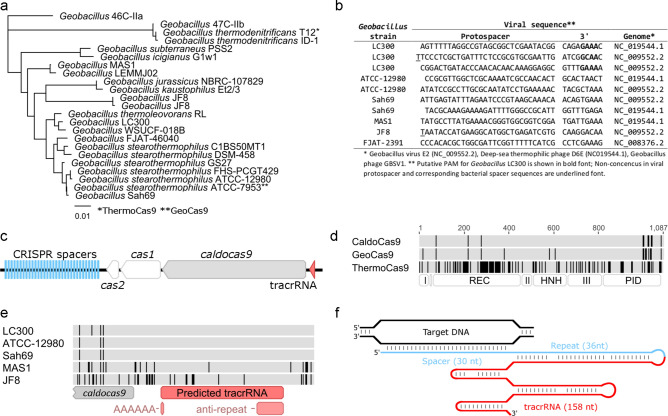
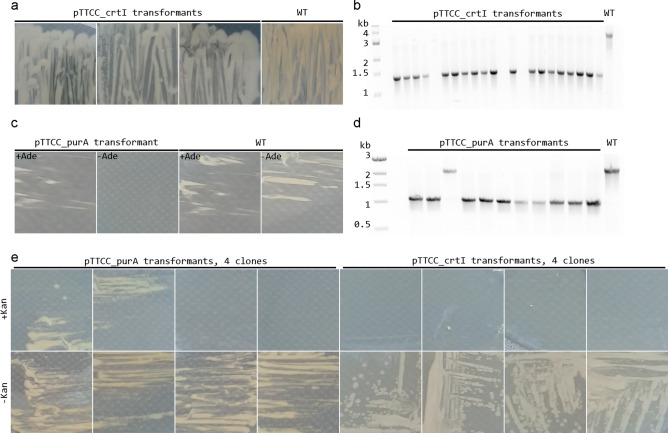
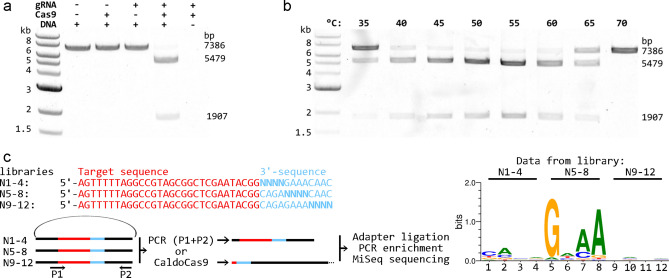
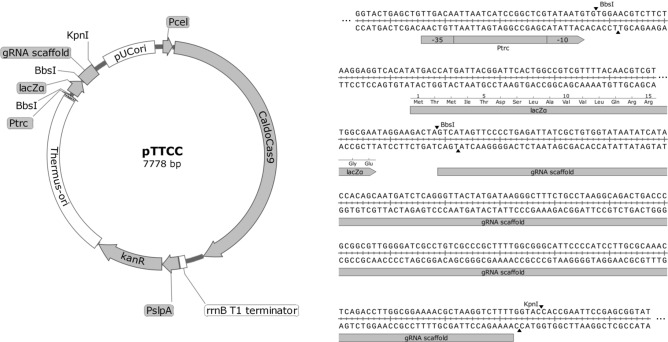
Thermophilic organisms are extensively studied in industrial biotechnology, for exploration of the limits of life, and in other contexts. Their optimal growth at high temperatures presents a challenge for the development of genetic tools for their genome editing, since genetic markers and selection substrates are often thermolabile. We sought to develop a thermostable CRISPR-Cas9 based system for genome editing of thermophiles. We identified CaldoCas9 and designed an associated guide RNA and showed that the pair have targetable nuclease activity in vitro at temperatures up to 65 °C. We performed a detailed characterization of the protospacer adjacent motif specificity of CaldoCas9, which revealed a preference for 5'-NNNNGNMA. We constructed a plasmid vector for the delivery and use of the CaldoCas9 based genome editing system in the extreme thermophile Thermus thermophilus at 65 °C. Using the vector, we generated gene knock-out mutants of T. thermophilus, targeting genes on the bacterial chromosome and megaplasmid. Mutants were obtained at a frequency of about 90%. We demonstrated that the vector can be cured from mutants for a subsequent round of genome editing. CRISPR-Cas9 based genome editing has not been reported previously in the extreme thermophile T. thermophilus. These results may facilitate development of genome editing tools for other extreme thermophiles and to that end, the vector has been made available via the plasmid repository Addgene.
嗜热生物在工业生物技术中得到了广泛的研究,用于探索生命的极限,以及在其他背景下。它们在高温下的最佳生长对开发用于基因组编辑的遗传工具提出了挑战,因为遗传标记和选择底物通常不耐热。我们试图开发一种基于 CRISPR-Cas9 的耐热系统,用于对嗜热菌进行基因组编辑。我们鉴定了 CaldoCas9,并设计了一个相关的向导 RNA,并表明该对在高达 65°C 的体外具有靶向核酸酶活性。我们对 CaldoCas9 的间隔相邻基序特异性进行了详细表征,结果表明它偏爱 5'-NNNNGNMA。我们构建了一个质粒载体,用于在极端嗜热菌 Thermus thermophilus 中在 65°C 下使用 CaldoCas9 进行基因组编辑系统的传递和使用。使用该载体,我们针对细菌染色体和大质粒上的基因,生成了 T. thermophilus 的基因敲除突变体。突变体的获得频率约为 90%。我们证明该载体可以从突变体中消除,以便进行下一轮基因组编辑。在极端嗜热菌 T. thermophilus 中,以前没有报道过基于 CRISPR-Cas9 的基因组编辑。这些结果可能有助于为其他极端嗜热菌开发基因组编辑工具,为此,该载体已通过质粒库 Addgene 提供。