Department of Communicable Diseases, World Health Organization Regional Office for South-East Asia, New Delhi, India.
Hyderabad, India.
Bull World Health Organ. 2021 Apr 1;99(4):304-311. doi: 10.2471/BLT.20.254003.
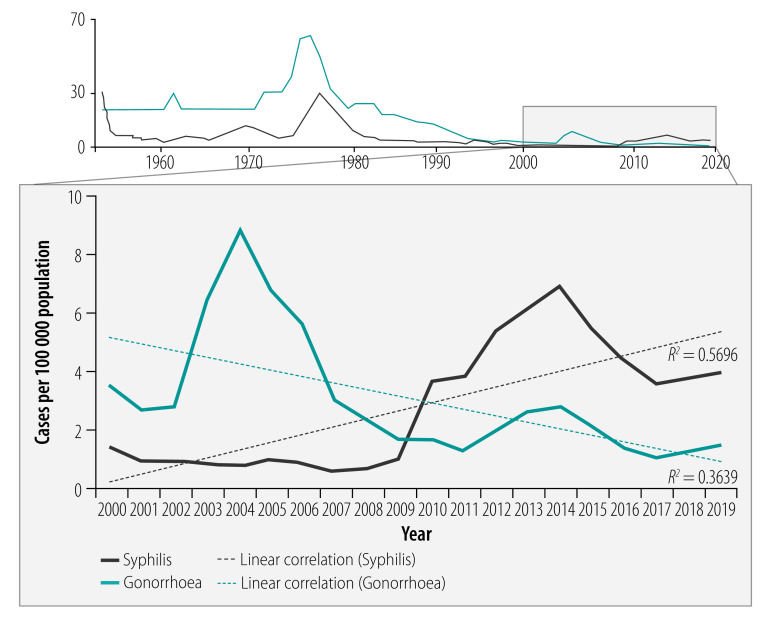
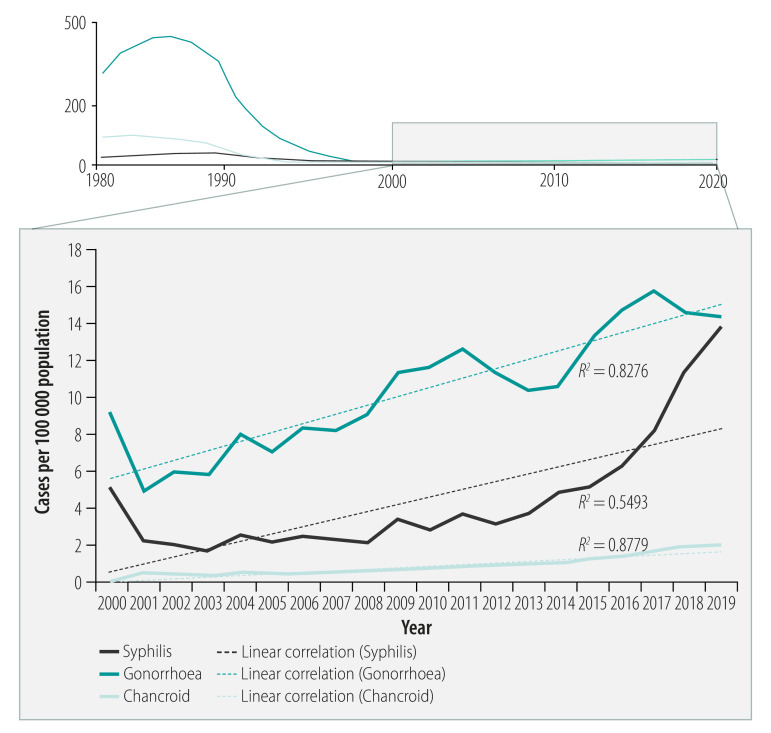
The World Health Organization (WHO) set targets for a 90% reduction in the incidence of syphilis and gonorrhoea between 2018 and 2030. We review trends in sexually transmitted infections in the WHO South-East Asia Region to assess the feasibility of reaching these targets. Myanmar, Sri Lanka and Thailand reported 90% or greater reductions in the incidence or prevalence of syphilis and/or gonorrhoea between 1975 and 2005. Evidence suggests that smaller, more recent reductions in trends in sexually transmitted infections in India have driven regional declines. In other countries, sexually transmitted infections remain high or are increasing or data are not reliable enough to measure change. Sri Lanka and Thailand have strong control programmes for sexually transmitted infections that ensure universal access to services for these infections and targeted interventions in key populations. India and Myanmar have implemented targeted control efforts on a large scale. Other countries of the region have prioritized control of human immunodeficiency virus, and limited resources are available for other sexually transmitted infections. At national and subnational levels, data show rapid declines in sexually transmitted infections when targeted promotion of condom use and sexually transmitted infection services are scaled up to reach large numbers of sex workers. In contrast, recent outbreaks of sexually transmitted infections in underserved populations of men who have sex with men have been linked to rising trends in sexually transmitted infections in the region. A renewed and focused response to sexually transmitted infections in the region is needed to meet global elimination targets.
世界卫生组织(WHO)设定了目标,即在 2018 年至 2030 年期间,将梅毒和淋病的发病率降低 90%。我们审查了世卫组织东南亚区域内性传播感染的趋势,以评估实现这些目标的可行性。1975 年至 2005 年期间,缅甸、斯里兰卡和泰国报告梅毒和/或淋病的发病率或流行率降低了 90%或更多。有证据表明,印度性传播感染趋势的近期较小幅度下降推动了区域下降。在其他国家,性传播感染仍然很高,或者正在增加,或者数据不够可靠,无法衡量变化。斯里兰卡和泰国拥有强大的性传播感染控制方案,确保为这些感染提供普遍获得服务,并在重点人群中进行针对性干预。印度和缅甸已经大规模实施了有针对性的控制工作。该区域其他国家将重点放在控制人类免疫缺陷病毒上,用于其他性传播感染的资源有限。在国家和次国家一级,数据显示,当有针对性地推广安全套使用和性传播感染服务以覆盖大量性工作者时,性传播感染会迅速减少。相比之下,最近在性传播感染服务不足的男男性行为者人群中爆发的性传播感染与该区域性传播感染上升趋势有关。需要对该区域的性传播感染重新采取有针对性的应对措施,以实现全球消除目标。