Cai Guoshuai, Xia Zhu, Charvet Leigh, Xiao Feifei, Datta Abhishek, Androulakis X Michelle
Department of Environmental Health Sciences, Arnold School of Public Health, University of South Carolina, Columbia, SC, 29208, USA.
Department of Epidemiology, School of Public Health, Nanjing Medical University, Nanjing, 211166, People's Republic of China.
J Pain Res. 2021 Apr 27;14:1171-1183. doi: 10.2147/JPR.S295704. eCollection 2021.
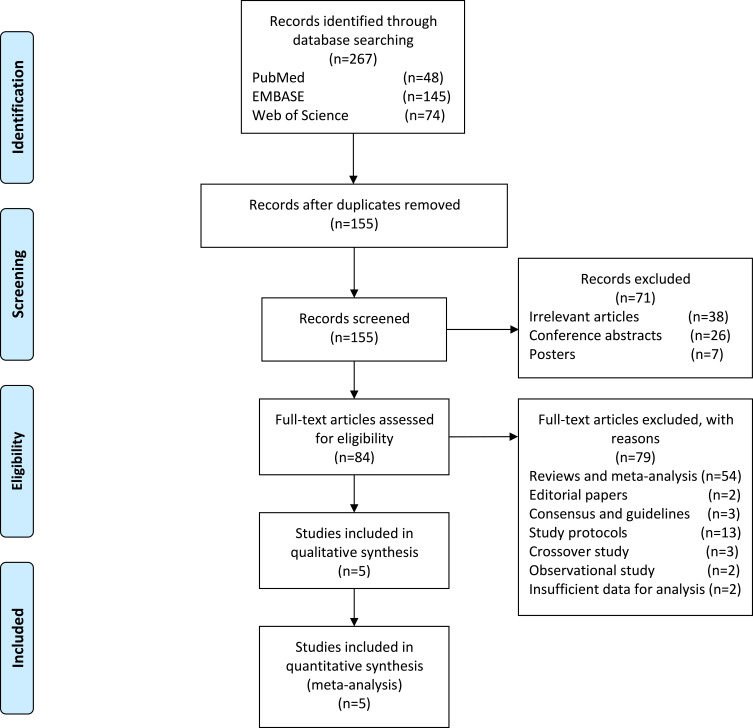
Transcranial direct current stimulation (tDCS) may have therapeutic potential in the management of migraine. However, studies to date have yielded conflicting results. We reviewed studies using repeated tDCS for longer than 4 weeks in migraine treatment, and performed meta-analysis on the efficacy of tDCS in migraine.
In this meta-analysis, we included the common outcome measurements reported across randomized controlled trials (RCTs). Subgroup analysis was performed at different post-treatment endpoints, and with different stimulation intensities and polarities.
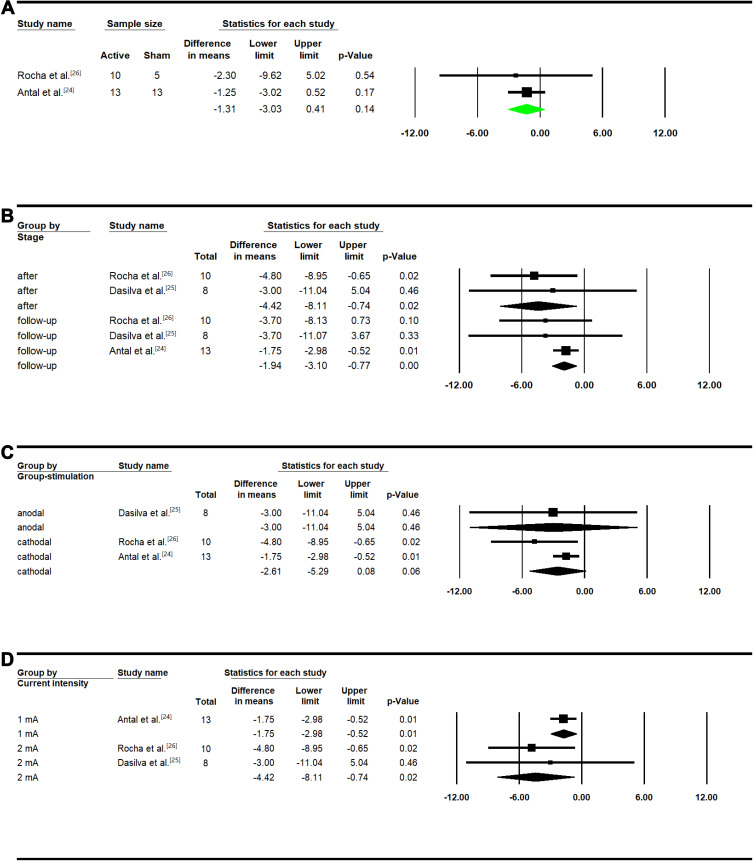
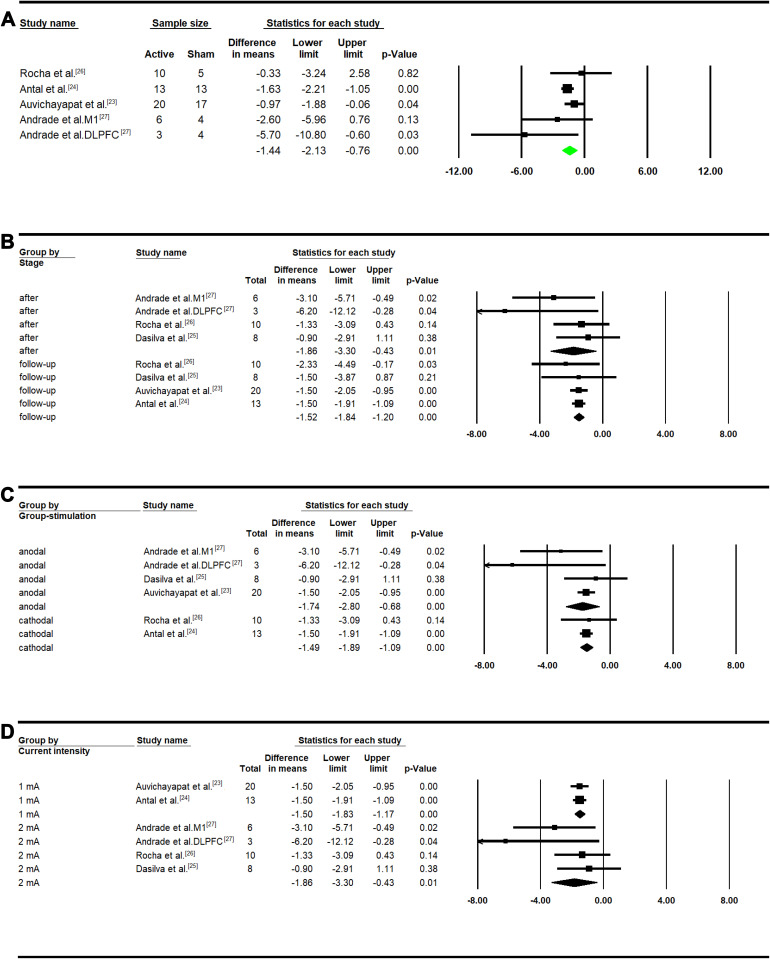
Five RCTs were included in the quantitative meta-analysis with a total of 104 migraine patients. We found a significant reduction of migraine pain intensity (MD: -1.44; CI: [-2.13, -0.76]) in active vs sham tDCS treated patients. Within active treatment groups, pain intensity and duration were significantly improved from baseline after tDCS treatment (intensity MD: -1.86; CI: [-3.30, -0.43]; duration MD: -4.42; CI: [-8.11, -0.74]) and during a follow-up period (intensity MD: -1.52; CI: [-1.84, -1.20]; duration MD: -1.94; CI: [-3.10, -0.77]). There was a significant reduction of pain intensity by both anodal (MD: -1.74; CI: [-2.80, -0.68]) and cathodal (MD: -1.49; CI: [-1.89, -1.09]) stimulation conditions.
tDCS treatment repeated over days for a period of 4 weeks or more is effective in reducing migraine pain intensity and duration of migraine episode. The benefit of tDCS can persist for at least 4 weeks after the completion of last tDCS session. Both anodal and cathodal stimulation are effective for reducing migraine pain intensity.
经颅直流电刺激(tDCS)在偏头痛治疗中可能具有治疗潜力。然而,迄今为止的研究结果相互矛盾。我们回顾了使用重复tDCS超过4周治疗偏头痛的研究,并对tDCS治疗偏头痛的疗效进行了荟萃分析。
在这项荟萃分析中,我们纳入了随机对照试验(RCT)中报告的常见结局指标。在不同的治疗后终点、不同的刺激强度和极性下进行亚组分析。
定量荟萃分析纳入了5项RCT,共104例偏头痛患者。我们发现,与假tDCS治疗的患者相比,接受活性tDCS治疗的患者偏头痛疼痛强度显著降低(MD:-1.44;CI:[-2.13,-0.76])。在活性治疗组中,tDCS治疗后(强度MD:-1.86;CI:[-3.30,-0.43];持续时间MD:-4.42;CI:[-8.11,-0.74])以及随访期间(强度MD:-1.52;CI:[-1.84,-1.20];持续时间MD:-1.94;CI:[-3.10,-0.77]),疼痛强度和持续时间均较基线显著改善。阳极(MD:-1.74;CI:[-2.80,-0.68])和阴极(MD:-1.49;CI:[-1.89,-1.09])刺激条件下疼痛强度均显著降低。
连续数天重复进行4周或更长时间的tDCS治疗可有效降低偏头痛疼痛强度和偏头痛发作持续时间。最后一次tDCS治疗结束后,tDCS的益处至少可持续4周。阳极和阴极刺激均能有效降低偏头痛疼痛强度。