Alqahtani Ali Robaian, Gufran Khalid, Silva Fred, Rocha Mateus Garcia, Chang Jia
Department of Conservative Dental Sciences, College of Dentistry, Prince Sattam Bin Abdulaziz University, Alkharj, Saudi Arabia.
Department of Preventive Dental Sciences, College of Dentistry, Prince Sattam Bin Abdulaziz University, Alkharj, Saudi Arabia.
Case Rep Dent. 2021 Apr 10;2021:5592934. doi: 10.1155/2021/5592934. eCollection 2021.
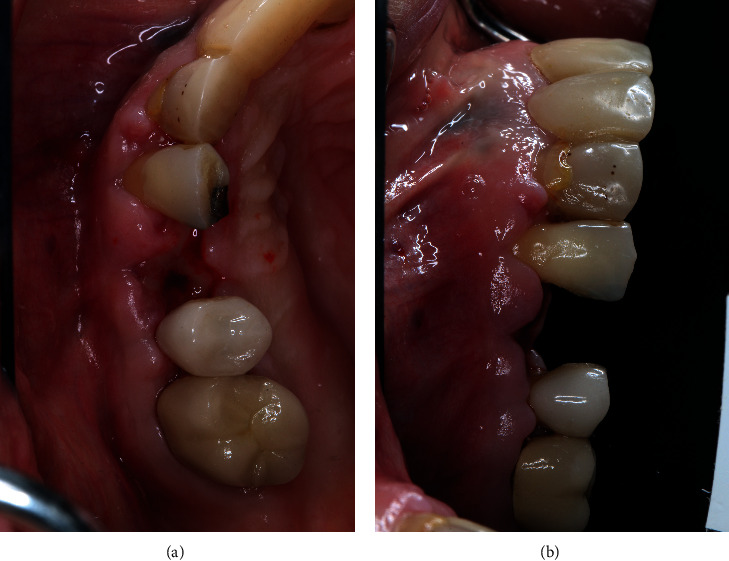
Titanium hypersensitivity is rare, but it may exist among patients who need dental implant treatment. It could contribute to mild or severe peri-implant tissue hypersensitivity reactions and affect patients' oral and general health according to some clinical reports. In extreme cases, it may lead to implant failure or extraction. In this case report, a 64-year-old Caucasian female patient received a titanium implant placement on #5. Right after the implant placement, she reported the symptoms of pain, eczema, and slight extraoral swelling, along with significant burning sensation occurring intra- and extraorally. The symptoms were not released after the systemic intervention of antibiotics for six days. On retrieving her medical history, the patient reported a previous allergic reaction to jewelry-like earrings in her childhood. The diagnosis of titanium hypersensitivity was made based on the rapid onset of symptoms and her metal allergy history. Therefore, the dental implant was removed after diagnosis, and a bone allograft was used to preserve the alveolar bone volume. Immediately after implant extraction, the swelling and burning sensation were receded. A complete recovery was achieved three weeks later. The dimension of the alveolar ridge bone was found well maintained in 10 weeks follow-up visit. . Rapid onset of peri-implant gingival swelling may indicate a hypersensitivity to titanium implant in the clinic. For patients with a history of allergy to jewelry, the hypersensitivity tests to titanium alloy such as patch test or lymphocyte transformation test should be recommended as part of the dental implant treatment plan.
钛过敏很少见,但在需要种植牙治疗的患者中可能存在。根据一些临床报告,它可能导致轻度或重度种植体周围组织过敏反应,并影响患者的口腔和全身健康。在极端情况下,可能导致种植失败或拔除。在本病例报告中,一名64岁的白种女性患者在5号牙位植入了一枚钛种植体。植入后不久,她就报告了疼痛、湿疹、口外轻微肿胀的症状,以及口内和口外均出现的明显烧灼感。在进行了六天的全身性抗生素干预后,症状并未缓解。在询问她的病史时,患者报告童年时有过对类似首饰的耳环的过敏反应。基于症状的快速出现和她的金属过敏史,诊断为钛过敏。因此,诊断后拔除了种植牙,并使用同种异体骨移植来保留牙槽骨体积。拔除种植体后,肿胀和烧灼感立即消退。三周后完全康复。在10周的随访中发现牙槽嵴骨尺寸保持良好。临床上,种植体周围牙龈肿胀的快速出现可能表明对钛种植体过敏。对于有首饰过敏史的患者,应建议进行钛合金过敏试验,如斑贴试验或淋巴细胞转化试验,作为种植牙治疗计划的一部分。