1466Johns Hopkins University School of Nursing, Baltimore, MD, USA.
25802Johns Hopkins University Bloomberg School of Public Health, Baltimore, MD, USA.
Trauma Violence Abuse. 2022 Dec;23(5):1728-1751. doi: 10.1177/15248380211013136. Epub 2021 May 6.
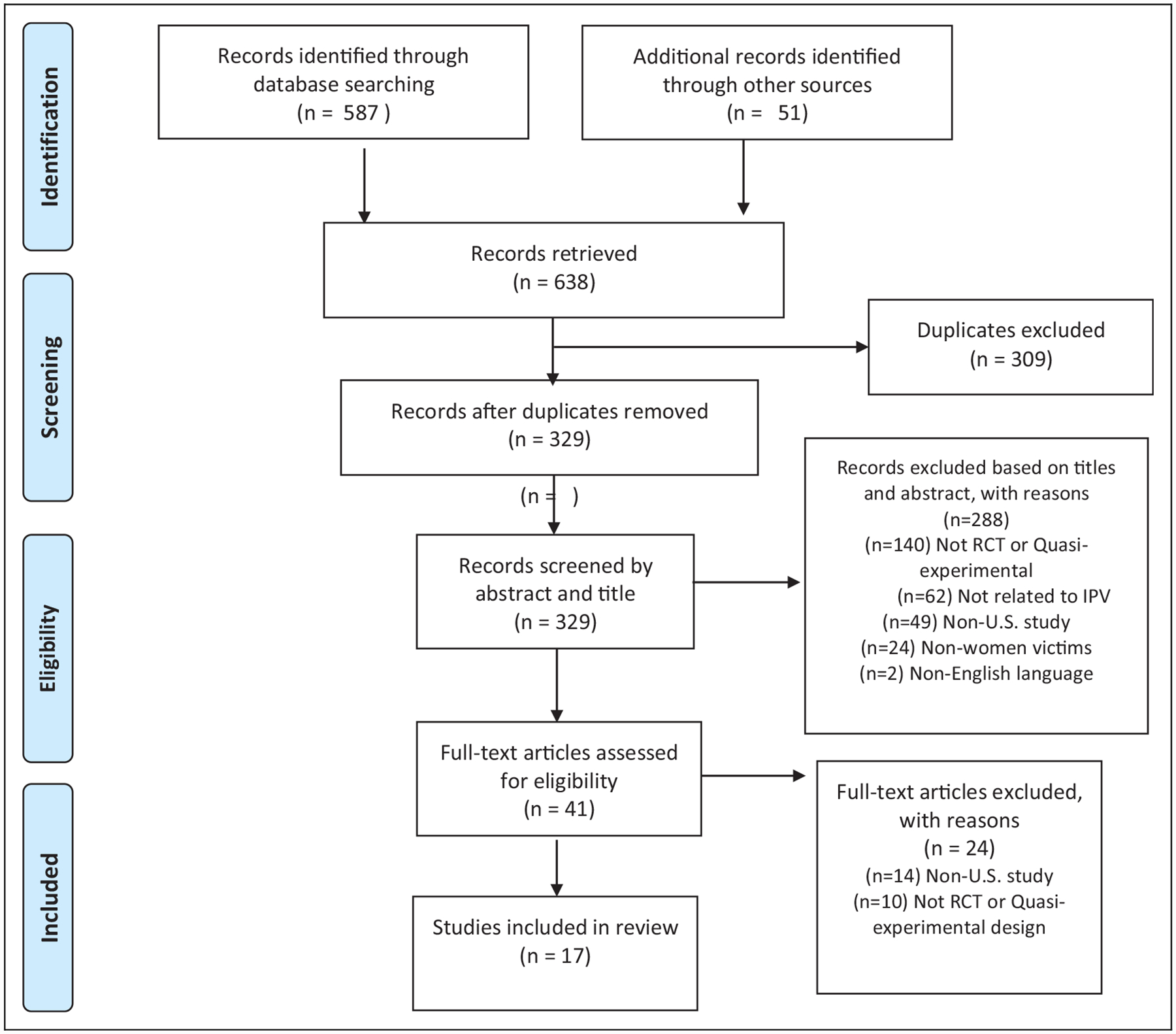
Intimate partner violence (IPV) disproportionately affects marginalized women in the United States. This calls for effective safety planning strategies to reduce the risk for future revictimization and address safety needs of survivors from marginalized groups. This review identified types of interventions that incorporated safety planning and were successful in reducing the risk for future revictimization among IPV survivors from diverse groups, examined elements of safety planning in effective interventions, and described challenges or limitations in safety planning intervention research with marginalized women. A systematic search of five databases was performed. The search resulted in inclusion of 17 studies for synthesis. The included studies were quantitative, U.S.-based, evaluated interventions with a safety planning component, and had an outcome of change in IPV. Effective interventions that incorporated safety planning were empowerment and advocacy focused. Elements included were comprehensive assessments of survivors' unique needs and situations, educating them about IPV, helping them identify threats to safety, developing a concrete safety plan, facilitating linkage with resources, providing advocacy services as needed, and conducting periodic safety check-ins. For survivors with mental and behavioral health issues, effective interventions included psychotherapeutic approaches along with safety planning to address survivors' co-occurring health care needs. Although most studies reported positive findings, there were limitations related to designs, methods, adequate inclusion, and representation of marginalized women and cultural considerations. This calls for additional research using rigorous and culturally informed approaches to establish an evidence base for effective interventions that specifically address the safety planning needs of marginalized survivors of IPV.
亲密伴侣暴力(IPV)不成比例地影响美国的边缘化女性。这需要有效的安全规划策略,以降低未来再次受害的风险,并满足来自边缘化群体的幸存者的安全需求。本综述确定了纳入安全规划并成功降低来自不同群体的 IPV 幸存者未来再次受害风险的干预类型,研究了有效干预措施中安全规划的要素,并描述了针对边缘化女性的安全规划干预研究中的挑战或限制。对五个数据库进行了系统搜索。该搜索纳入了 17 项研究进行综合分析。纳入的研究为定量研究,基于美国,评估了具有安全规划组成部分的干预措施,并且干预措施的结果是 IPV 发生变化。纳入安全规划的有效干预措施以赋权和倡导为重点。包括的要素包括对幸存者独特需求和情况的全面评估、向他们传授有关 IPV 的知识、帮助他们识别安全威胁、制定具体的安全计划、促进与资源的联系、按需提供倡导服务以及定期进行安全检查。对于有精神和行为健康问题的幸存者,有效的干预措施包括心理治疗方法以及安全规划,以解决幸存者同时存在的医疗保健需求。尽管大多数研究报告了积极的结果,但在设计、方法、充分纳入以及代表性和文化考虑方面存在局限性。这需要使用严格和具有文化意识的方法进行更多的研究,为专门满足 IPV 边缘化幸存者安全规划需求的有效干预措施建立证据基础。