Department of Nutrition Science, Purdue University, West Lafayette, IN, USA.
Division of Endocrinology, Department of Medicine, Indiana University School of Medicine, Indianapolis, IN, USA.
Br J Nutr. 2022 Mar 28;127(6):850-861. doi: 10.1017/S0007114521001495. Epub 2021 May 6.
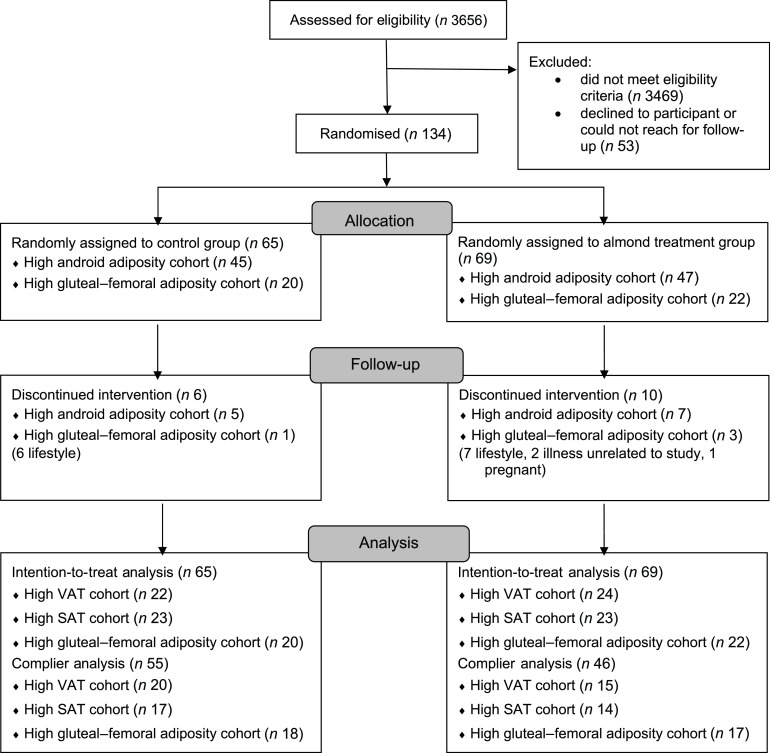
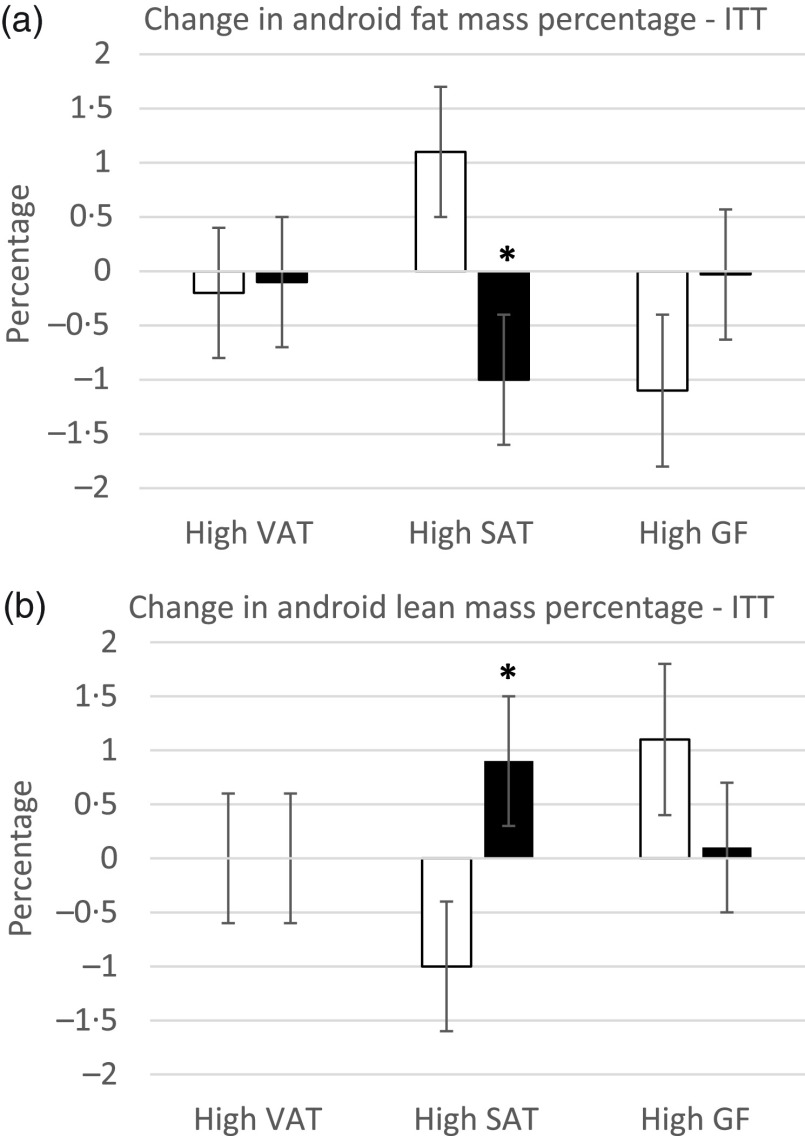
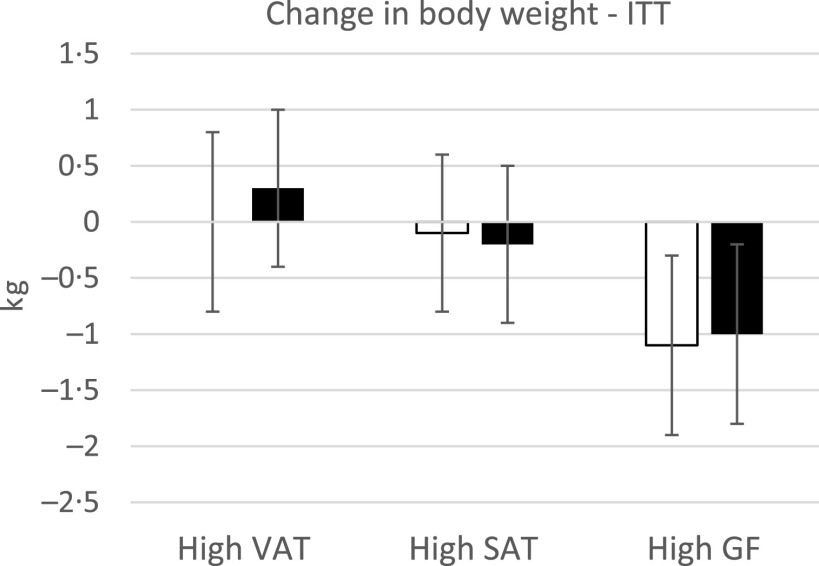
The purpose of this study was to determine if the mixed evidence of almond consumption on HbA1c stems from testing people with different body fat distributions (BFD) associated with different risks of glucose intolerance. A 6-month randomised controlled trial in 134 adults was conducted. Participants were randomly assigned to the almond (A) or control (C) group based on their BFD. Those in the almond group consumed 1·5 oz of almonds with their breakfast and as their afternoon snack daily. Those in the control group continued their habitual breakfast and afternoon snack routines. Body weight and composition were measured and blood samples were collected for determination of HbA1c, glycaemia and lipaemia at 0 and 6 months. Appetite ratings, energy intake and diet quality were collected at 0, 2, 4 and 6 months. Participants consuming almonds ingested 816 (sem 364) kJ/d more than participants in the control group (P = 0·03), but this did not result in any differences in body weight (A: -0·3 (sem 0·4), C: -0·4 (sem 0·4); P > 0·3). Participants in the almond, high android subcutaneous adipose tissue (SAT) group had a greater reduction in android fat mass percentage (A: -1·0 (sem 0·6), C: 1·1 (sem 0·6); P = 0·04), preserved android lean mass percentage (A: 0·9 (sem 0·6), C: -1 (sem 0·6); P = 0·04) and tended to decrease android visceral adipose tissue mass (A: -13 (sem 53) g, C: 127 (sem 53) g; P = 0·08) compared with those in the control, high SAT group. There were no differences in HbA1c between groups (A: 5·4 (sem 0·04), C: 5·5 (sem 0·04); P > 0·05). Thus, BFD may not explain the mixed evidence on almond consumption and HbA1c. Long-term almond consumption has limited ability to improve cardiometabolic health in those who are overweight and obese but otherwise healthy.
本研究旨在确定杏仁摄入对 HbA1c 的混合证据是否源于测试具有不同葡萄糖耐量风险相关不同体脂分布(BFD)的人群。对 134 名成年人进行了为期 6 个月的随机对照试验。参与者根据他们的 BFD 被随机分配到杏仁(A)或对照(C)组。杏仁组每天早餐和下午零食时食用 1.5 盎司杏仁。对照组继续进行他们的常规早餐和下午零食。在 0 个月和 6 个月时测量体重和身体成分,并采集血样以测定 HbA1c、血糖和血脂。在 0、2、4 和 6 个月时收集食欲评分、能量摄入和饮食质量。与对照组相比,食用杏仁的参与者每天多摄入 816(sem 364)kJ/d(P = 0.03),但这并未导致体重差异(A:-0.3(sem 0.4),C:-0.4(sem 0.4);P > 0.3)。杏仁组中高安卓皮下脂肪组织(SAT)的参与者安卓脂肪量百分比降低幅度更大(A:-1.0(sem 0.6),C:1.1(sem 0.6);P = 0.04),安卓瘦体重百分比保持不变(A:0.9(sem 0.6),C:-1(sem 0.6);P = 0.04),安卓内脏脂肪组织质量倾向于减少(A:-13(sem 53)g,C:127(sem 53)g;P = 0.08),而对照组中高 SAT 组则没有差异。两组之间的 HbA1c 没有差异(A:5.4(sem 0.04),C:5.5(sem 0.04);P > 0.05)。因此,BFD 可能无法解释杏仁摄入与 HbA1c 之间的混合证据。长期杏仁摄入对超重和肥胖但其他方面健康的人改善心血管代谢健康的能力有限。