Tobacco Medicine and Tobacco Cessation Centre, Center of Respiratory Medicine, China-Japan Friendship Hospital, Beijing, People's Republic of China.
Peking University China-Japan Friendship School of Clinical Medicine, Beijing, People's Republic of China.
Int J Chron Obstruct Pulmon Dis. 2021 Apr 30;16:1203-1214. doi: 10.2147/COPD.S301579. eCollection 2021.
Smoking cessation is a key intervention for all smokers with chronic obstructive pulmonary disease (COPD). Poor treatment adherence is a challenge in clinical practice that might contribute to the lower efficacy of medication (eg, oral drug). However, it is unclear what factors will influence adherence among smokers with COPD.
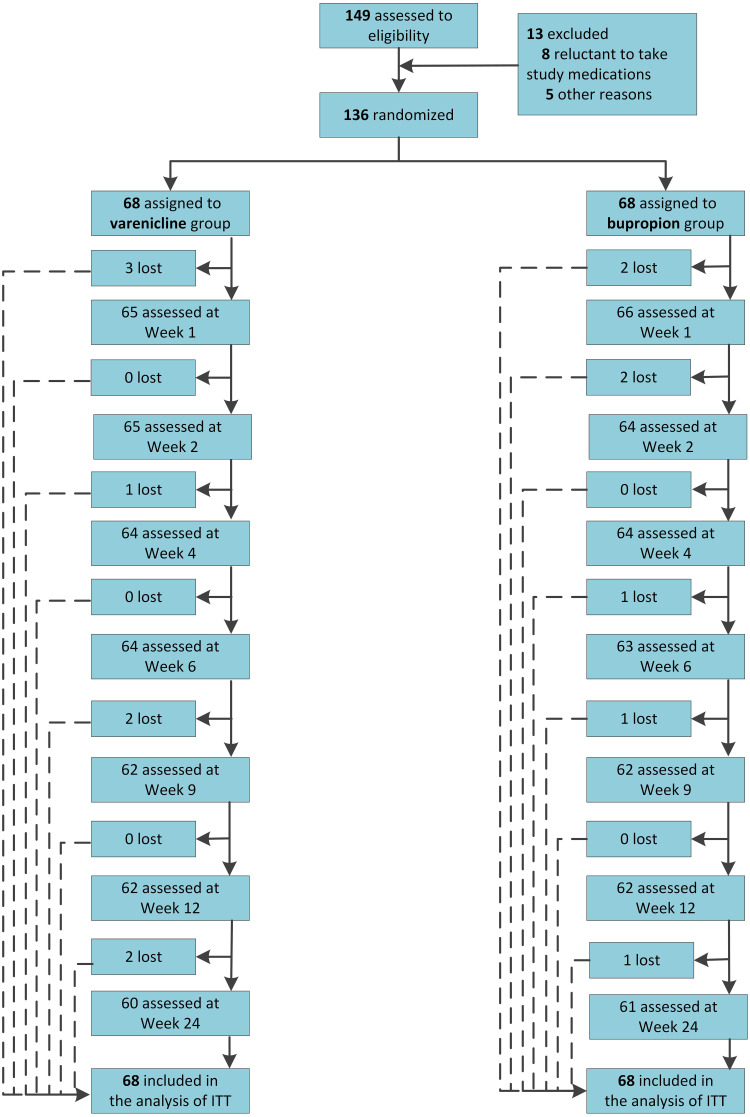
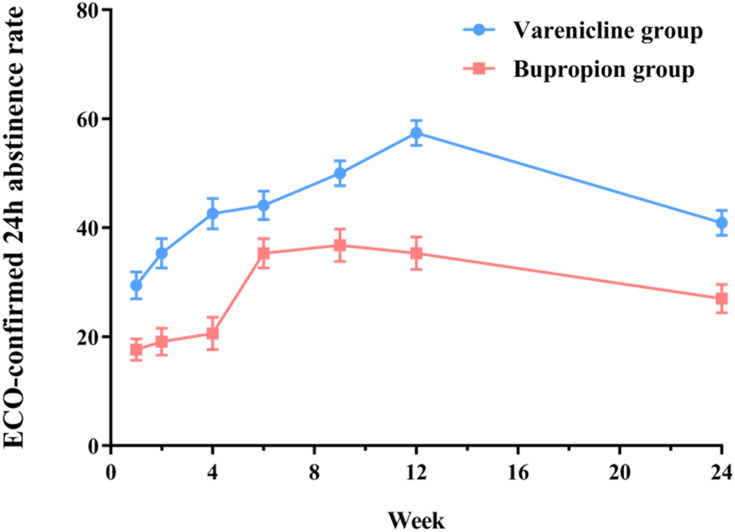
This study was based on an open-label randomized controlled trial (RCT) of varenicline and bupropion for smoking cessation among patients with COPD in China. The medication was given for 12 weeks, and visits and assessments were conducted at weeks 0, 1, 2, 4, 6, 9, 12, and 24. We assessed whether the adherence to smoking cessation treatment affects the smoking cessation efficacy and evaluated predictors of adherence.
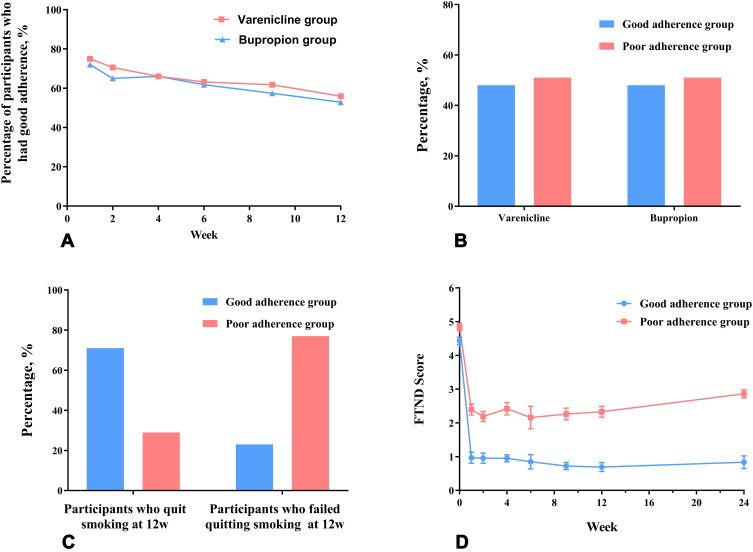
A total of 136 participants were recruited from February 2019 to June 2020, and analyzed using the intention-to-treat (ITT) method. In this study, 48.5% (66/136) of the total participants had good adherence to smoking cessation, and good adherence significantly improved the efficacy of smoking cessation (OR=9.60, 95% CI 4.02-22.96, P < 0.001). After adjusting for age, gender, nationality, education, and marital status, we found older age, higher education level, having more previous quitting attempts, stronger self-efficacy and preparation in quitting smoking, recognizing hazards of smoking, longer duration of COPD, and higher St. George's Respiratory Questionnaire (SGRQ) scores were relevant to good adherence (P < 0.05).
To our best knowledge, this is the first study to evaluate adherence to smoking cessation treatment among patients with COPD in China. Our study found that good adherence to smoking cessation treatment significantly improved the smoking cessation efficacy, and predictors of adherence were evaluated. We call on the medical community to pay attention to the adherence to smoking cessation among patients with COPD.
戒烟是所有慢性阻塞性肺疾病(COPD)患者的关键干预措施。在临床实践中,治疗依从性差是一个挑战,这可能会降低药物(例如口服药物)的疗效。然而,目前尚不清楚哪些因素会影响 COPD 患者的依从性。
本研究基于一项在中国 COPD 患者中使用伐尼克兰和安非他酮戒烟的开放性随机对照试验(RCT)。药物治疗持续 12 周,在第 0、1、2、4、6、9、12 和 24 周进行访视和评估。我们评估了戒烟治疗的依从性是否会影响戒烟效果,并评估了依从性的预测因素。
本研究共纳入了 2019 年 2 月至 2020 年 6 月期间的 136 名参与者,采用意向治疗(ITT)方法进行分析。在本研究中,总参与者中有 48.5%(66/136)具有良好的戒烟依从性,良好的依从性显著提高了戒烟效果(OR=9.60,95%CI 4.02-22.96,P<0.001)。在校正了年龄、性别、国籍、教育程度和婚姻状况后,我们发现年龄较大、教育程度较高、有更多的戒烟尝试、戒烟自我效能感和准备度更高、认识到吸烟的危害、COPD 持续时间更长以及圣乔治呼吸问卷(SGRQ)评分更高与良好的依从性相关(P<0.05)。
据我们所知,这是第一项评估中国 COPD 患者戒烟治疗依从性的研究。我们的研究发现,良好的戒烟治疗依从性显著提高了戒烟效果,并评估了依从性的预测因素。我们呼吁医学界关注 COPD 患者的戒烟依从性。