Ding Chengsheng, Shan Zezhi, Li Mengcheng, Xia Yang, Jin Zhiming
Department of General Surgery, Shanghai Jiao Tong University Affiliated Sixth People's Hospital, Shanghai, People's Republic of China.
Department of Colorectal Surgery, Fudan University Shanghai Cancer Center, Shanghai, People's Republic of China.
Onco Targets Ther. 2021 Apr 29;14:2893-2909. doi: 10.2147/OTT.S300095. eCollection 2021.
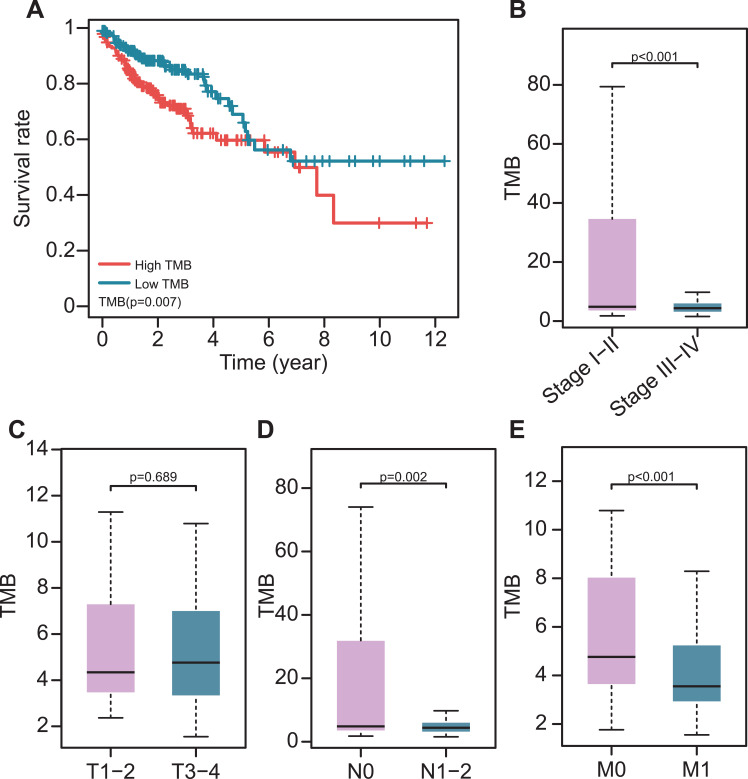
Tumor mutation burden (TMB) is emerging as a new biomarker to monitor the response of cancer patients to immunotherapy. Long non-coding RNAs (lncRNAs) are critical in regulating gene expression and play a significant role in cancer-associated immune responses. However, the association between lncRNA expression patterns and TMB levels and survival outcomes remains unknown in colon cancer.
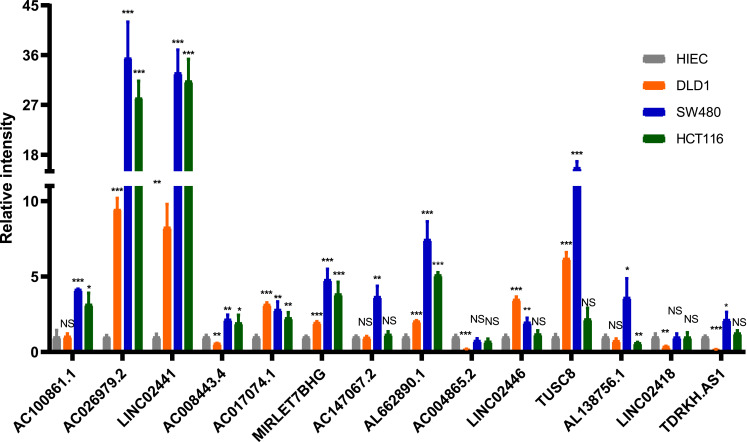
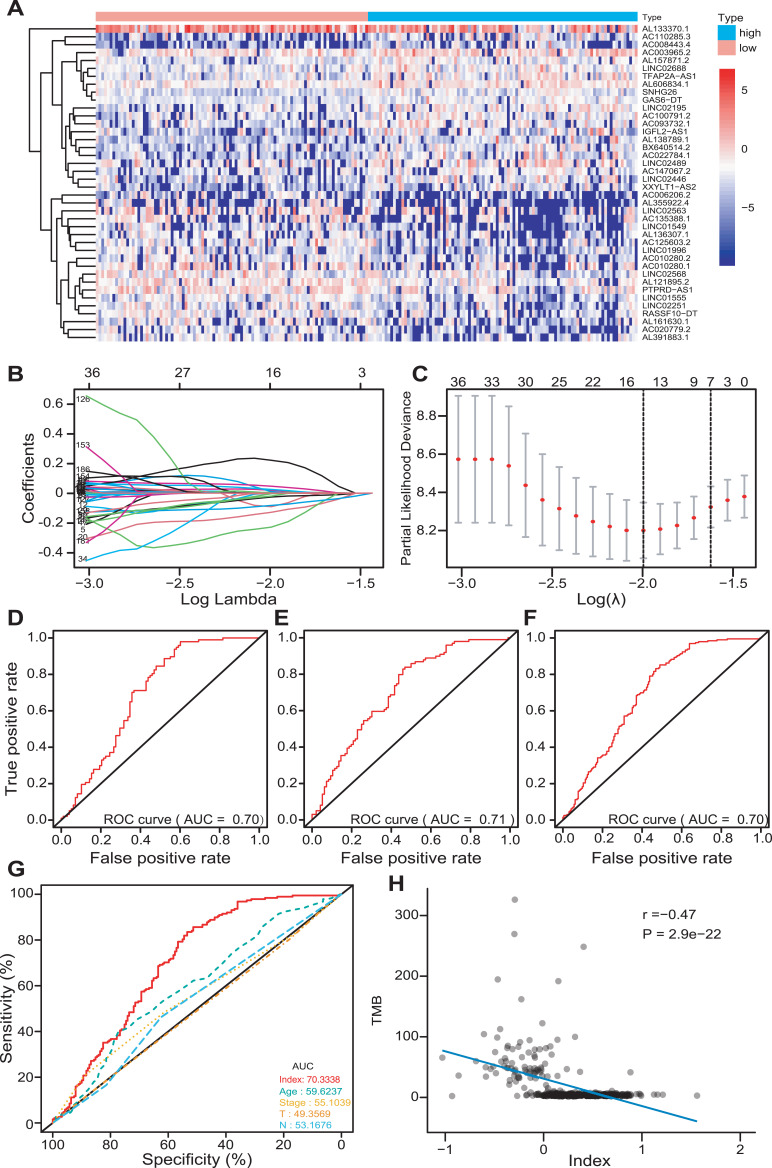
In colon cancer patients from The Cancer Genome Atlas Program (TCGA), a multi-lncRNAs based classifier for predicting TMB levels was established using the least absolute shrinkage and selection operator (LASSO) method. The association between classifier index and immune-related characteristics of patients was also investigated. Quantitative polymerase chain reaction (qPCR) was used to verify the expression levels of these lncRNAs in normal and CRC cell lines.
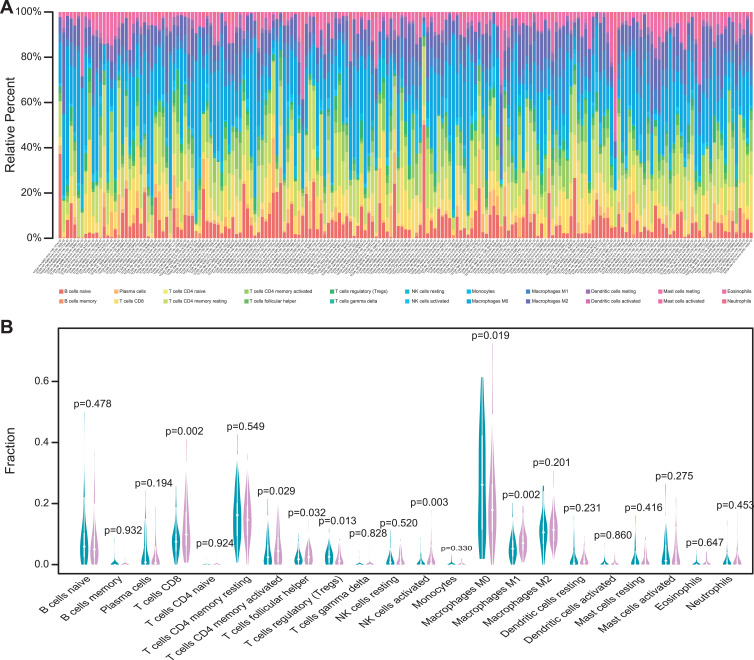
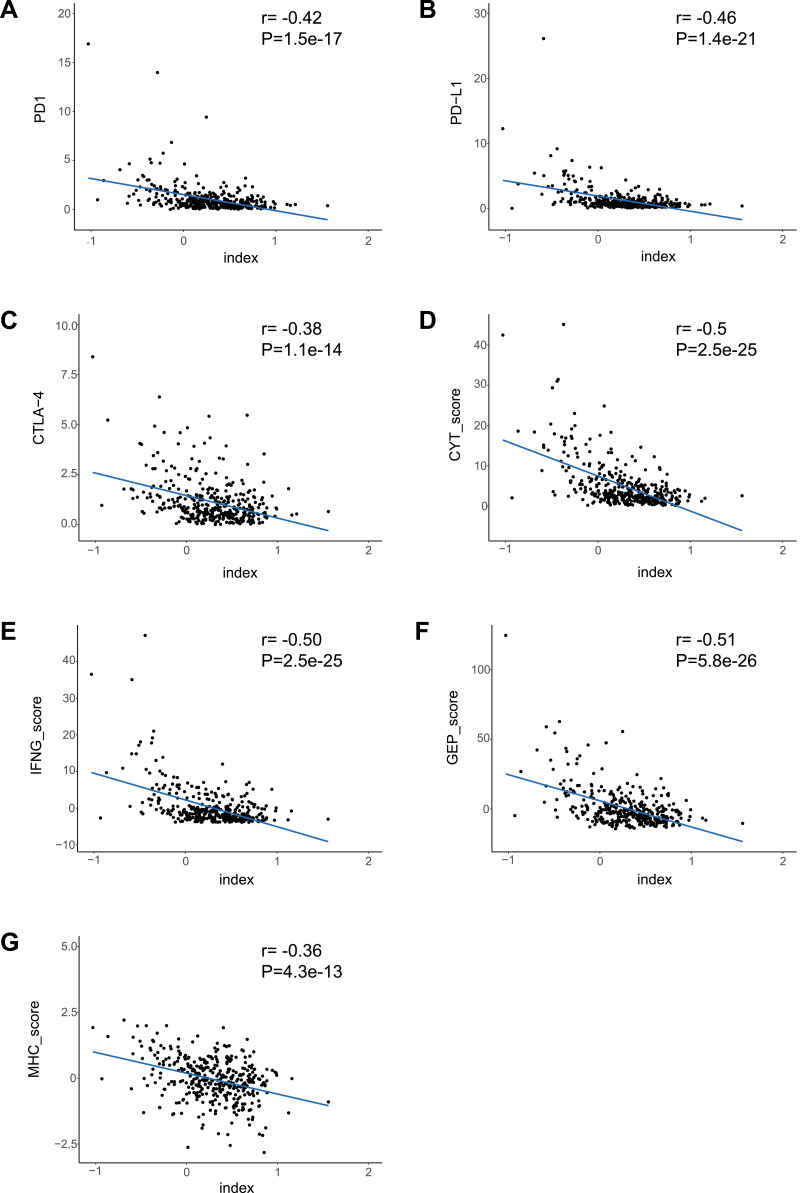
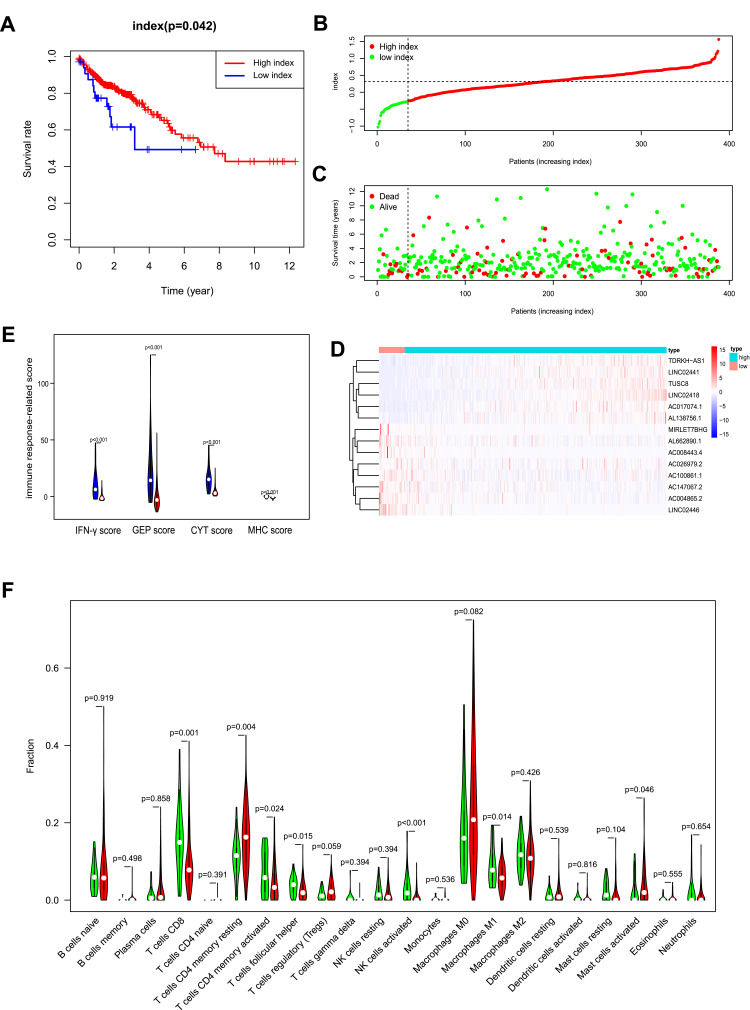
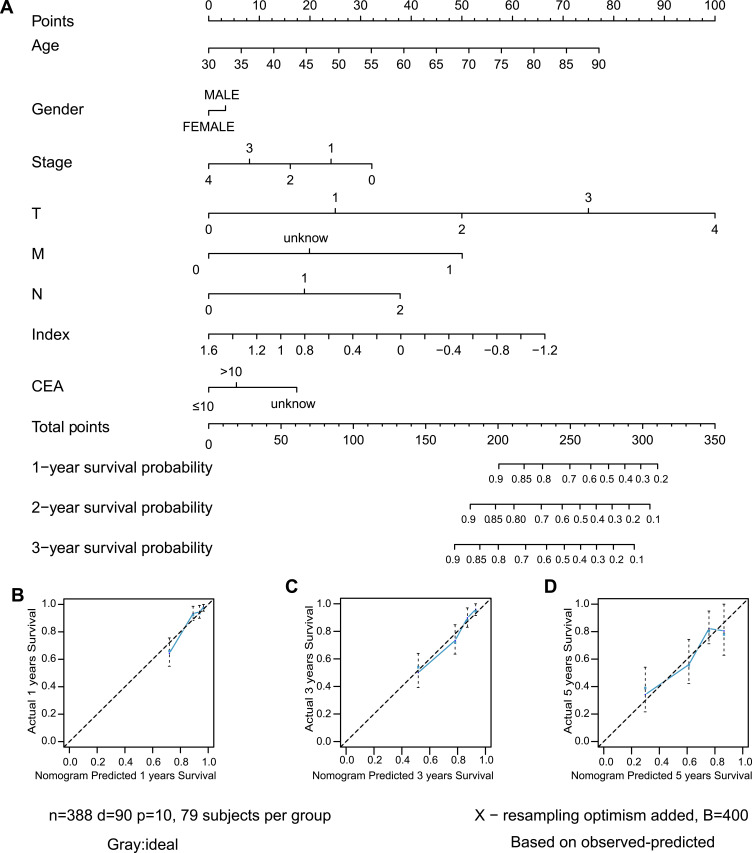
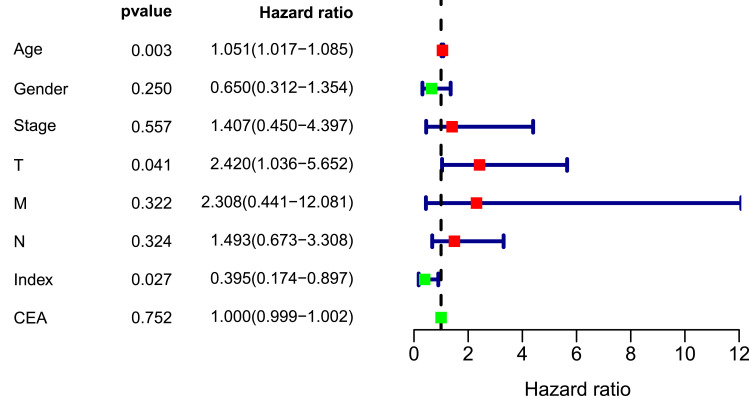
The multi-lncRNAs based classifier had ability to predict TMB level of patients with accuracy (AUC= 0.70), and the general applicability of this classifier was proved in the validation set (AUC= 0.71) and the pooled set (AUC= 0.70). The classifier index was related to three immune checkpoints (PD1, PD-L1, and CTLA-4), the infiltration level of immune cells, and immune response-related score (IFN-γ score, gene expression profiles (GEP) score, cytolytic activity (CYT) score and MHC score). A nomogram, which integrates classifier and some common clinical information, was able to predict the overall survival of colon cancer patients accurately.
LncRNA expression patterns are associated with TMB, which may serve as a classifier to predict the TMB in colon cancer patients. The nomogram could potentially evaluate survival outcomes and provide a reference to better manage colon cancer patients.
肿瘤突变负荷(TMB)正逐渐成为监测癌症患者免疫治疗反应的一种新生物标志物。长链非编码RNA(lncRNA)在调节基因表达中起关键作用,并且在癌症相关免疫反应中发挥重要作用。然而,lncRNA表达模式与TMB水平及生存结果之间的关联在结肠癌中仍不清楚。
在来自癌症基因组图谱计划(TCGA)的结肠癌患者中,使用最小绝对收缩和选择算子(LASSO)方法建立了一种基于多种lncRNA的预测TMB水平的分类器。还研究了分类器指标与患者免疫相关特征之间的关联。采用定量聚合酶链反应(qPCR)验证这些lncRNA在正常和结直肠癌细胞系中的表达水平。
基于多种lncRNA的分类器能够准确预测患者的TMB水平(AUC = 0.70),并且该分类器在验证集(AUC = 0.71)和合并集(AUC = 0.70)中被证明具有普遍适用性。分类器指标与三个免疫检查点(PD1、PD-L1和CTLA-4)、免疫细胞浸润水平以及免疫反应相关评分(IFN-γ评分、基因表达谱(GEP)评分、细胞溶解活性(CYT)评分和MHC评分)相关。一个整合了分类器和一些常见临床信息的列线图能够准确预测结肠癌患者的总生存期。
lncRNA表达模式与TMB相关,这可能作为一种分类器来预测结肠癌患者的TMB。该列线图有可能评估生存结果,并为更好地管理结肠癌患者提供参考。