Zhang Qing, Ji Hong, Shi Jian, Wang Longmei, Ding Lu, Jiang Yufei, Huang Xianjing, Qiu Pingping, Li Ping
Department of Reproductive Medicine, Women and Children's Hospital Affiliated to Xiamen University, Xiamen, Fujian, People's Republic of China.
Xiamen Key Laboratory of Reproduction and Genetics, Xiamen, Fujian, People's Republic of China.
Pharmgenomics Pers Med. 2021 Apr 30;14:521-531. doi: 10.2147/PGPM.S304747. eCollection 2021.
The ratio of mitochondrial DNA to genomic DNA (mtDNA/gDNA) in embryo culture medium as a predictor of embryonic development is a new method of noninvasive embryo screening. However, current tests based on this concept have proven inconsistent. The aim of this study was to define the predictive value of the ratio of mtDNA/gDNA for embryonic developmental potential.
We used digital PCR to measure mtDNA/gDNA ratios in day 3 culture media of 223 embryos from 56 patients. We compared the relationship between the predictive value of mtDNA/gDNA ratio and each of embryo fragmentation, embryo morphological grade, and blastocyst formation.
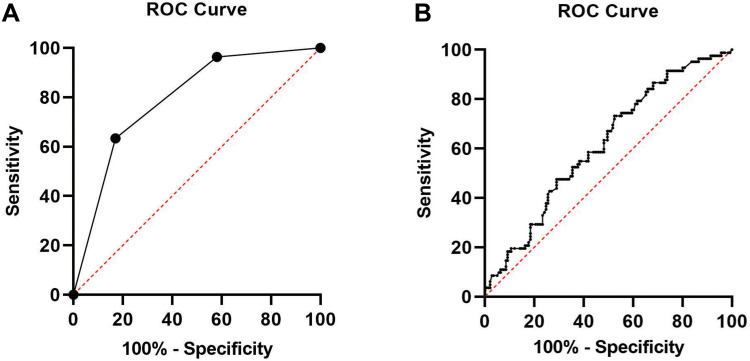
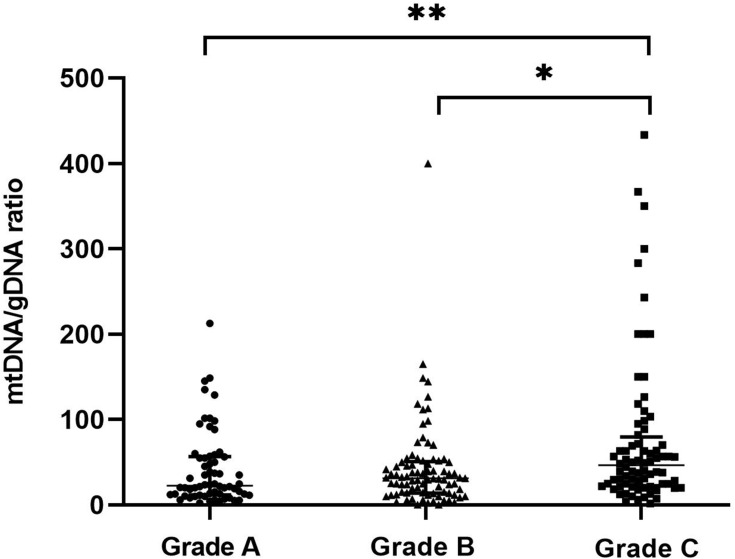
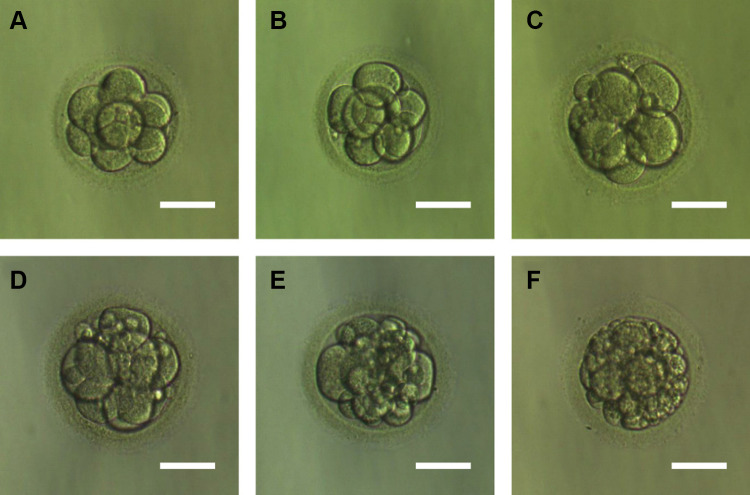
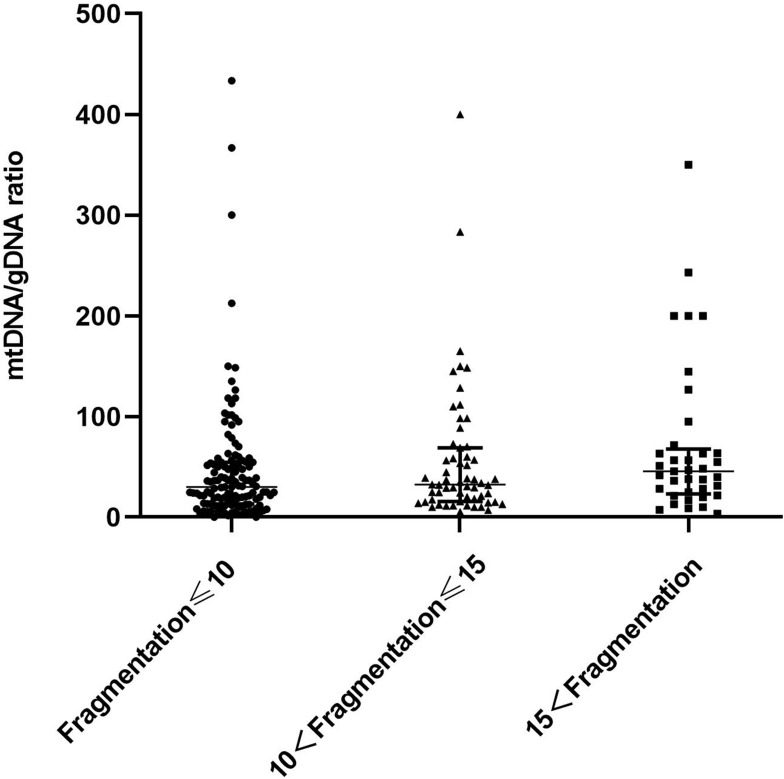
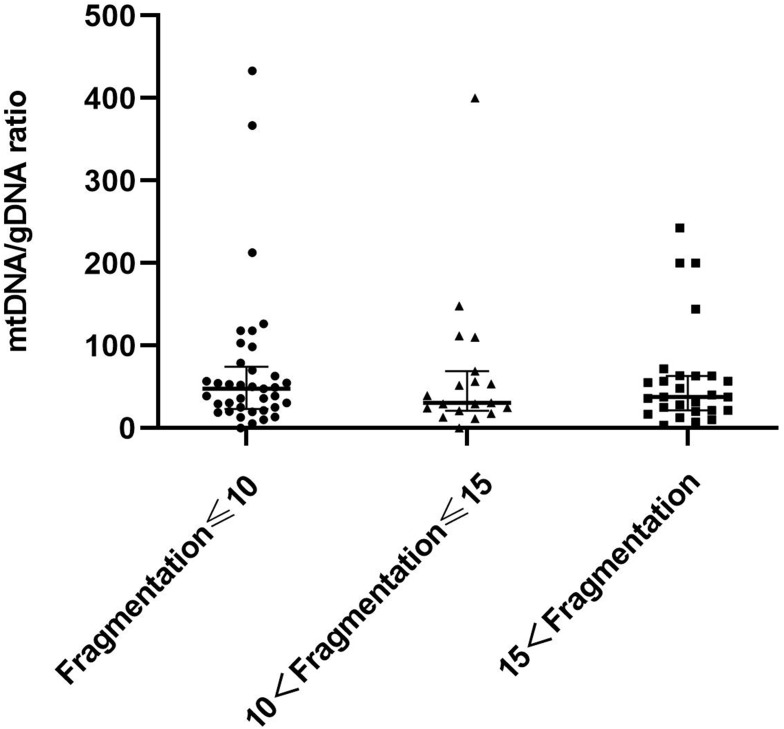
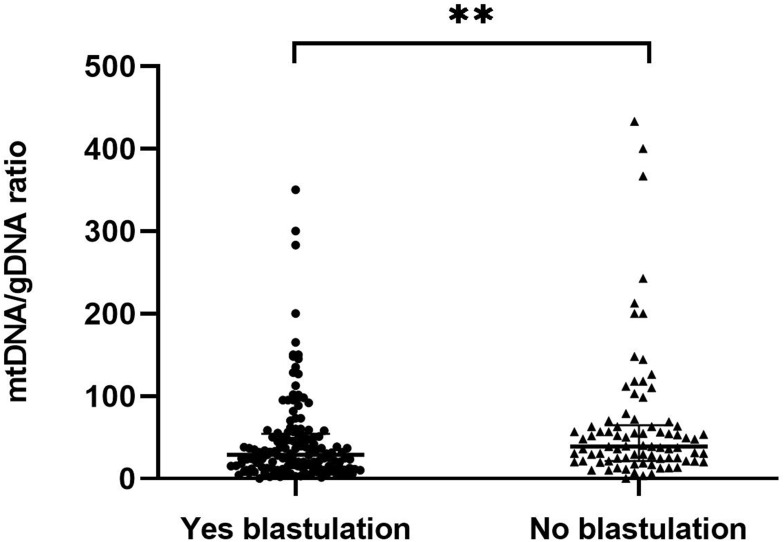
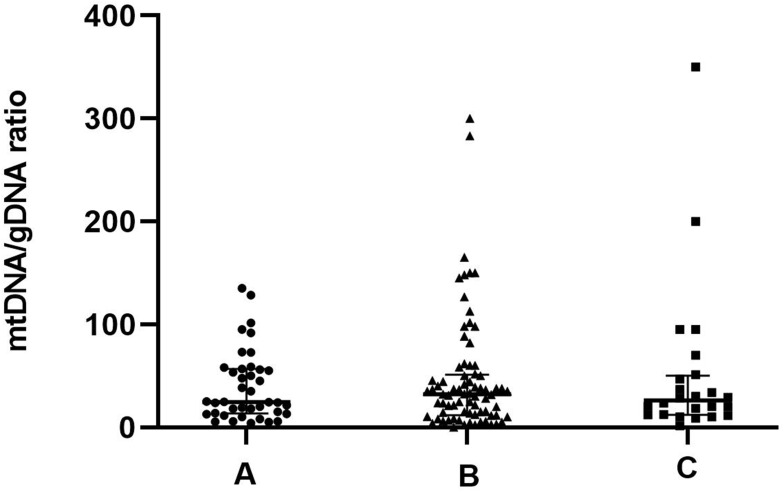
mtDNA/gDNA ratio decreased significantly with a decrease in embryo rating: 22.54 (44.66); 31.25 (36.97) and 46.33 (57.11); Grades A vs C, = 0.006; B vs C, = 0.015. mtDNA/gDNA ratio increased overall with an increase in embryo fragment content but did not differ significantly between high-, -medium, and poor-quality embryos. Interestingly, this trend differed from that of the unformed blastocysts. mtDNA/gDNA ratio of cleavage stage embryos forming blastocysts was lower (=0.005). Trends of mtDNA/gDNA ratio differed according to inner cell mass (ICM) and trophectoderm (TE) levels, but not significantly. mtDNA/gDNA ratio in day 3 culture medium was not significantly improved over morphological scores.
We hereby show the correlation of mtDNA/gDNA ratio in the culture medium of developing embryos. The correlation between the mtDNA/gDNA ratio and early embryonic development was controversial. Furthermore, an increase in mtDNA/gDNA ratio might indicate reduced development potential, but the difference remains insufficient for application as a clinical predictor.
胚胎培养基中线粒体DNA与基因组DNA的比率(mtDNA/gDNA)作为胚胎发育的预测指标,是一种非侵入性胚胎筛查的新方法。然而,目前基于这一概念的检测结果并不一致。本研究的目的是确定mtDNA/gDNA比率对胚胎发育潜能的预测价值。
我们使用数字PCR测量了来自56例患者的223个胚胎第3天培养基中的mtDNA/gDNA比率。我们比较了mtDNA/gDNA比率的预测价值与胚胎碎片、胚胎形态学等级和囊胚形成之间的关系。
随着胚胎评分的降低,mtDNA/gDNA比率显著下降:A级与C级相比,分别为22.54(44.66)、31.25(36.97)和46.33(57.11),P = 0.006;B级与C级相比,P = 0.015。随着胚胎碎片含量的增加,mtDNA/gDNA比率总体上有所增加,但在高、中、低质量胚胎之间没有显著差异。有趣的是,这种趋势与未形成囊胚的情况不同。形成囊胚的卵裂期胚胎的mtDNA/gDNA比率较低(P = 0.005)。mtDNA/gDNA比率的趋势根据内细胞团(ICM)和滋养外胚层(TE)水平而有所不同,但差异不显著。第3天培养基中的mtDNA/gDNA比率在形态学评分方面没有显著改善。
我们在此展示了发育中胚胎培养基中mtDNA/gDNA比率的相关性。mtDNA/gDNA比率与早期胚胎发育之间的相关性存在争议。此外,mtDNA/gDNA比率的增加可能表明发育潜能降低,但差异仍不足以作为临床预测指标应用。