Li Ka Shing Centre, Cancer Research UK Cambridge Institute, Robinson Way, Cambridge, CB2 0RE, UK.
Yusuf Hamied Department of Chemistry, University of Cambridge, Cambridge, CB2 1EW, UK.
Genome Biol. 2021 May 7;22(1):143. doi: 10.1186/s13059-021-02346-7.
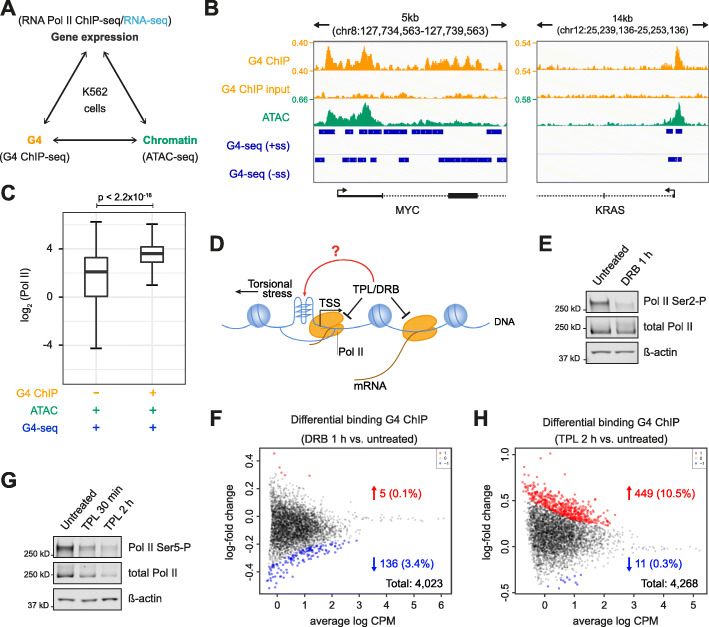
Four-stranded G-quadruplexes (G4s) are DNA secondary structures in the human genome that are primarily found in active promoters associated with elevated transcription. Here, we explore the relationship between the folding of promoter G4s, transcription and chromatin state.
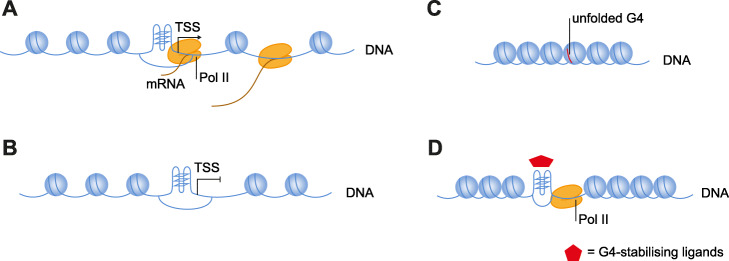
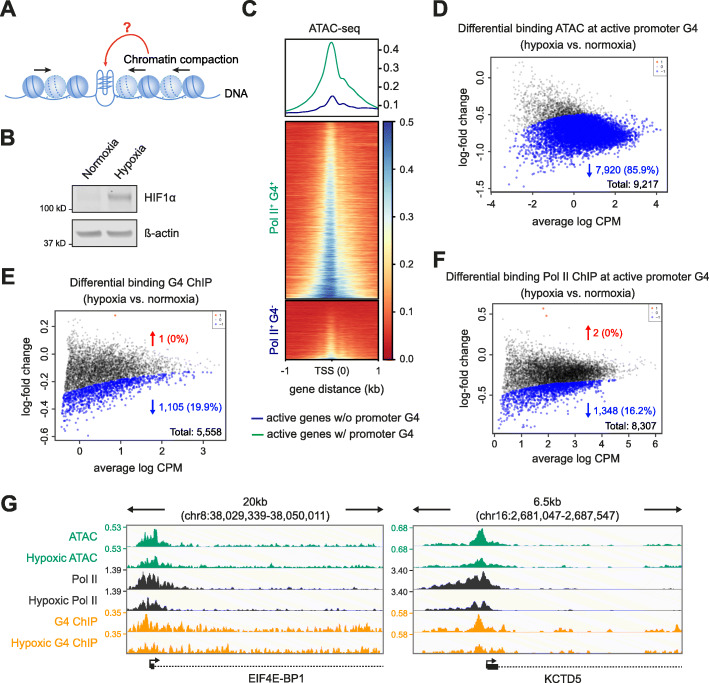
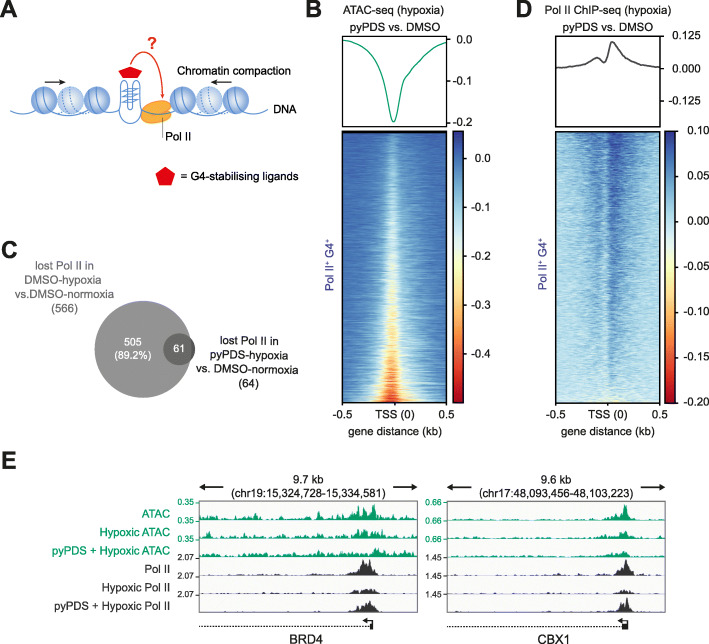
Transcriptional inhibition by DRB or by triptolide reveals that promoter G4 formation, as assessed by G4 ChIP-seq, does not depend on transcriptional activity. We then show that chromatin compaction can lead to loss of promoter G4s and is accompanied by a corresponding loss of RNA polymerase II (Pol II), thus establishing a link between G4 formation and chromatin accessibility. Furthermore, pre-treatment of cells with a G4-stabilising ligand mitigates the loss of Pol II at promoters induced by chromatin compaction.
Overall, our findings show that G4 folding is coupled to the establishment of accessible chromatin and does not require active transcription.
四链 G-四联体(G4s)是人类基因组中的 DNA 二级结构,主要存在于与转录升高相关的活跃启动子中。在这里,我们探索了启动子 G4s 的折叠、转录和染色质状态之间的关系。
通过 DRB 或雷公藤内酯醇的转录抑制作用表明,通过 G4 ChIP-seq 评估的启动子 G4 形成并不依赖于转录活性。然后,我们表明染色质紧缩会导致启动子 G4 的丢失,并伴随着 RNA 聚合酶 II(Pol II)的相应丢失,从而在 G4 形成和染色质可及性之间建立了联系。此外,用 G4 稳定配体预处理细胞可以减轻染色质紧缩诱导的启动子 Pol II 的丢失。
总的来说,我们的研究结果表明,G4 的折叠与建立可及的染色质有关,并不需要活跃的转录。