Ou Wei, Liang Yu, Qin Yu, Wu Wei, Xie Maodi, Zhang Yabing, Zhang Yarong, Ji Liwei, Yu Haiyang, Li Tao
Laboratory of Mitochondria and Metabolism, Department of Anesthesiology, National Clinical Research Center for Geriatrics, West China Hospital of Sichuan University, Chengdu, 610041, China; Laboratory of Anesthesia and Critical Care Medicine, West China Hospital of Sichuan University, Chengdu, 610041, China; Department of Anesthesiology, Nanchong Central Hospital, Nanchong, 637000, China.
Laboratory of Mitochondria and Metabolism, Department of Anesthesiology, National Clinical Research Center for Geriatrics, West China Hospital of Sichuan University, Chengdu, 610041, China; Laboratory of Anesthesia and Critical Care Medicine, West China Hospital of Sichuan University, Chengdu, 610041, China.
Redox Biol. 2021 Jul;43:101994. doi: 10.1016/j.redox.2021.101994. Epub 2021 Apr 30.
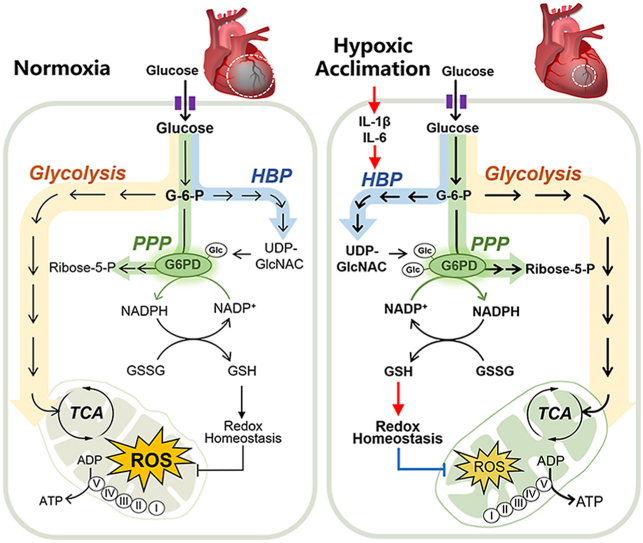
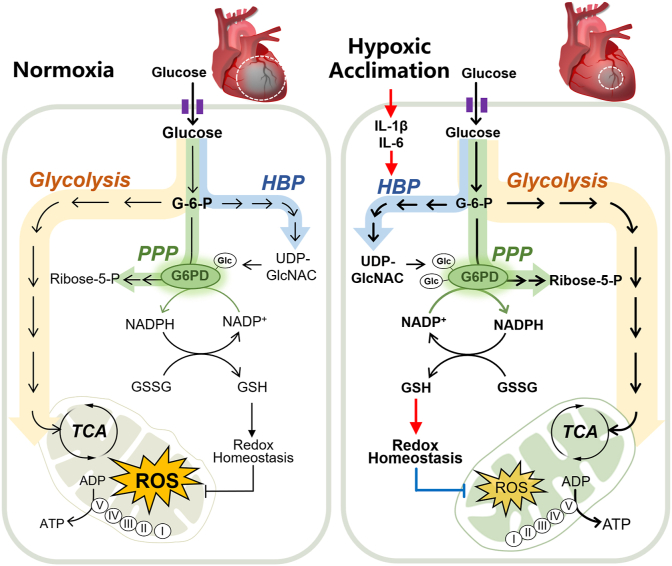
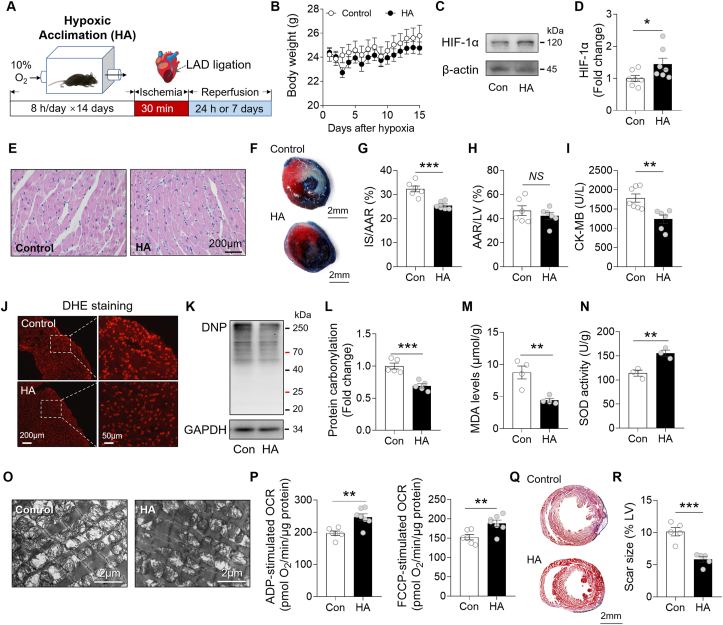
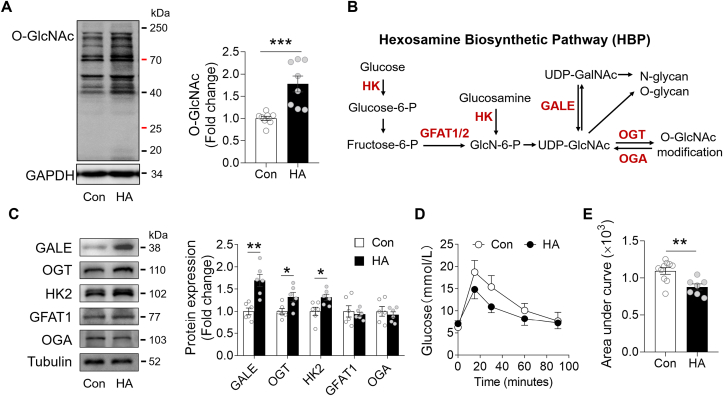
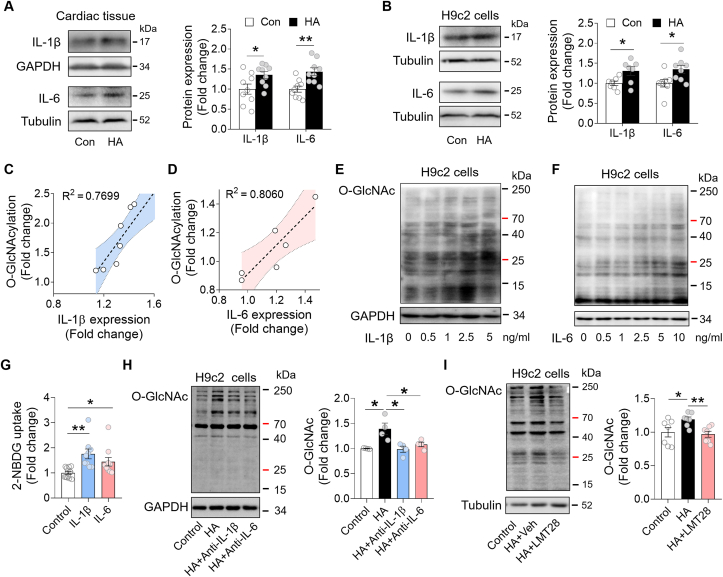
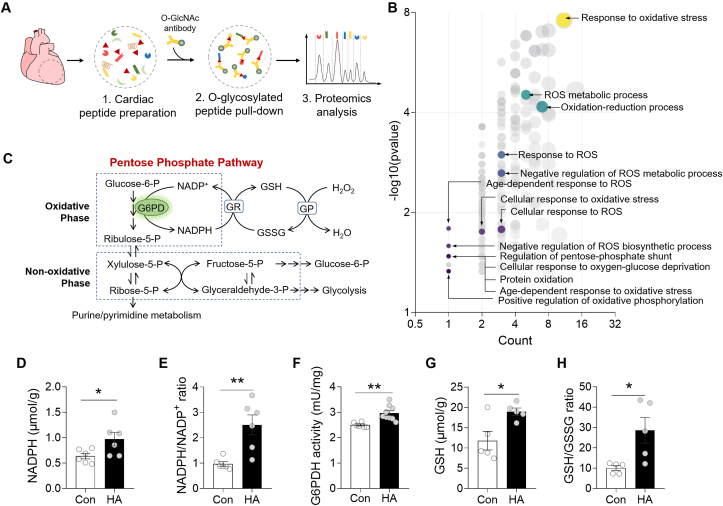
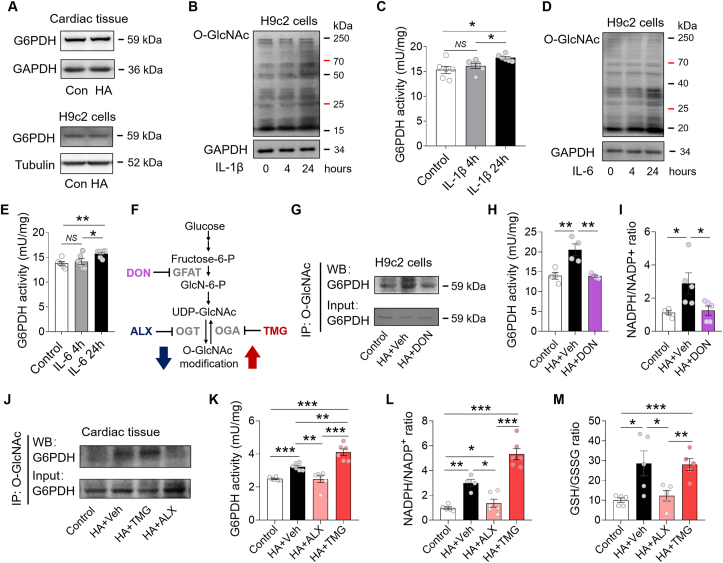
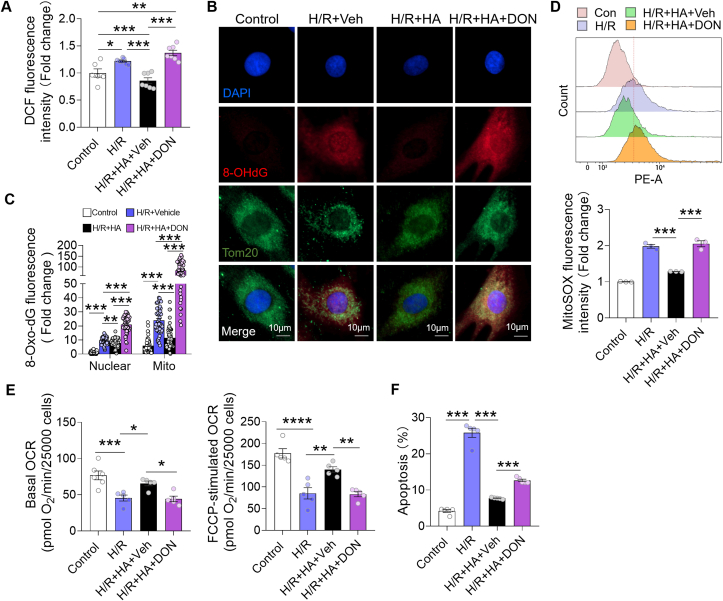
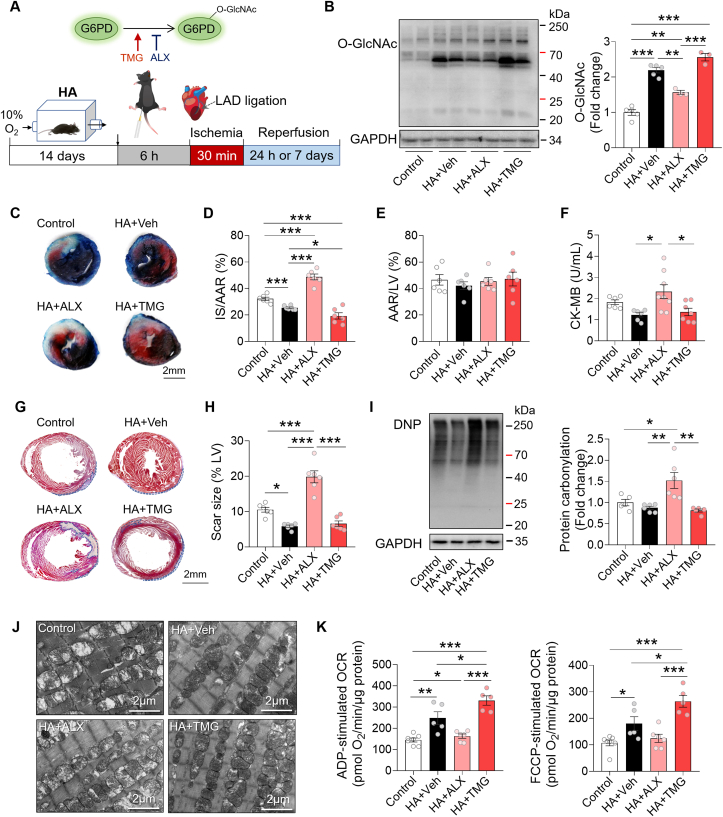
Ischemia-reperfusion (I/R) injury is detrimental to cardiovascular system. Alteration in glucose metabolism has been recognized as an important adaptive response under hypoxic conditions. However, the biological benefits underlying this metabolic phenotype remain to be elucidated. This study was designed to investigate the impact of hypoxic acclimation (HA) on cardiac I/R injury and the antioxidative mechanism(s). Male adult mice were acclimated in a hypoxic chamber (10% oxygen [O]) for 8 h/day for 14 days, and then subjected to cardiac I/R injury by ligation of left anterior descending coronary artery for 30 min and reperfusion for 24 h or 7 days. Our results showed that HA attenuated oxidative stress and reduced infarct size in the I/R hearts. This cardioprotective effect is coupled with an elevation of protein O-linked N-acetylglucosamine (O-GlcNAc) modification partially due to inflammatory stimulation. Hyperglycosylation activated glucose-6-phosphate dehydrogenase (G6PDH), the rate-limiting enzyme in the pentose phosphate pathway, resulting in an upregulation of NADPH/NADP and GSH/GSSG couples and enhancement of redox homeostasis in the heart. Pharmacological suppression of O-GlcNAcylation totally abolished the influence of HA on the G6PDH activity, redox balance and post-I/R damage in the hearts and cultured cardiomyocytes, whereby augmentation of O-GlcNAcylation further enhanced the benefits, suggesting a central role of O-GlcNAcylation in HA-initiated antioxidative and cardioprotective effects. These findings, therefore, identified HA as a promising anti-I/R strategy for the heart and proposed O-GlcNAc modification of G6PDH as a therapeutic target in ischemic heart disease.
缺血再灌注(I/R)损伤对心血管系统有害。葡萄糖代谢改变已被认为是缺氧条件下一种重要的适应性反应。然而,这种代谢表型背后的生物学益处仍有待阐明。本研究旨在探讨低氧适应(HA)对心脏I/R损伤的影响及其抗氧化机制。成年雄性小鼠在低氧舱(10%氧气[O])中每天适应8小时,持续14天,然后通过结扎左冠状动脉前降支30分钟并再灌注24小时或7天来诱导心脏I/R损伤。我们的结果表明,HA减轻了I/R心脏中的氧化应激并减小了梗死面积。这种心脏保护作用与蛋白质O-连接的N-乙酰葡糖胺(O-GlcNAc)修饰的升高有关,部分原因是炎症刺激。高糖基化激活了磷酸戊糖途径中的限速酶葡萄糖-6-磷酸脱氢酶(G6PDH),导致心脏中NADPH/NADP和GSH/GSSG比值上调,氧化还原稳态增强。O-GlcNAcylation的药理学抑制完全消除了HA对心脏和培养心肌细胞中G6PDH活性、氧化还原平衡和I/R后损伤的影响,而O-GlcNAcylation的增强进一步增强了益处,表明O-GlcNAcylation在HA引发的抗氧化和心脏保护作用中起核心作用。因此,这些发现确定HA是一种有前景的心脏抗I/R策略,并提出G6PDH的O-GlcNAc修饰作为缺血性心脏病的治疗靶点。