AGH University of Science and Technology, Faculty of Energy and Fuels, Department of Coal Chemistry and Environmental Sciences, Al. Mickiewicza 30, 30-059 Kraków, Poland.
AGH University of Science and Technology, Faculty of Energy and Fuels, Department of Coal Chemistry and Environmental Sciences, Al. Mickiewicza 30, 30-059 Kraków, Poland.
Sci Total Environ. 2021 Sep 10;786:147401. doi: 10.1016/j.scitotenv.2021.147401. Epub 2021 Apr 29.
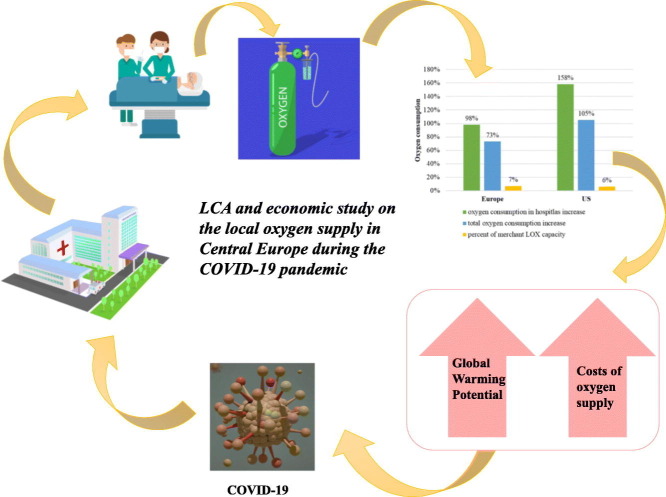
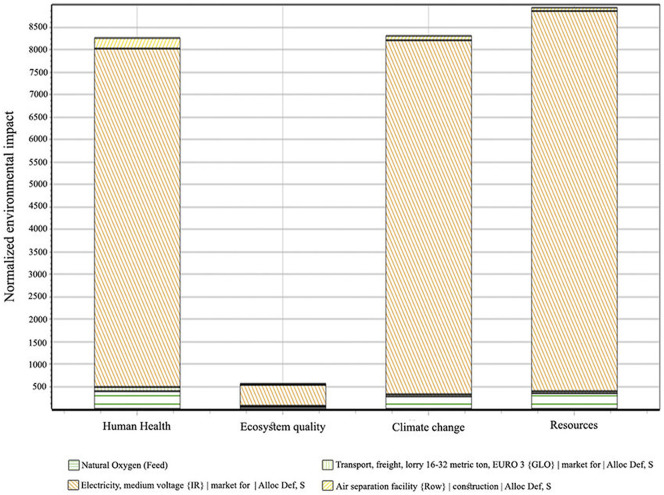
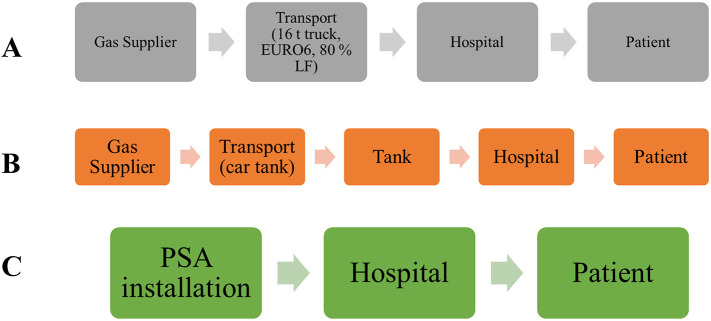
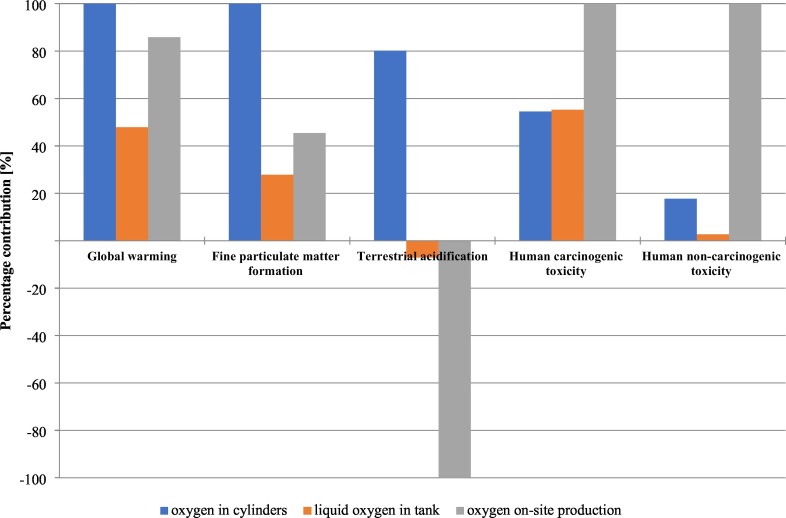
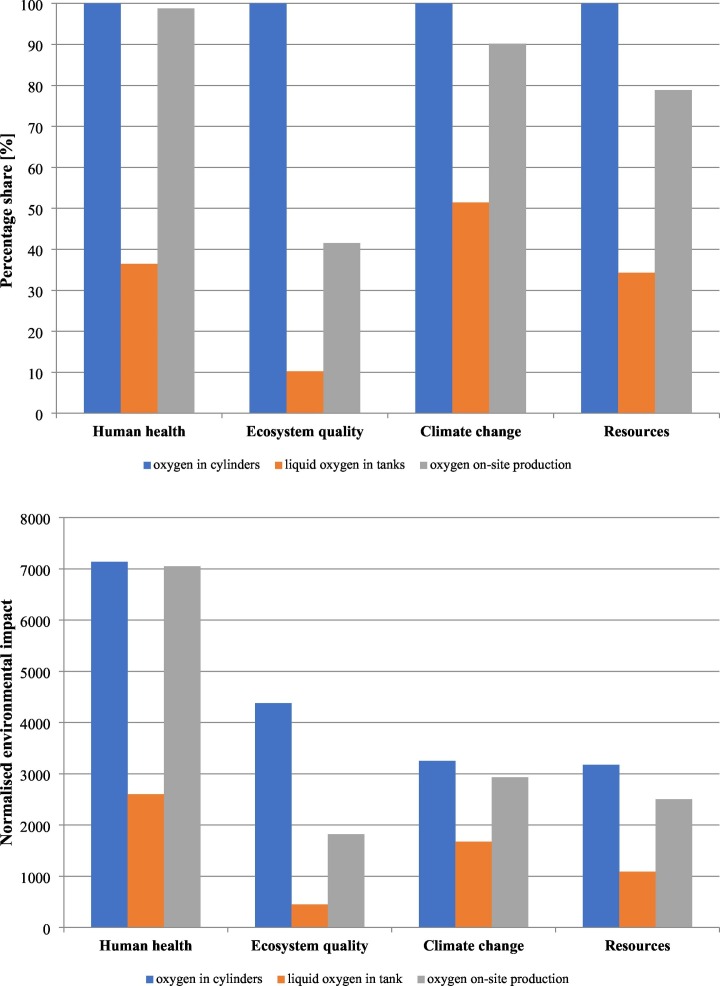
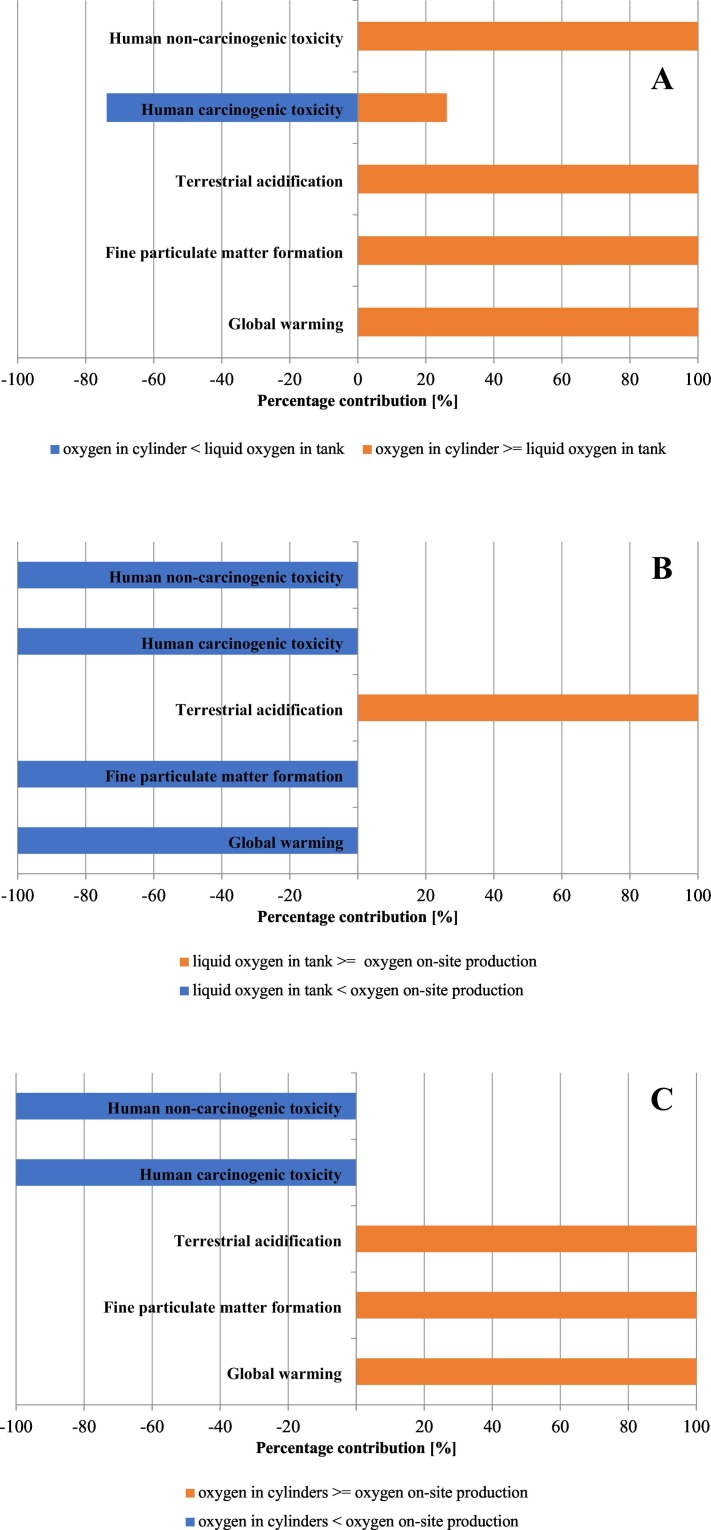
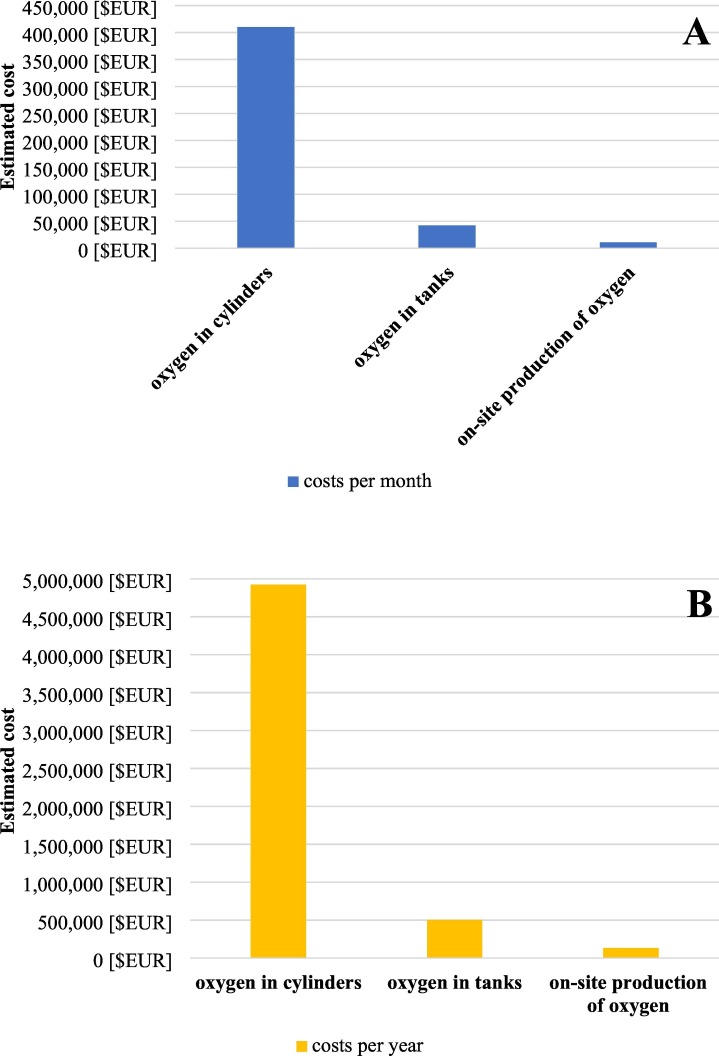
Medical oxygen is the key to survival for COVID-19 patients. To meet the pandemic-driven oxygen demand spike, local hospitals began searching for a suitable medical oxygen delivery system. Among the studies published on the impact of COVID-19 on a range of aspects, including the global economy and the environment, no study has been conducted on the environmental impact of medical oxygen supply to hospitals under epidemic conditions. In this paper the authors perform a comparative Life Cycle Assessment (LCA) to evaluate the environmental and economic impact of three scenarios (oxygen cylinders, liquid oxygen in tanks and on-site oxygen production) of local oxygen supply to hospitals in Poland. The LCA was performed according to ISO 14040 -14044 standards requirements, using the SimaPro 9.0 software. Results from the analysis showed that the Global Warming Potential (GWP) and Fine Particulate Matter Formation Potential (FPMFP) indicators for the liquid oxygen in tank scenario are the lowest and equal 265 kg CO eq and 0.309 kg PM eq. respectively. The greatest terrestrial acidification reductions (-1.38 kg SO eq) can be achieved when applying the on-site oxygen production scenario. Our findings revealed that the oxygen in cylinders scenario has the most harmful impact on the environment. The economic analysis was performed in order to compare the monthly and annual operational costs of analysed scenarios. The results show that hospitals sustain the lowest annual costs when using the on-site oxygen production scenario.
医用氧气是 COVID-19 患者生存的关键。为满足大流行期间激增的氧气需求,当地医院开始寻找合适的医用氧气输送系统。在已发表的研究中,有研究探讨了 COVID-19 对包括全球经济和环境在内的多个方面的影响,但没有研究涉及大流行期间医院医用氧气供应对环境的影响。本文作者对当地医院三种供氧方案(钢瓶氧气、罐式液氧和现场制氧)进行了比较生命周期评估(LCA),以评估环境和经济影响。LCA 是根据 ISO 14040-14044 标准要求,使用 SimaPro 9.0 软件进行的。分析结果表明,罐式液氧方案的全球变暖潜势(GWP)和细颗粒物形成潜势(FPMFP)指标最低,分别为 265 kg CO eq 和 0.309 kg PM eq。应用现场制氧方案可实现最大的陆地酸化减排(-1.38 kg SO eq)。研究结果表明,钢瓶氧气方案对环境的危害最大。进行经济分析是为了比较分析方案的月度和年度运营成本。结果表明,使用现场制氧方案时,医院的年度成本最低。