Molecular Preventive Medicine, University Medical Center and Faculty of Medicine-University of Freiburg, Freiburg, Germany.
Institute of Food Technology and Food Chemistry, Technical University of Berlin, Berlin, Germany.
Front Immunol. 2021 Apr 20;12:669005. doi: 10.3389/fimmu.2021.669005. eCollection 2021.
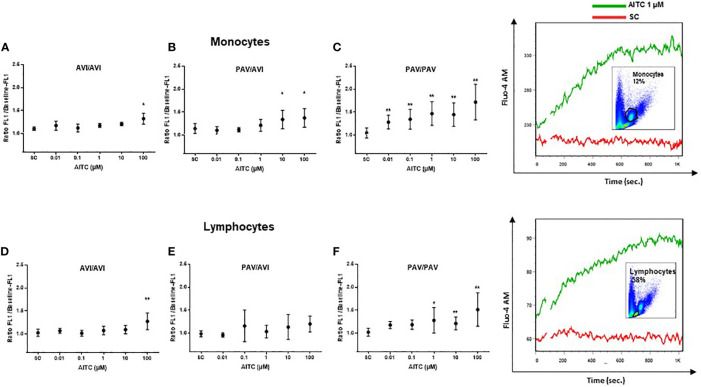
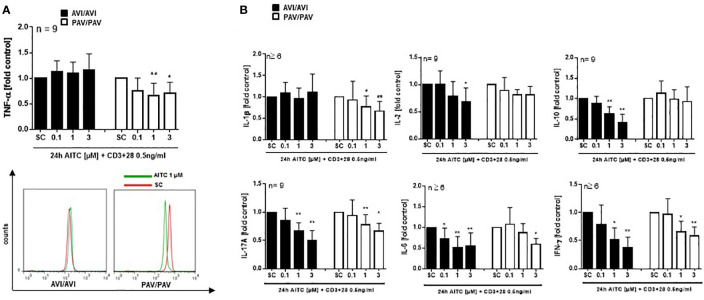
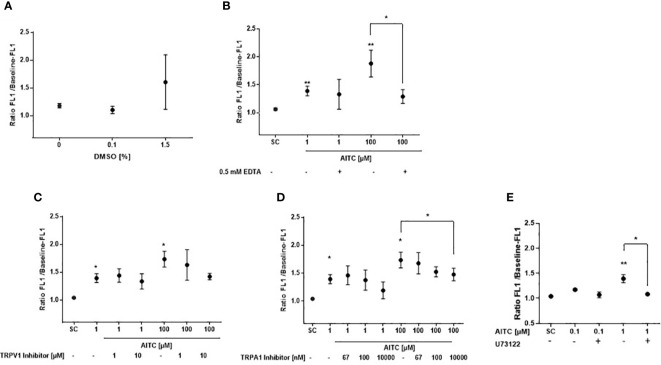
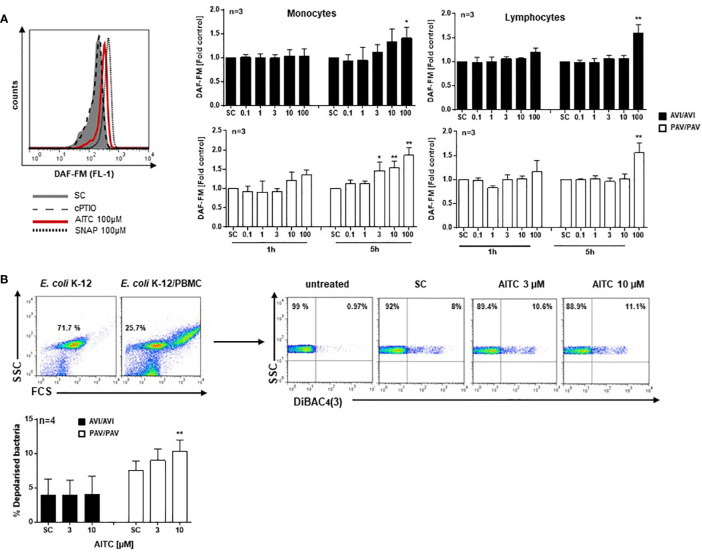
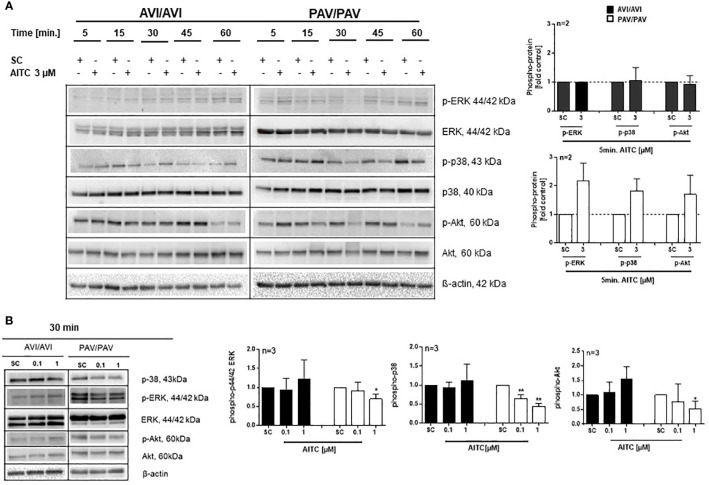
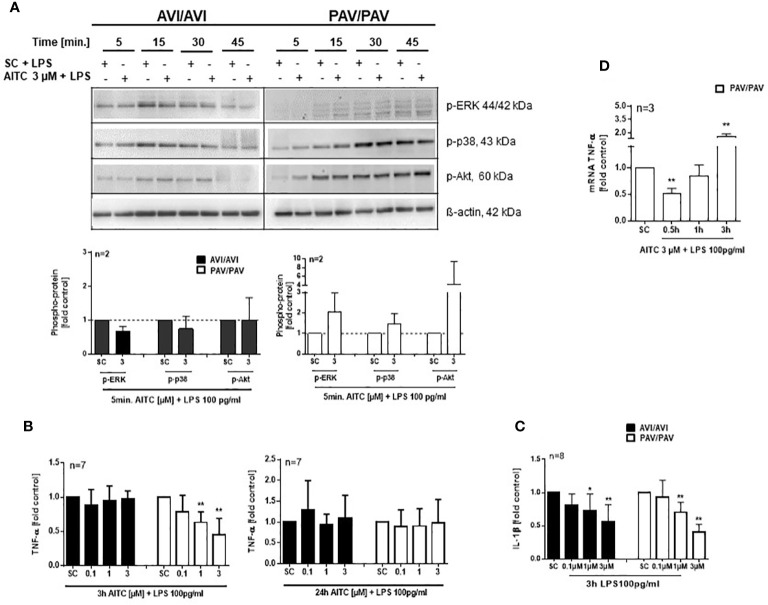
Understanding individual responses to nutrition and medicine is of growing interest and importance. There is evidence that differences in bitter taste receptor (TAS2R) genes which give rise to two frequent haplotypes, TAS2R38-PAV (functional) and TAS2R38-AVI (non-functional), may impact inter-individual differences in health status. We here analyzed the relevance of the TAS2R38 receptor in the regulation of the human immune response using the TAS2R38 agonist allyl isothiocyanate (AITC) from plants. A differential response in calcium mobilization upon AITC treatment in leucocytes from healthy humans confirmed a relevance of TAS2R38 functionality, independent from cation channel TRPV1 or TRPA1 activation. We further identified a TAS2R38-dependence of MAPK and AKT signaling activity, bactericidal (toxicity against ) and anti-inflammatory activity (TNF-alpha inhibition upon cell stimulation). These results were derived at relevant human plasma levels in the low micro molar range as shown here in a human intervention trial with AITC-containing food.
了解个体对营养和药物的反应越来越受到关注和重视。有证据表明,苦味受体(TAS2R)基因的差异导致了两种常见的单倍型,TAS2R38-PAV(功能性)和 TAS2R38-AVI(非功能性),可能会影响个体健康状况的差异。我们在这里使用植物中的 TAS2R38 激动剂丙烯基异硫氰酸酯(AITC)分析了 TAS2R38 受体在人类免疫反应调节中的相关性。健康人白细胞在 AITC 处理后钙动员的差异反应证实了 TAS2R38 功能的相关性,与阳离子通道 TRPV1 或 TRPA1 的激活无关。我们进一步确定了 MAPK 和 AKT 信号活性、杀菌(对 的毒性)和抗炎活性(细胞刺激时 TNF-α抑制)对 TAS2R38 的依赖性。这些结果是在相关的人类血浆水平下在低微摩尔范围内得出的,如这里在含有 AITC 的食物的人类干预试验中所示。