Villanueva-Corrales Simón, García-Botero Camilo, Garcés-Cardona Froilán, Ramírez-Ríos Viviana, Villanueva-Mejía Diego F, Álvarez Javier C
BEC Research Group, Biological Sciences Department, EAFIT University, Medellín, Colombia.
CIBIOP Research Group, Biological Sciences Department, EAFIT University, Medellín, Colombia.
Front Plant Sci. 2021 Apr 23;12:667060. doi: 10.3389/fpls.2021.667060. eCollection 2021.
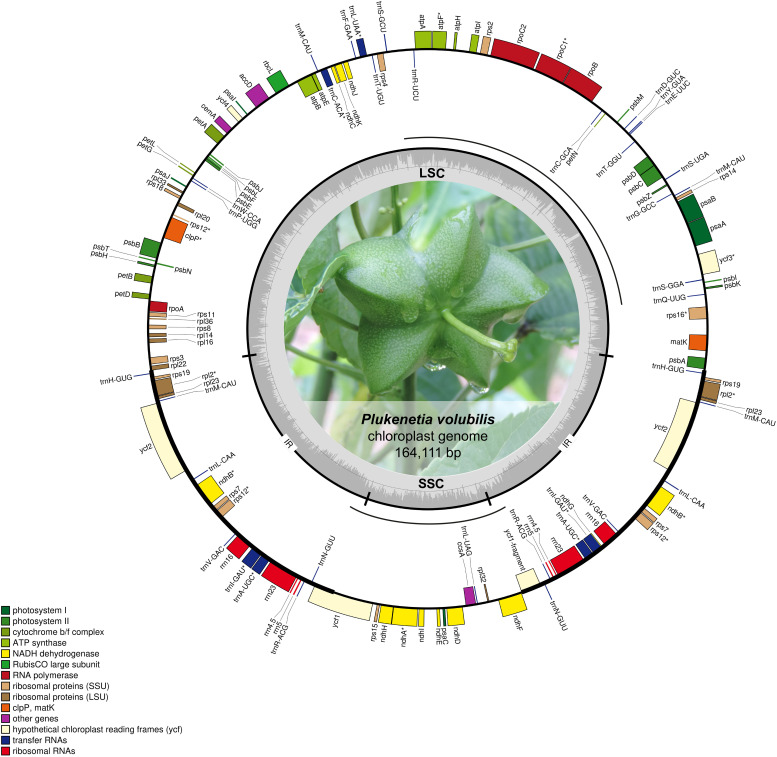
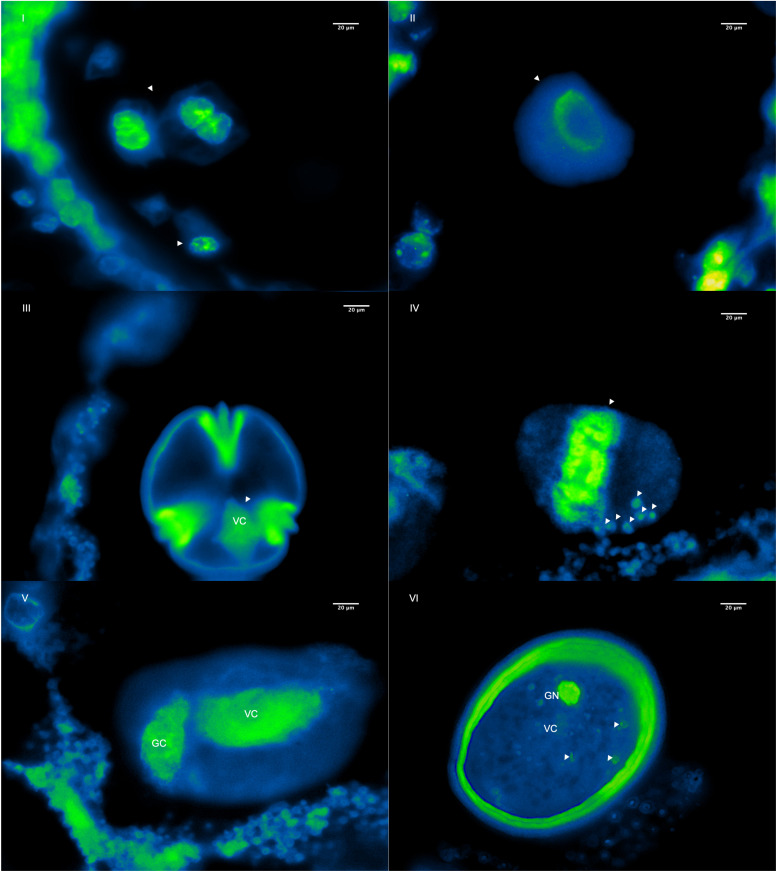
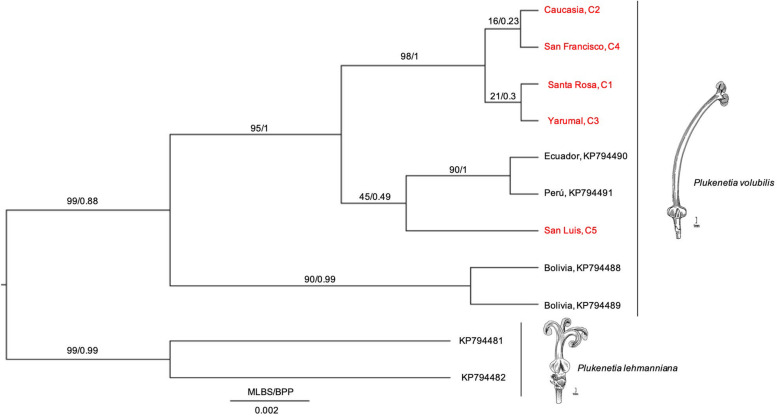
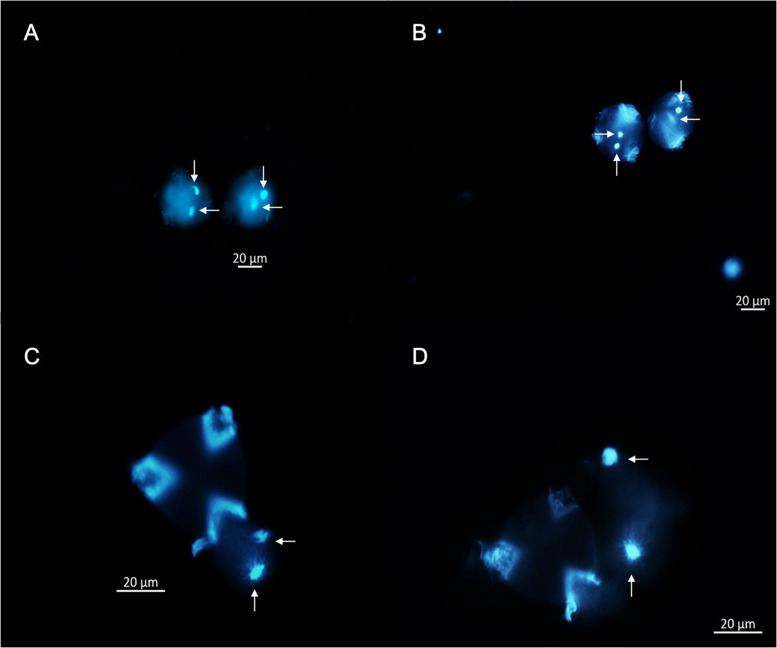
L. (Malpighiales: Euphorbiaceae), also known as Sacha inchi, is considered a promising crop due to its high seed content of unsaturated fatty acids (UFAs), all of them highly valuable for food and cosmetic industries, but the genetic basis of oil biosynthesis of this non-model plant is still insufficient. Here, we sequenced the total DNA of Sacha inchi by using Illumina and Nanopore technologies and approached a reconstruction of the whole nucleotide sequence and the organization of its 164,111 bp length of the chloroplast genome, displaying two copies of an inverted repeat sequence [inverted repeat A (IRA) and inverted repeat B (IRB)] of 28,209 bp, each one separating a small single copy (SSC) region of 17,860 bp and a large single copy (LSC) region of 89,833 bp. We detected two large inversions on the chloroplast genome that were not presented in the previously reported sequence and studied a promising cpDNA marker, useful in phylogenetic approaches. This chloroplast DNA (cpDNA) marker was used on a set of five distinct Colombian cultivars of from different geographical locations to reveal their phylogenetic relationships. Thus, we evaluated if it has enough resolution to genotype cultivars, intending to crossbreed parents and following marker's trace down to the F1 generation. We finally elucidated, by using molecular and cytological methods on cut flower buds, that the inheritance mode of cpDNA is maternally transmitted and proposed that it occurs as long as it is physically excluded during pollen development. This chloroplast genome will provide a valuable resource for studying this promising crop, allowing the determination of the organellar inheritance mechanism of some critical phenotypic traits and enabling the use of genetic engineering in breeding programs to develop new varieties.
印加果(大戟科金虎尾目),也被称为美藤果,因其种子中不饱和脂肪酸(UFA)含量高而被视为一种有前景的作物,所有这些不饱和脂肪酸对食品和化妆品行业都非常有价值,但这种非模式植物油脂生物合成的遗传基础仍然不足。在这里,我们使用Illumina和纳米孔技术对印加果的总DNA进行了测序,并对其164,111 bp长的叶绿体基因组的全核苷酸序列和组织结构进行了重建,该基因组显示出两个28,209 bp的反向重复序列拷贝[反向重复A(IRA)和反向重复B(IRB)],每个拷贝分隔一个17,860 bp的小单拷贝(SSC)区域和一个89,833 bp的大单拷贝(LSC)区域。我们在叶绿体基因组上检测到两个先前报道的序列中未出现的大倒位,并研究了一种有前景的叶绿体DNA(cpDNA)标记,该标记在系统发育研究中很有用。这种cpDNA标记被用于一组来自不同地理位置的五个不同的哥伦比亚品种,以揭示它们的系统发育关系。因此,我们评估它是否有足够的分辨率对品种进行基因分型,以便杂交亲本并追踪标记到F1代。我们最终通过对切下的花芽使用分子和细胞学方法阐明,cpDNA的遗传模式是母系遗传的,并提出只要在花粉发育过程中它被物理排除,就会发生这种情况。这个叶绿体基因组将为研究这种有前景的作物提供有价值的资源,有助于确定一些关键表型性状的细胞器遗传机制,并使基因工程在育种计划中得以应用以培育新品种。