Sun Jiahui, Wang Sheng, Wang Yiheng, Wang Ruishan, Liu Kangjia, Li Enze, Qiao Ping, Shi Linyuan, Dong Wenpan, Huang Luqi, Guo Lanping
State Key Laboratory Breeding Base of Dao-di Herbs, National Resource Center for Chinese Materia Medica, China Academy of Chinese Medical Sciences, Beijing, China.
Laboratory of Systematic Evolution and Biogeography of Woody Plants, School of Ecology and Nature Conservation, Beijing Forestry University, Beijing, China.
Front Plant Sci. 2022 Jun 9;13:920826. doi: 10.3389/fpls.2022.920826. eCollection 2022.
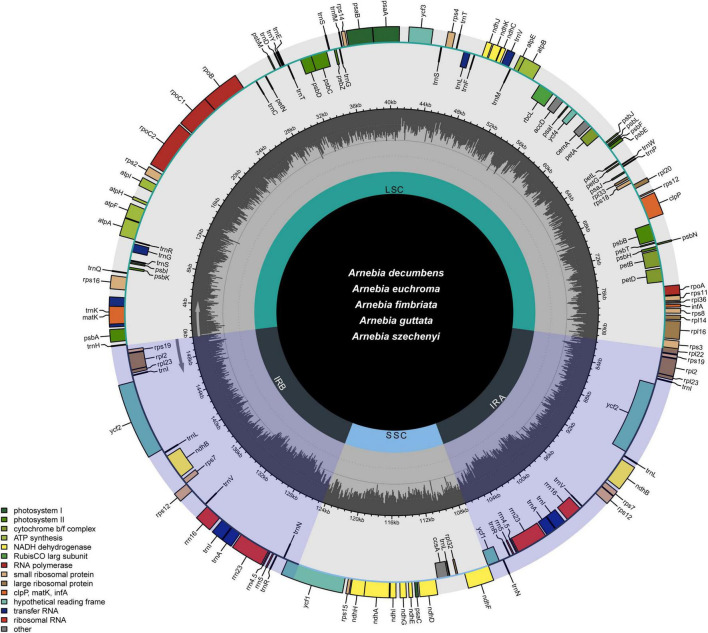
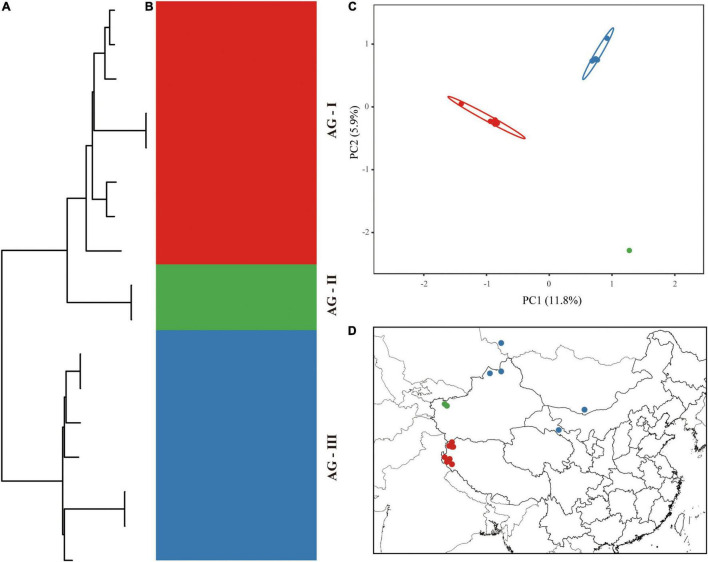
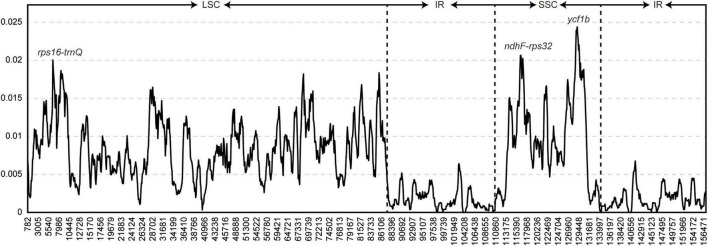
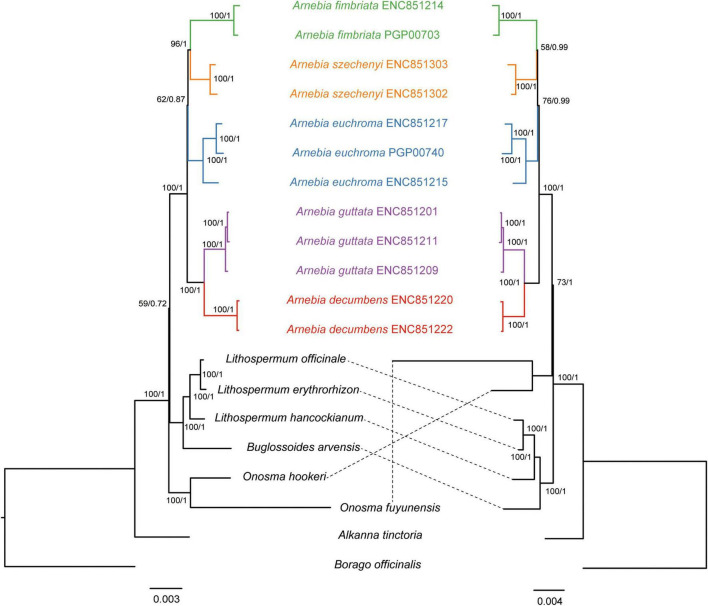
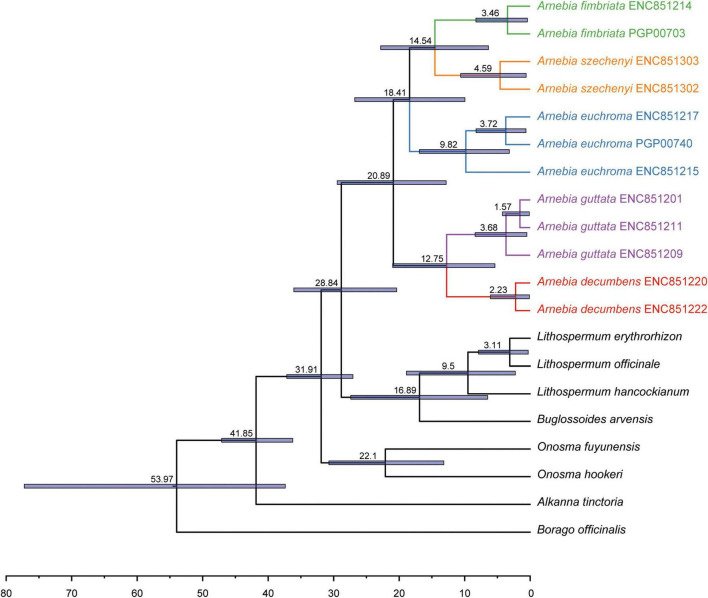
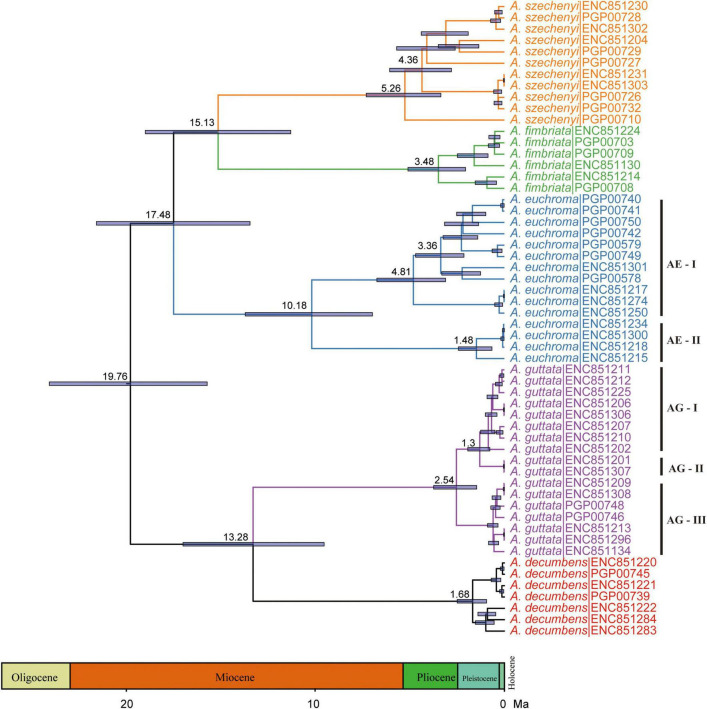
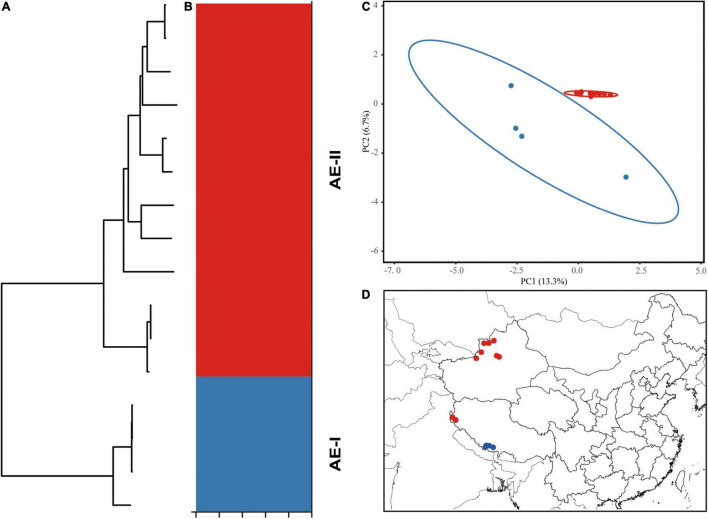
is a traditional medicine with pleiotropic properties that has been used for several 100 years. There are five species of in China, and the two species and are the source plants of according to the Chinese Pharmacopoeia. Molecular markers that permit species identification and facilitate studies of the genetic diversity and divergence of the wild populations of these two source plants have not yet been developed. Here, we sequenced the chloroplast genomes of 56 samples of five species using genome skimming methods. The chloroplast genomes exhibited quadripartite structures with lengths from 149,539 and 152,040 bp. Three variable markers (, , and ) were identified, and these markers exhibited more variable sites than universal chloroplast markers. The phylogenetic relationships among the five species were completely resolved using the whole chloroplast genome sequences. arose during the Oligocene and diversified in the middle Miocene; this coincided with two geological events during the late Oligocene and early Miocene: warming and the progressive uplift of Tianshan and the Himalayas. Our analyses revealed that and have high levels of genetic diversity and comprise two and three subclades, respectively. The two clades of exhibited significant genetic differences and diverged at 10.18 Ma in the middle Miocene. Three clades of diverged in the Pleistocene. The results provided new insight into evolutionary history of species and promoted the conservation and exploitation of and
是一种具有多种功效的传统药物,已使用了数百年。中国有五种[具体植物名称未给出],根据《中国药典》,其中两种[具体植物名称未给出]和[具体植物名称未给出]是[具体药物名称未给出]的源植物。尚未开发出能够进行物种鉴定并有助于研究这两种源植物野生种群遗传多样性和分化的分子标记。在此,我们使用基因组浅层测序方法对五种[具体植物名称未给出]物种的56个样本的叶绿体基因组进行了测序。[具体植物名称未给出]的叶绿体基因组呈现出四分体结构,长度在149,539至152,040 bp之间。鉴定出三个可变标记([具体标记名称未给出]、[具体标记名称未给出]和[具体标记名称未给出]),这些标记比通用叶绿体标记具有更多的可变位点。使用整个叶绿体基因组序列完全解析了五种[具体植物名称未给出]物种之间的系统发育关系。[具体植物名称未给出]出现在渐新世,并在中新世中期多样化;这与渐新世晚期和中新世早期的两次地质事件同时发生:气候变暖和天山及喜马拉雅山的逐渐隆升。我们的分析表明,[具体植物名称未给出]和[具体植物名称未给出]具有高水平的遗传多样性,分别包含两个和三个亚分支。[具体植物名称未给出]的两个分支表现出显著的遗传差异,并在中新世中期的1018万年前分化。[具体植物名称未给出]的三个分支在更新世分化。这些结果为[具体植物名称未给出]物种的进化历史提供了新的见解,并促进了[具体植物名称未给出]和[具体植物名称未给出]的保护与开发。