Department of Economics, University of New Mexico, Albuquerque, NM, United States.
Front Public Health. 2021 Apr 23;9:563515. doi: 10.3389/fpubh.2021.563515. eCollection 2021.
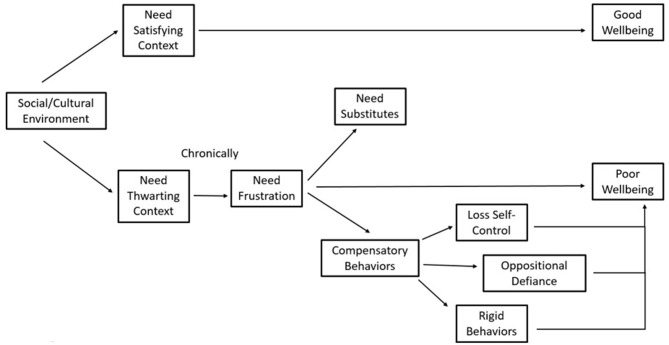
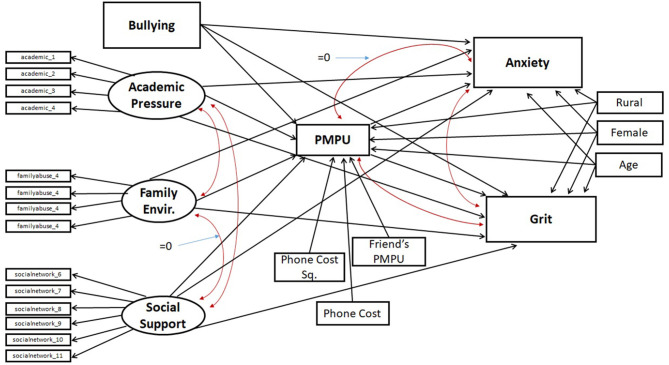
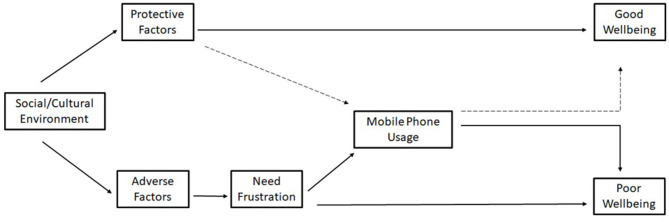
Adolescents are slowly being recognized as a generation, worldwide, that may require different policy approaches to improve staggering statistics on their failing well-being, including mental health. By providing the support to allow the next generation to achieve better mental health outcomes, they are going to be more economically successful and the future economic growth of nations can be better assured. Adoption of mobile-based health interventions (e.g., mHealth) has garnered a lot of attention toward this end. While mHealth interventions are growing in popularity, many researchers/policy-makers appear to have neglected assessing potential (indirect) costs/negative consequences from their use. Evidence from the developed world shows strong associations between extensive cell phone use and negative mental health outcomes, but similar research is minimal in developing world contexts. Additionally, the bulk of work on the outcomes of mobile phone use is studied using a unidirectional approach with blinders to front-end motivations. Using primary data from a large-scale, school-based survey of older adolescents in southwestern Nepal ( = 539), this work investigates such a tension between mobile/smartphone usage as a true mobile health (mHealth) opportunity in Nepal or as a potential problem, introducing additional deleterious well-being effects from over-use. Founded in Basic Psychological Needs Theory (BPNT), robust results of analyses using full structural modeling approaches (and traditional regression-based sensitivity analyses) indicate support for the BPNT framework in explaining statistically significant positive associations between bullying and anxiety, as well as, negative associations between bullying and grit, including evidence to support the mediating role of problematic mobile phone use in these relationships. More than 56% of the sample showed indicators of mild to moderate anxiety and over 10% claim experiences of bullying, coupled with over 75% of the sample scoring above the midline of a problematic mobile phone use scale, all of which motivates the relevance of our findings. Potential policy implications of these findings, and mention of other intriguing avenues for future work are further discussed.
青少年正逐渐被全球各国视为一个特殊的群体,他们可能需要采取不同的政策措施来改善令人震惊的福祉统计数据,包括心理健康。通过提供支持,让下一代实现更好的心理健康结果,他们将在经济上更加成功,国家的未来经济增长也将得到更好的保障。为此,移动健康干预措施(如 mHealth)的应用受到了广泛关注。虽然 mHealth 干预措施越来越受欢迎,但许多研究人员/政策制定者似乎忽视了评估其使用可能带来的间接成本/负面影响。来自发达国家的证据表明,手机的广泛使用与负面心理健康结果之间存在很强的关联,但在发展中国家背景下,类似的研究很少。此外,关于手机使用结果的大部分工作都是使用单向方法进行研究的,对前端动机视而不见。本研究利用尼泊尔西南部一项大规模、基于学校的青少年调查的原始数据(n = 539),调查了手机/智能手机使用在尼泊尔既是真正的移动健康(mHealth)机会还是潜在问题之间的这种紧张关系,因为过度使用会带来额外的不良幸福感影响。本研究基于基本心理需求理论(BPNT),使用完整的结构建模方法(以及传统的基于回归的敏感性分析)进行的稳健分析结果表明,BPNT 框架能够解释欺凌行为与焦虑之间存在统计学上显著的正相关关系,以及欺凌行为与坚毅之间存在负相关关系,包括支持手机使用问题在这些关系中起中介作用的证据。超过 56%的样本表现出轻度到中度焦虑的迹象,超过 10%的样本报告了欺凌经历,加上超过 75%的样本在手机使用问题量表的中线上方得分,这些都促使我们发现了这些结果。进一步讨论了这些发现的潜在政策意义,以及对未来工作的其他有趣途径的提及。