Plajer Alex J, Williams Charlotte K
Oxford Chemistry, Chemical Research Laboratory, 12 Mansfield Road, Oxford, OX1 3TA, UK.
Angew Chem Int Ed Engl. 2021 Jun 7;60(24):13372-13379. doi: 10.1002/anie.202101180. Epub 2021 May 10.
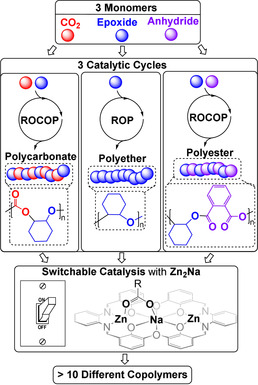
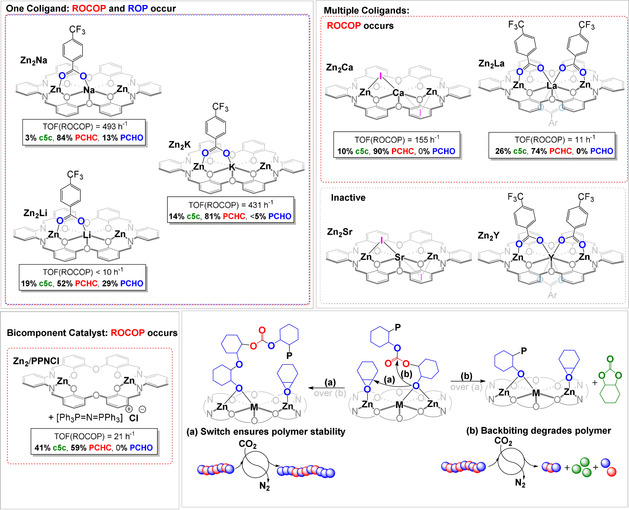
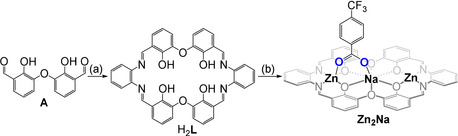
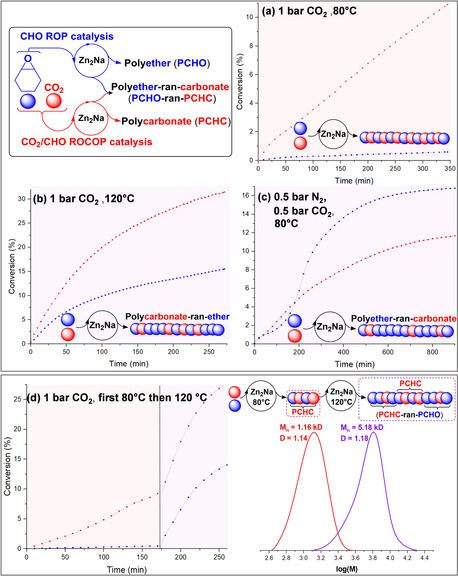
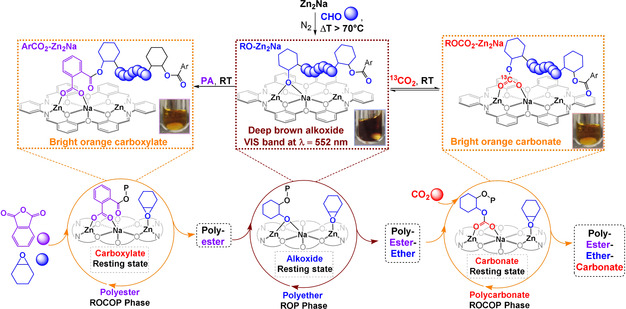
A challenge in polymer synthesis using CO is to precisely control CO placement in the backbone and chain end groups. Here, a new catalyst class delivers unusual selectivity and is self-switched between different polymerization cycles to construct specific sequences and desirable chain-end chemistries. The best catalyst is a trinuclear dizinc(II)sodium(I) complex and it functions without additives or co-catalysts. It shows excellent rates across different ring-opening (co)polymerization catalytic cycles and allows precise control of CO incorporation within polyesters and polyethers, thereby allowing access to new polymer chemistries without requiring esoteric monomers, multi-reactor processes or complex post-polymerization procedures. The structures, kinetics and mechanisms of the catalysts are investigated, providing evidence for intermediate speciation and uncovering the factors governing structure and composition and thereby guiding future catalyst design.
使用一氧化碳进行聚合物合成时面临的一个挑战是精确控制一氧化碳在主链和链端基团中的位置。在此,一类新型催化剂具有不同寻常的选择性,并且在不同的聚合循环之间会自我切换,以构建特定序列和理想的链端化学结构。最佳催化剂是一种三核二锌(II)钠(I)配合物,其在无添加剂或助催化剂的情况下发挥作用。它在不同的开环(共)聚合催化循环中表现出优异的速率,并能精确控制聚酯和聚醚中一氧化碳的掺入,从而无需使用奇特的单体、多反应器工艺或复杂的聚合后程序就能获得新的聚合物化学结构。对这些催化剂的结构、动力学和机理进行了研究,为中间物种形成提供了证据,并揭示了控制结构和组成的因素,从而指导未来的催化剂设计。