Department of Psychiatry, University of Cambridge, Robinson Way, Cambridge, Cambridgeshire, CB2 0SZ, UK.
Center for Systems Biology, Massachusetts General Hospital, 149 13th Street, Boston, MA, 02129, USA.
Mol Autism. 2021 May 10;12(1):34. doi: 10.1186/s13229-021-00439-5.
Autism has previously been characterized by both structural and functional differences in brain connectivity. However, while the literature on single-subject derivations of functional connectivity is extensively developed, similar methods of structural connectivity or similarity derivation from T1 MRI are less studied.
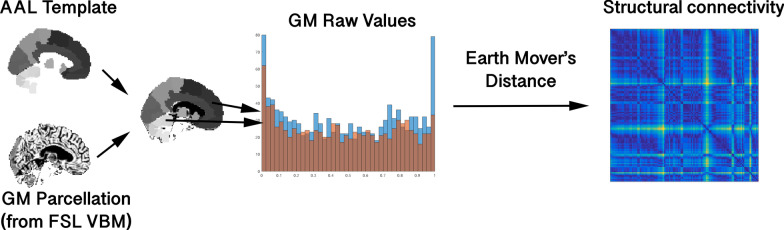
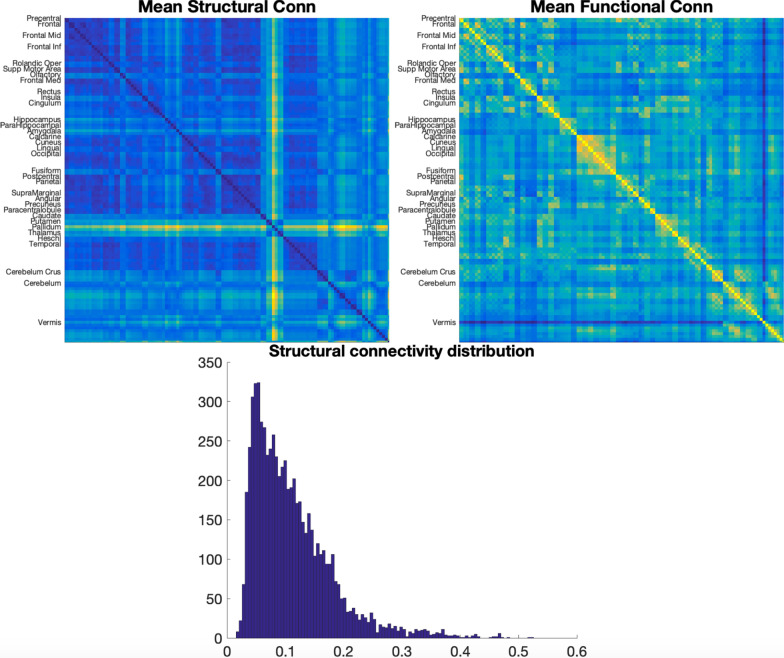
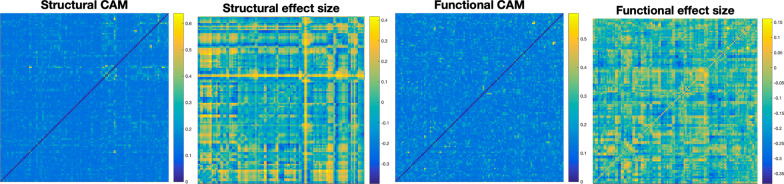
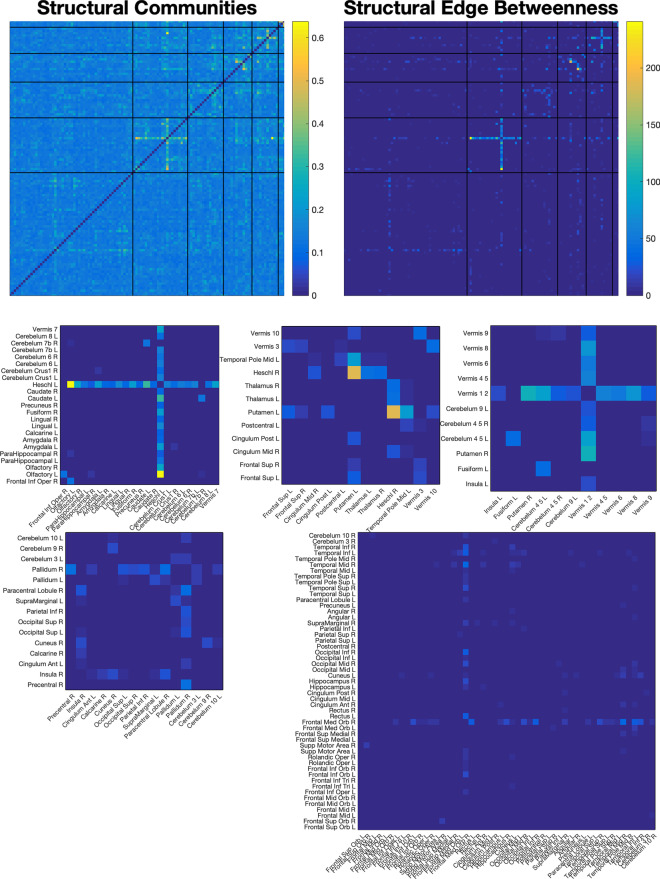
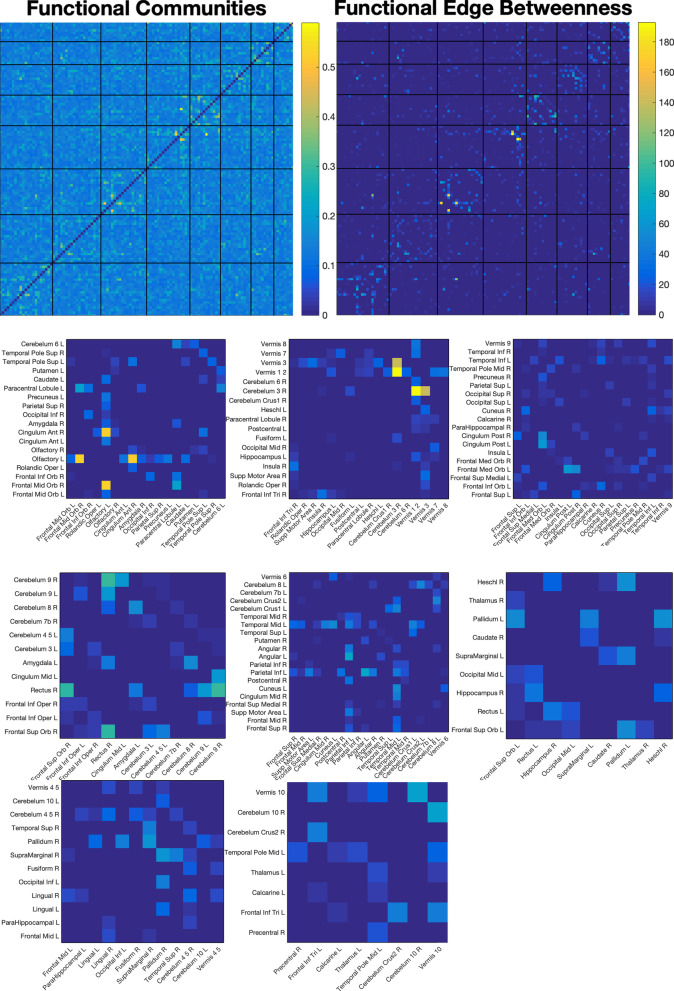
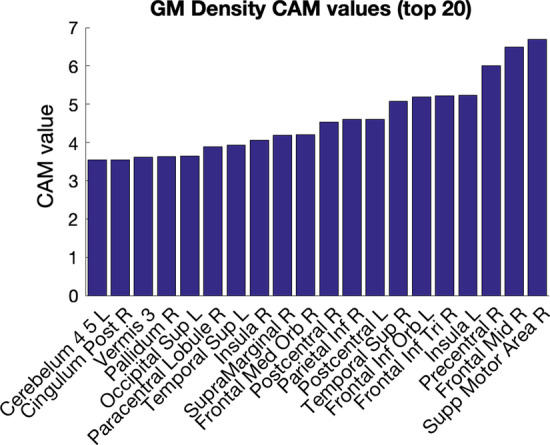
We introduce a technique of deriving symmetric similarity matrices from regional histograms of grey matter volumes estimated from T1-weighted MRIs. We then validated the technique by inputting the similarity matrices into a convolutional neural network (CNN) to classify between participants with autism and age-, motion-, and intracranial-volume-matched controls from six different databases (29,288 total connectomes, mean age = 30.72, range 0.42-78.00, including 1555 subjects with autism). We compared this method to similar classifications of the same participants using fMRI connectivity matrices as well as univariate estimates of grey matter volumes. We further applied graph-theoretical metrics on output class activation maps to identify areas of the matrices that the CNN preferentially used to make the classification, focusing particularly on hubs.
While this study used a large sample size, the majority of data was from a young age group; furthermore, to make a viable machine learning study, we treated autism, a highly heterogeneous condition, as a binary label. Thus, these results are not necessarily generalizable to all subtypes and age groups in autism.
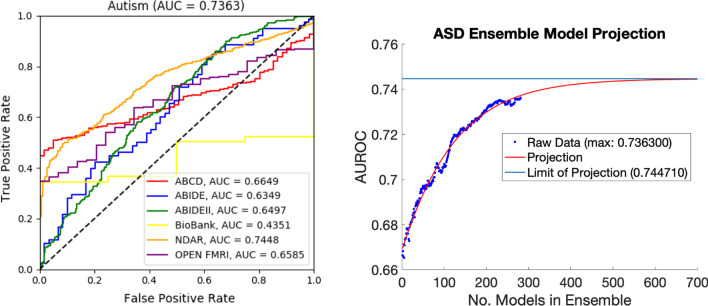
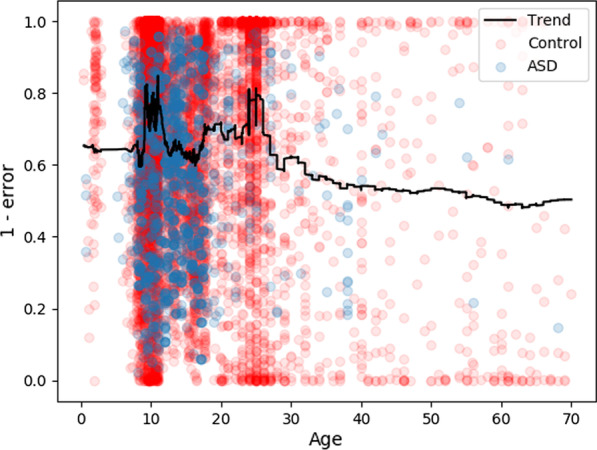
Our models gave AUROCs of 0.7298 (69.71% accuracy) when classifying by only structural similarity, 0.6964 (67.72% accuracy) when classifying by only functional connectivity, and 0.7037 (66.43% accuracy) when classifying by univariate grey matter volumes. Combining structural similarity and functional connectivity gave an AUROC of 0.7354 (69.40% accuracy). Analysis of classification performance across age revealed the greatest accuracy in adolescents, in which most data were present. Graph analysis of class activation maps revealed no distinguishable network patterns for functional inputs, but did reveal localized differences between groups in bilateral Heschl's gyrus and upper vermis for structural similarity.
This study provides a simple means of feature extraction for inputting large numbers of structural MRIs into machine learning models. Our methods revealed a unique emphasis of the deep learning model on the structure of the bilateral Heschl's gyrus when characterizing autism.
自闭症以前被认为具有大脑连接的结构和功能差异。然而,虽然关于功能连接的单主题推导的文献已经很发达,但类似的结构连接或从 T1 MRI 推导相似性的方法研究较少。
我们介绍了一种从 T1 加权 MRI 估计的灰质体积的区域直方图中导出对称相似矩阵的技术。然后,我们通过将相似矩阵输入卷积神经网络(CNN)来验证该技术,以将自闭症患者与来自六个不同数据库的年龄、运动和颅内体积匹配的对照组(总共 29288 个连接组,平均年龄为 30.72 岁,范围为 0.42-78.00,包括 1555 名自闭症患者)进行分类。我们将这种方法与使用 fMRI 连接矩阵和灰质体积的单变量估计对相同参与者进行的类似分类进行了比较。我们进一步应用图论度量来识别 CNN 优先用于分类的矩阵区域,特别关注枢纽。
虽然这项研究使用了大量样本,但大多数数据来自年轻年龄段;此外,为了进行可行的机器学习研究,我们将自闭症(一种高度异质的疾病)视为二分类标签。因此,这些结果不一定适用于自闭症的所有亚型和年龄组。
当仅通过结构相似性进行分类时,我们的模型给出了 0.7298 的 AUROC(69.71%的准确率),当仅通过功能连接进行分类时,给出了 0.6964 的 AUROC(67.72%的准确率),当通过单变量灰质体积进行分类时,给出了 0.7037 的 AUROC(66.43%的准确率)。结构相似性和功能连接的结合给出了 0.7354 的 AUROC(69.40%的准确率)。对分类性能随年龄的分析表明,在青少年中具有最高的准确性,其中存在大多数数据。对分类激活图的图分析显示,功能输入没有可区分的网络模式,但确实显示了结构相似性中双侧海氏回和上蚓部之间的组间局部差异。
这项研究为将大量结构 MRI 输入机器学习模型提供了一种简单的特征提取方法。我们的方法揭示了深度学习模型在表征自闭症时对双侧海氏回结构的独特重视。