Manikantan Kiruthigha, Jaganathan Suresh
Department of Computer Science and Engineering, Sri Sivasubramaniya Nadar College of Engineering, Chennai 603110, India.
Diagnostics (Basel). 2023 Mar 16;13(6):1143. doi: 10.3390/diagnostics13061143.
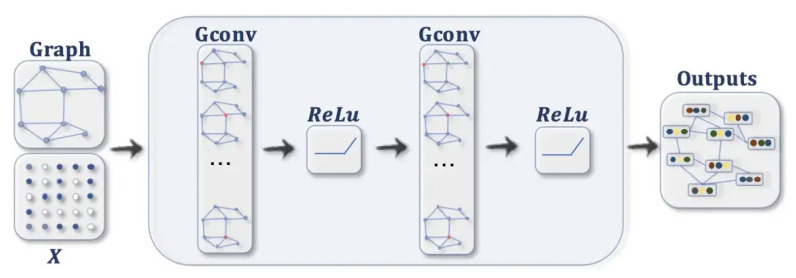
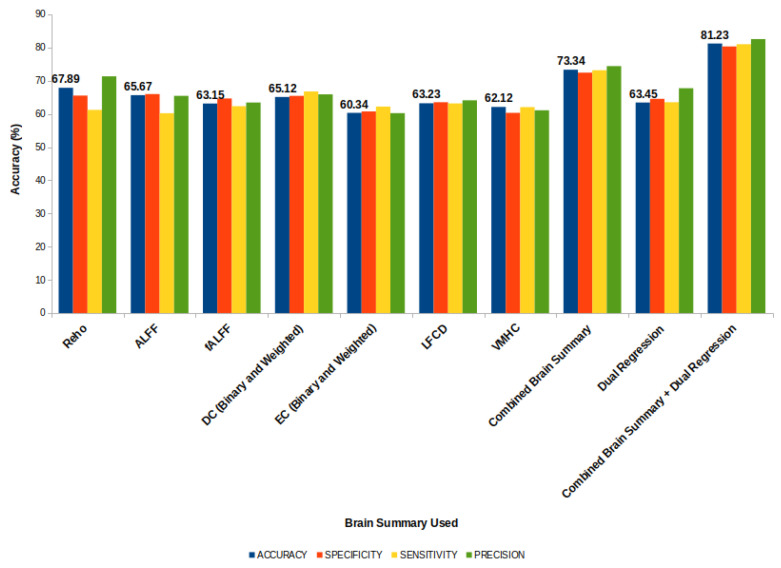
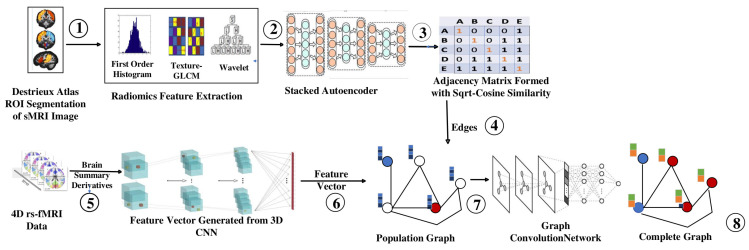
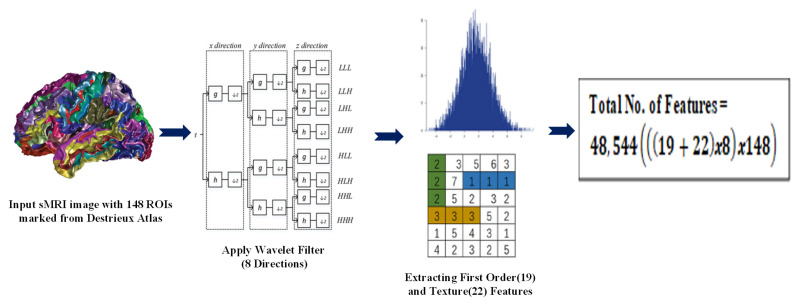
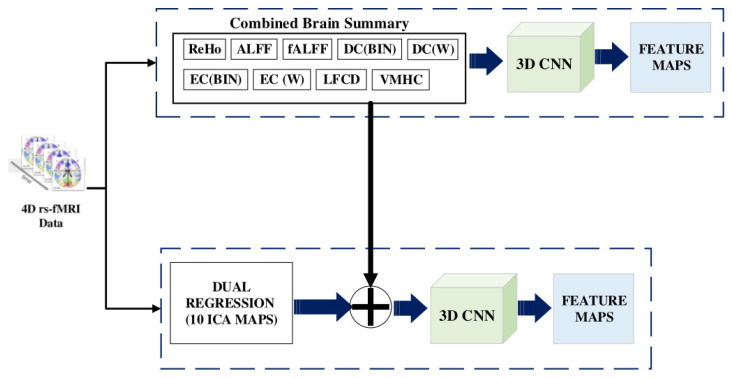
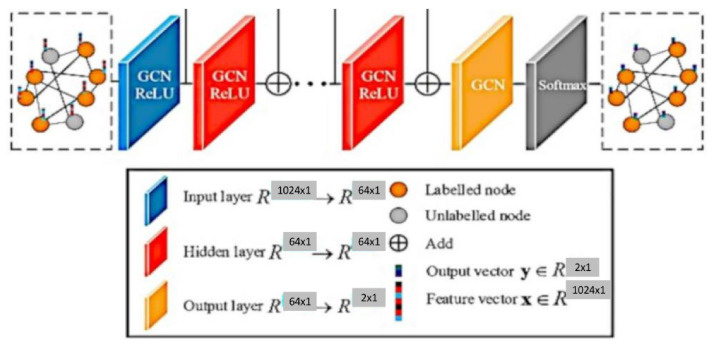
This article proposes a model to diagnose autism patients using graphical neural networks. A graphical neural network relates the subjects (nodes) using the features (edges). In our model, radiomic features obtained from sMRI are used as edges, and spatial-temporal data obtained through rs-fMRI are used as nodes. The similarity between first-order and texture features from the sMRI data of subjects are derived using radiomics to construct the edges of a graph. The features from brain summaries are assembled and learned using 3DCNN to represent the features of each node of the graph. Using the structural similarities of the brain rather than phenotypic data or graph kernel functions provides better accuracy. The proposed model was applied to a standard dataset, ABIDE, and it was shown that the classification results improved with the use of both spatial (sMRI) and statistical measures (brain summaries of rs-fMRI) instead of using only medical images.
本文提出了一种使用图形神经网络诊断自闭症患者的模型。图形神经网络利用特征(边)将主体(节点)关联起来。在我们的模型中,从结构磁共振成像(sMRI)获得的放射组学特征用作边,通过静息态功能磁共振成像(rs-fMRI)获得的时空数据用作节点。利用放射组学推导受试者sMRI数据中一阶特征和纹理特征之间的相似性,以构建图的边。使用三维卷积神经网络(3DCNN)对脑概要中的特征进行组装和学习,以表示图中每个节点的特征。利用大脑的结构相似性而非表型数据或图核函数可提供更高的准确性。将所提出的模型应用于标准数据集ABIDE,结果表明,使用空间(sMRI)和统计测量(rs-fMRI的脑概要)两者,而不是仅使用医学图像,分类结果有所改善。