Garcia-Contreras Marta, Thakor Avnesh S
Interventional Regenerative Medicine and Imaging Laboratory, Department of Radiology, Stanford University, Palo Alto, CA, 94304, USA.
Cell Death Discov. 2021 May 10;7(1):98. doi: 10.1038/s41420-021-00471-7.
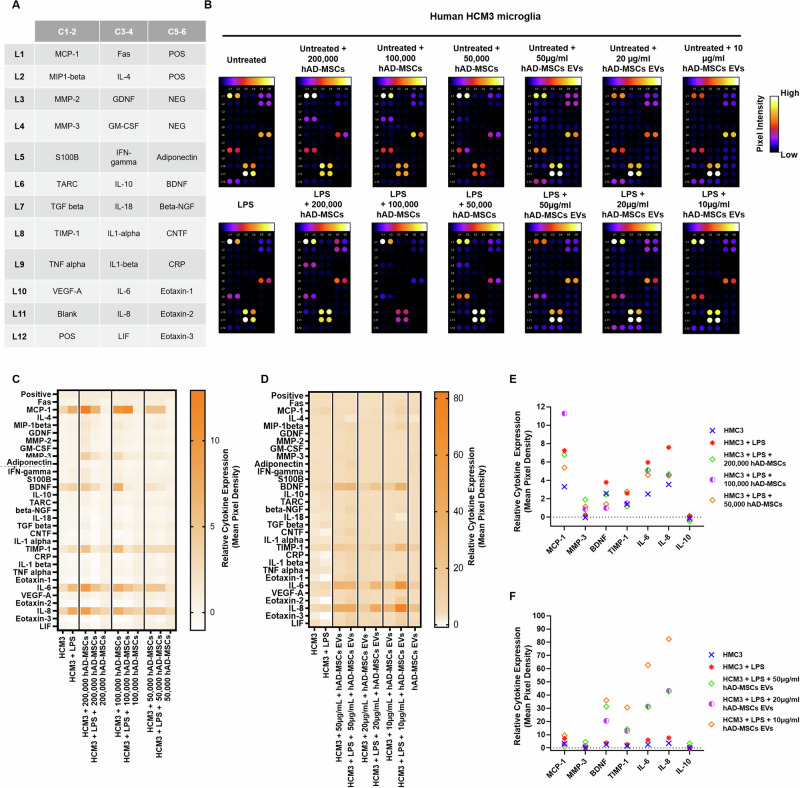
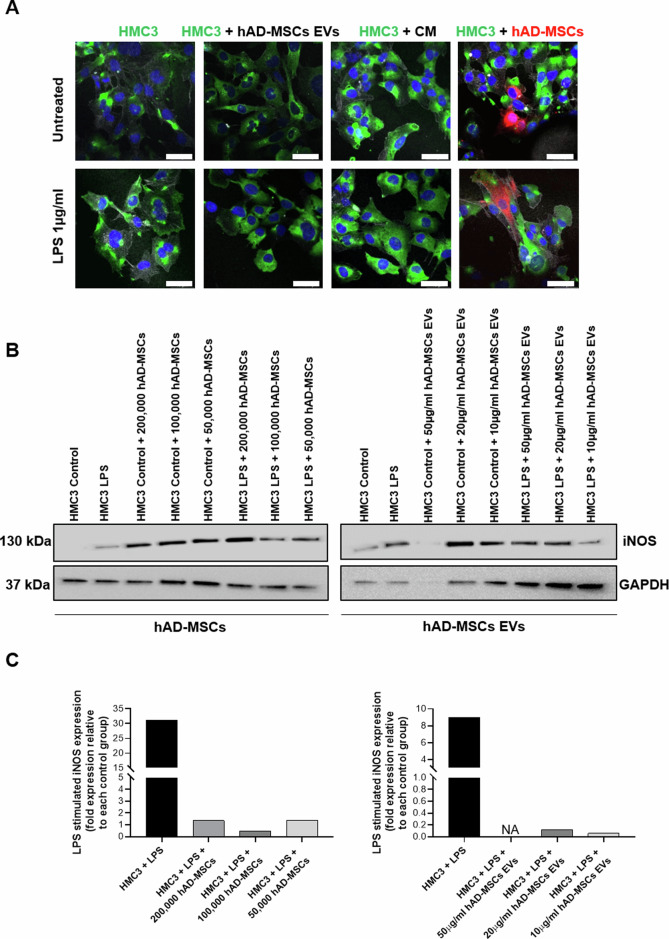
Neurodegenerative diseases (NDs), such as Alzheimer's disease (AD), are driven by neuroinflammation triggered by activated microglial cells; hence, the phenotypic regulation of these cells is an appealing target for intervention. Human adipose tissue-derived mesenchymal stem cells (hAD-MSCs) may be a potential therapeutic candidate to treat NDs given their immunomodulatory properties. Evidence suggests that the mechanism of action of hAD-MSCs is through their secretome, which includes secreted factors such as cytokines, chemokines, or growth factors as well as extracellular vesicles (EVs). Recently, EVs have emerged as important mediators in cell communication given, they can transfer proteins, lipids, and RNA species (i.e., miRNA, mRNA, and tRNAs) to modulate recipient cells. However, the therapeutic potential of hAD-MSCs and their secreted EVs has not been fully elucidated with respect to human microglia. In this study, we determined the therapeutic potential of different hAD-MSCs doses (200,000, 100,000, and 50,000 cells) or their secreted EVs (50, 20, or 10 µg/ml), on human microglial cells (HMC3) that were activated by lipopolysaccharides (LPS). Upregulation of inducible nitric oxide synthase (iNOS), an activation marker of HMC3 cells, was prevented when they were cocultured with hAD-MSCs and EVs. Moreover, hAD-MSCs inhibited the secretion of proinflammatory factors, such as IL-6, IL-8, and MCP-1, while their secreted EVs promoted the expression of anti-inflammatory mediators such as IL-10 or TIMP-1 in activated microglia. The present data therefore support a role for hAD-MSCs and their secreted EVs, as potential therapeutic candidates for the treatment of NDs.
神经退行性疾病(NDs),如阿尔茨海默病(AD),是由活化的小胶质细胞引发的神经炎症驱动的;因此,对这些细胞的表型调控是一个有吸引力的干预靶点。鉴于其免疫调节特性,人脂肪组织来源的间充质干细胞(hAD-MSCs)可能是治疗神经退行性疾病的潜在候选疗法。有证据表明,hAD-MSCs的作用机制是通过其分泌组,其中包括细胞因子、趋化因子或生长因子等分泌因子以及细胞外囊泡(EVs)。最近,鉴于细胞外囊泡可以转移蛋白质、脂质和RNA种类(即miRNA、mRNA和tRNA)来调节受体细胞,它们已成为细胞间通讯的重要介质。然而,hAD-MSCs及其分泌的细胞外囊泡在人类小胶质细胞方面的治疗潜力尚未完全阐明。在本研究中,我们测定了不同剂量的hAD-MSCs(200,000、100,000和50,000个细胞)或其分泌的细胞外囊泡(50、20或10μg/ml)对经脂多糖(LPS)激活的人小胶质细胞(HMC3)的治疗潜力。当HMC3细胞与hAD-MSCs和细胞外囊泡共培养时,可诱导型一氧化氮合酶(iNOS)(HMC3细胞的一种激活标志物)的上调受到抑制。此外,hAD-MSCs抑制促炎因子如IL-6、IL-8和MCP-1的分泌,而其分泌的细胞外囊泡则促进活化小胶质细胞中抗炎介质如IL-10或TIMP-1的表达。因此,目前的数据支持hAD-MSCs及其分泌的细胞外囊泡作为治疗神经退行性疾病的潜在候选疗法的作用。