Institute of Cellular Virology, Westphalian Wilhelms-University of Münster, Münster, Germany.
Interfaculty Centre 'Cells in Motion' (CiM), Westphalian Wilhelms-University of Münster, Münster, Germany.
PLoS Pathog. 2021 May 11;17(5):e1009580. doi: 10.1371/journal.ppat.1009580. eCollection 2021 May.
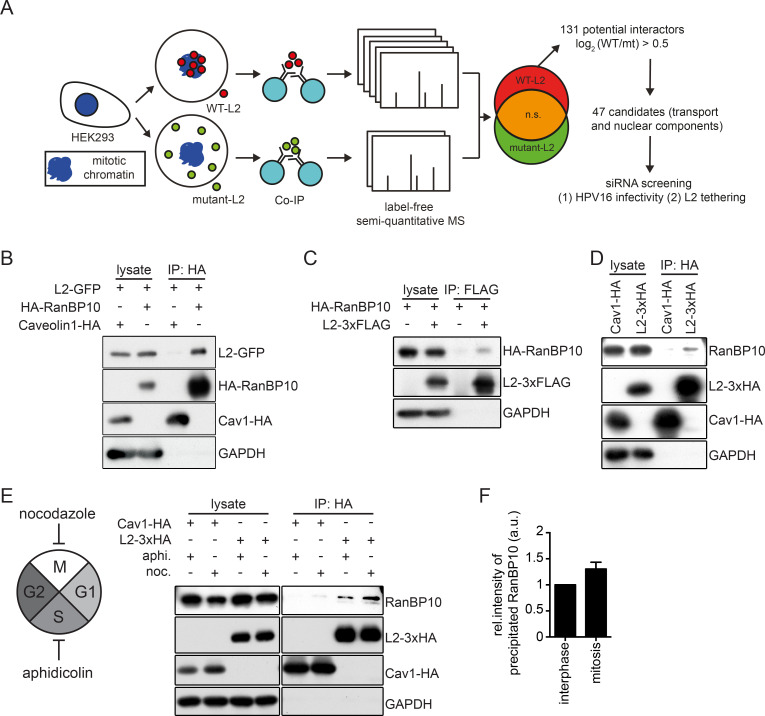
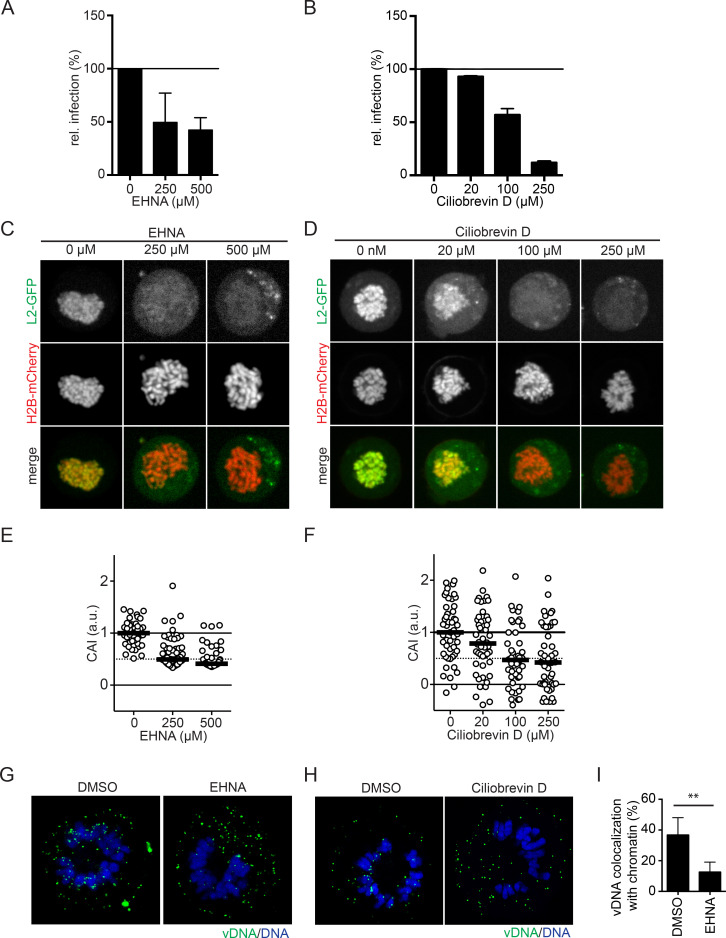
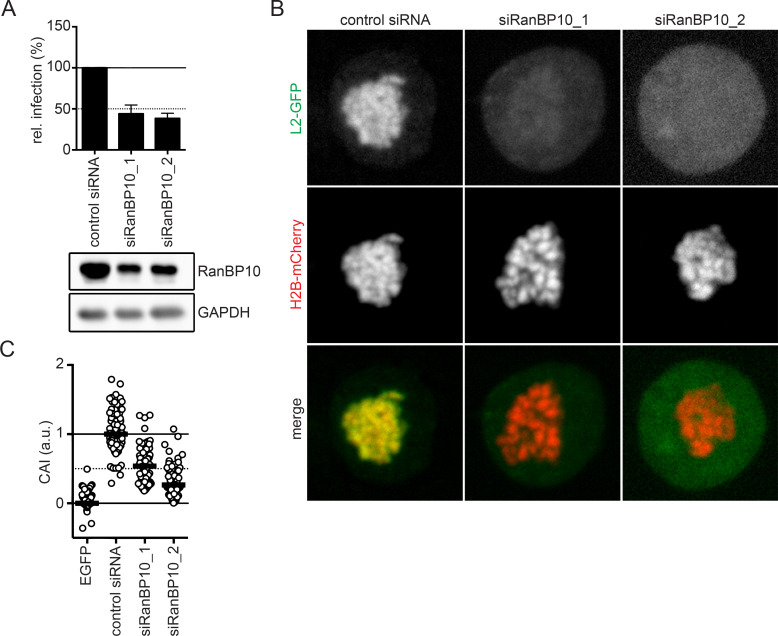
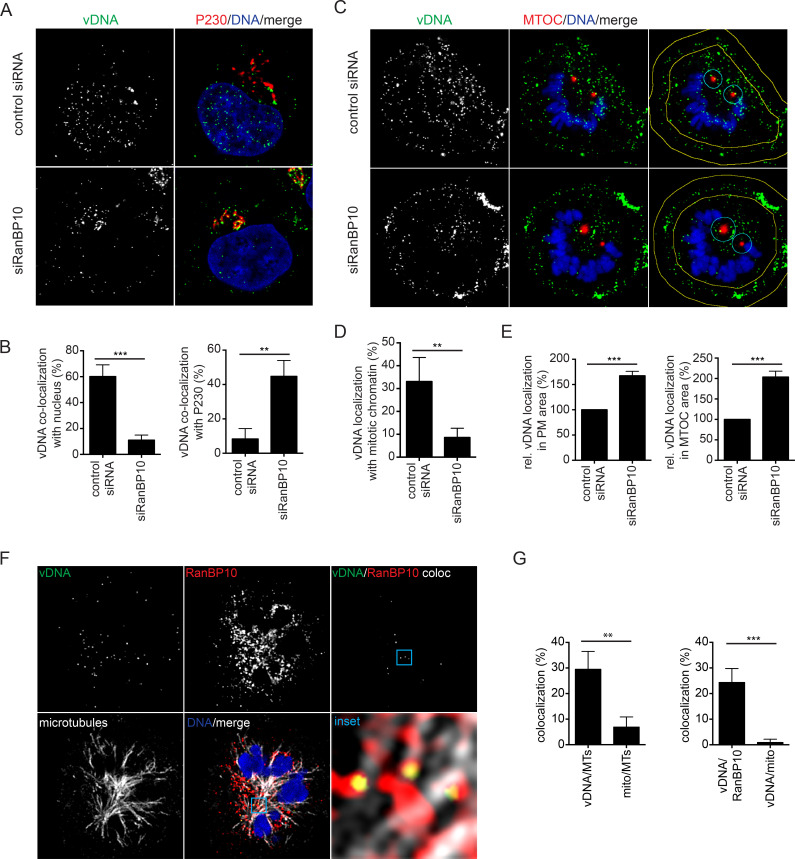
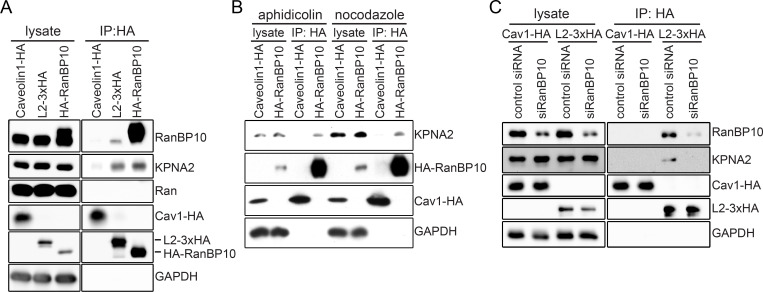
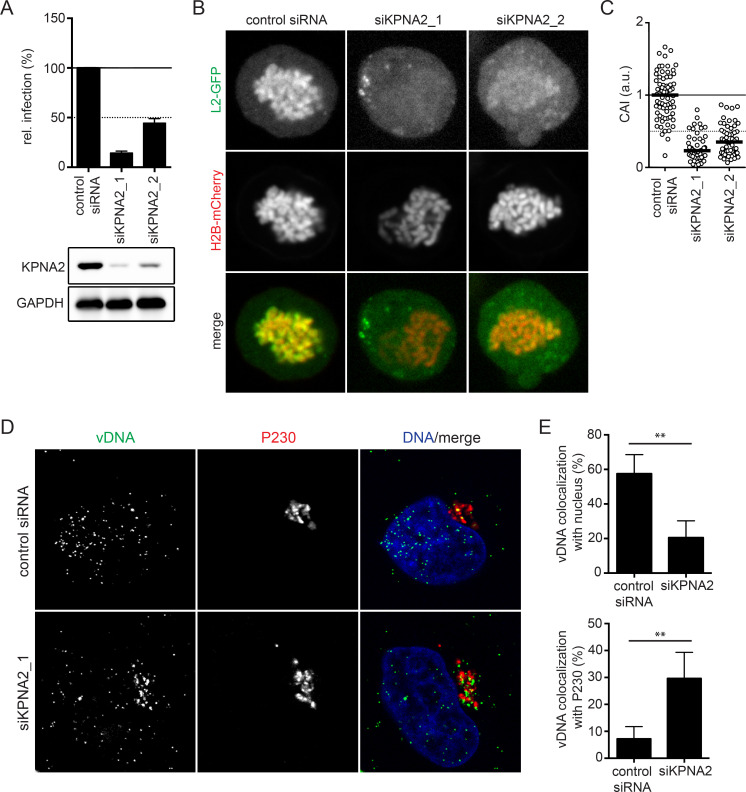
Human papillomaviruses (HPVs) utilize an atypical mode of nuclear import during cell entry. Residing in the Golgi apparatus until mitosis onset, a subviral complex composed of the minor capsid protein L2 and viral DNA (L2/vDNA) is imported into the nucleus after nuclear envelope breakdown by associating with mitotic chromatin. In this complex, L2 plays a crucial role in the interactions with cellular factors that enable delivery and ultimately tethering of the viral genome to mitotic chromatin. To date, the cellular proteins facilitating these steps remain unknown. Here, we addressed which cellular proteins may be required for this process. Using label-free mass spectrometry, biochemical assays, microscopy, and functional virological assays, we discovered that L2 engages a hitherto unknown protein complex of Ran-binding protein 10 (RanBP10), karyopherin alpha2 (KPNA2), and dynein light chain DYNLT3 to facilitate transport towards mitotic chromatin. Thus, our study not only identifies novel cellular interactors and mechanism that facilitate a poorly understood step in HPV entry, but also a novel cellular transport complex.
人乳头瘤病毒(HPV)在细胞进入时利用一种非典型的核输入方式。在有丝分裂开始之前,位于高尔基体中的由次要衣壳蛋白 L2 和病毒 DNA(L2/vDNA)组成的亚病毒复合物,在核膜破裂后,通过与有丝分裂染色质结合而被导入细胞核。在这个复合物中,L2 在与细胞因子的相互作用中起着至关重要的作用,这些因子使病毒基因组得以传递并最终锚定到有丝分裂染色质上。迄今为止,促进这一过程的细胞蛋白仍不清楚。在这里,我们研究了哪些细胞蛋白可能是这个过程所必需的。我们使用无标记质谱、生化分析、显微镜和功能病毒学分析,发现 L2 与先前未知的 Ran 结合蛋白 10(RanBP10)、核孔蛋白α2(KPNA2)和动力蛋白轻链 DYNLT3 蛋白复合物相互作用,以促进向有丝分裂染色质的运输。因此,我们的研究不仅鉴定了促进 HPV 进入过程中一个了解甚少的步骤的新的细胞相互作用因子和机制,还鉴定了一个新的细胞运输复合物。