Department of Biological Sciences, Fordham Universitygrid.256023.0, Bronx, New York, USA.
Microbiol Spectr. 2022 Jun 29;10(3):e0150522. doi: 10.1128/spectrum.01505-22. Epub 2022 May 24.
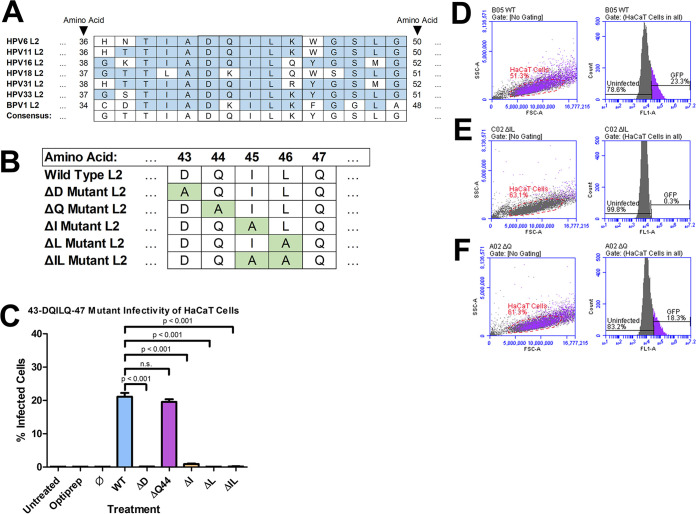
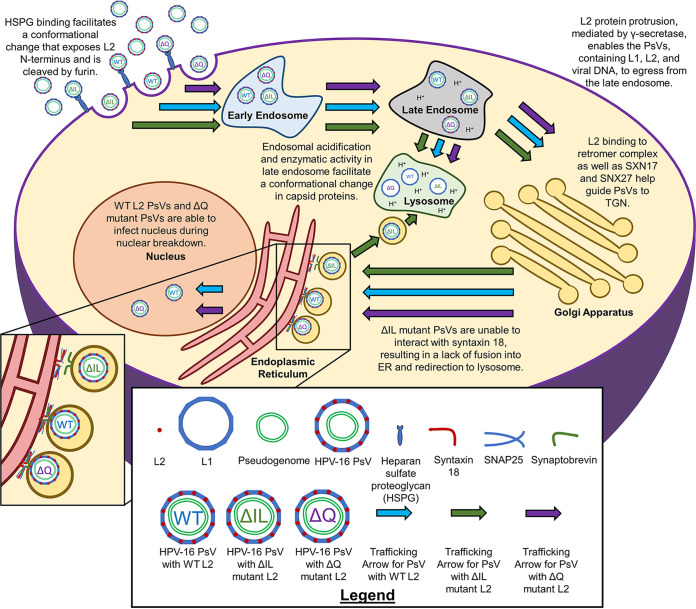
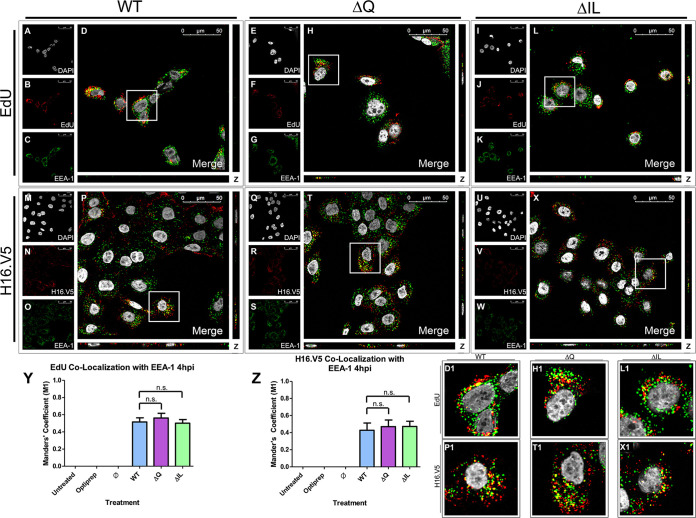
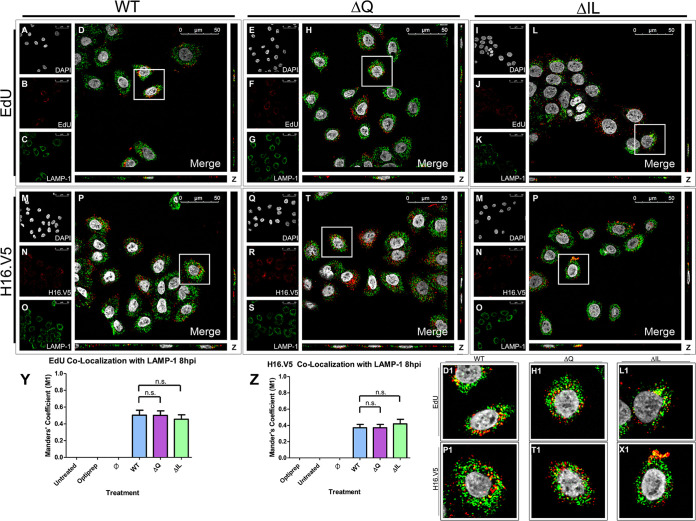
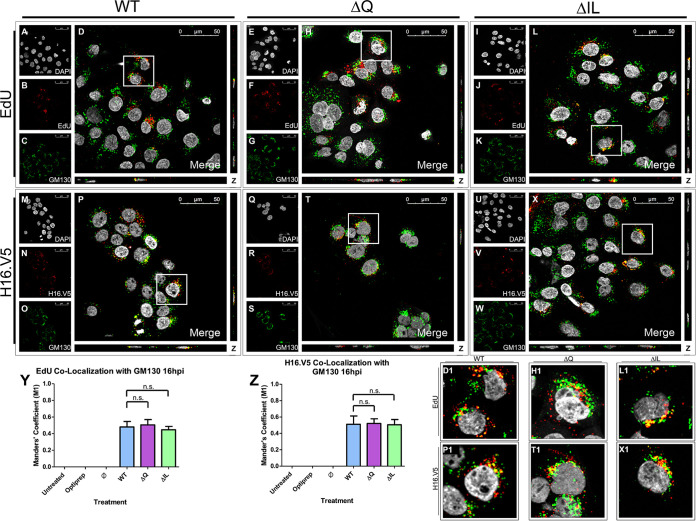
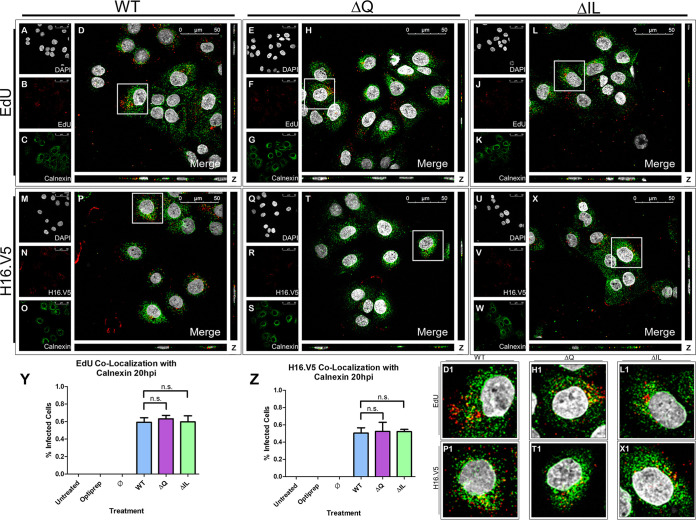
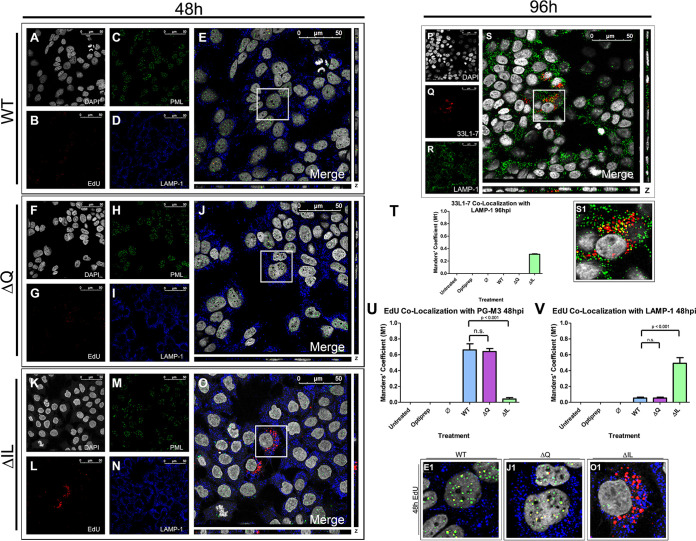
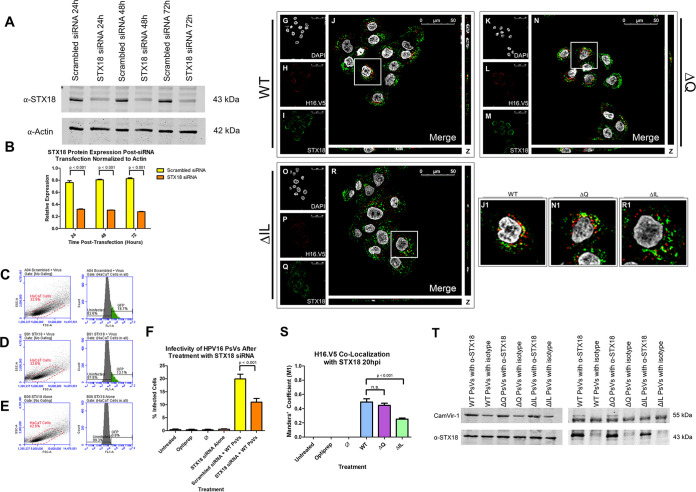
Human papillomaviruses (HPVs) consist of two capsid proteins: major capsid protein L1 and minor capsid protein L2. The L2 protein has been shown to be involved in intracellular trafficking events that lead to the deposition of the viral DNA into the nucleus. In this study, we investigate the role of HPV16 L2 residues 43-DQILQ-47 during intracellular trafficking in human keratinocytes. We demonstrate that the highly conserved amino acids aspartic acid, isoleucine, and leucine are involved with the intracellular trafficking of the virus. Amino acid substitution of the isoleucine and leucine residues with alanine residues results in a significant decrease in infectivity of the pseudovirions without any changes to the binding or internalization of the virus. The pseudovirions containing these substitutions exhibit an altered trafficking pattern and do not deposit the viral pseudogenome into the nucleus. Instead, these mutated pseudovirions display a lack of interaction with syntaxin 18, an ER SNARE protein, are unable to progress past the endoplasmic reticulum (ER) and are redirected to the lysosomes. The results of this study help to elucidate the role and potential involvement of the 43-DQILQ-47 sequence during intracellular trafficking, specifically during trafficking beyond the ER. High-risk types of human papillomaviruses (HPVs), such as HPV16, are highly associated with cervical, anogenital, and oropharyngeal cancers. The minor capsid protein L2 is essential for the intracellular trafficking of the viral DNA to the nucleus. This study investigates the role of amino acid residues 43-DQILQ-47 of the HPV16 L2 protein in the intracellular trafficking of the virus. Understanding how the virus traffics through the cell is a key factor in the development of additional preventative antiviral therapies. This study illustrates, through modification of the 43-DQILQ-47 sequence in pseudovirions, the importance of the 43-DQILQ-47 sequence in the trafficking of the virus beyond the endoplasmic reticulum.
人乳头瘤病毒 (HPV) 由两种衣壳蛋白组成:主要衣壳蛋白 L1 和次要衣壳蛋白 L2。已经表明 L2 蛋白参与导致病毒 DNA 沉积到细胞核内的细胞内运输事件。在这项研究中,我们研究了 HPV16 L2 残基 43-DQILQ-47 在人角质形成细胞内运输中的作用。我们证明,高度保守的天冬氨酸、异亮氨酸和亮氨酸氨基酸参与病毒的细胞内运输。用丙氨酸残基取代异亮氨酸和亮氨酸残基会导致假病毒的感染性显著降低,而病毒的结合或内化没有任何变化。含有这些取代的假病毒表现出改变的运输模式,并且不会将病毒假基因组沉积到细胞核中。相反,这些突变的假病毒与网格蛋白 18(一种内质网 SNARE 蛋白)缺乏相互作用,无法越过内质网并被重新定向到溶酶体。这项研究的结果有助于阐明 43-DQILQ-47 序列在细胞内运输过程中的作用和潜在参与,特别是在越过内质网的运输过程中。高危型人乳头瘤病毒(HPV),如 HPV16,与宫颈癌、肛门生殖器癌和口咽癌高度相关。次要衣壳蛋白 L2 是病毒 DNA 向细胞核内运输所必需的。本研究调查了 HPV16 L2 蛋白的氨基酸残基 43-DQILQ-47 在病毒细胞内运输中的作用。了解病毒如何在细胞内运输是开发额外预防性抗病毒疗法的关键因素。本研究通过在假病毒中修饰 43-DQILQ-47 序列,说明了 43-DQILQ-47 序列在病毒越过内质网运输中的重要性。