Department of Nephrology and Hypertension, Kawasaki Medical School, Kurashiki, Okayama, Japan.
Medical Science, Kawasaki Medical School, Kurashiki, Okayama, Japan.
PLoS One. 2021 May 11;16(5):e0251554. doi: 10.1371/journal.pone.0251554. eCollection 2021.
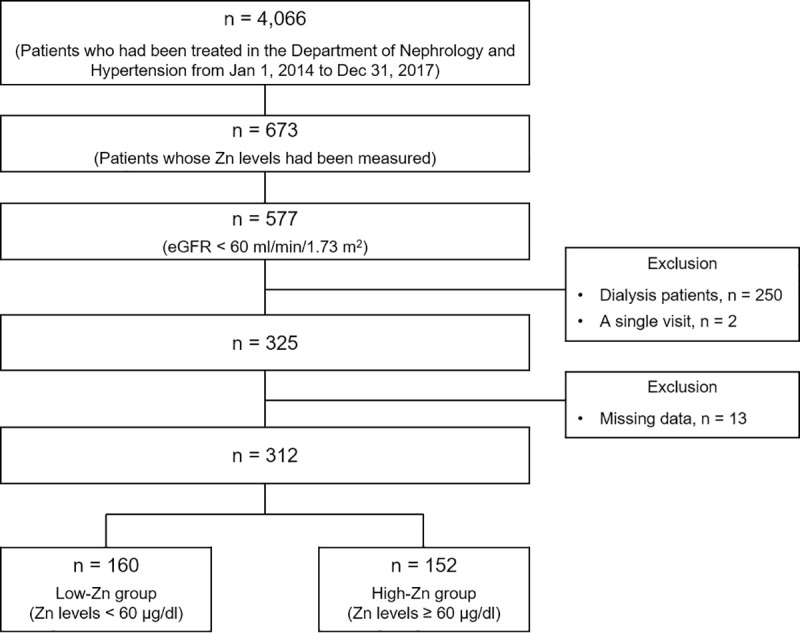
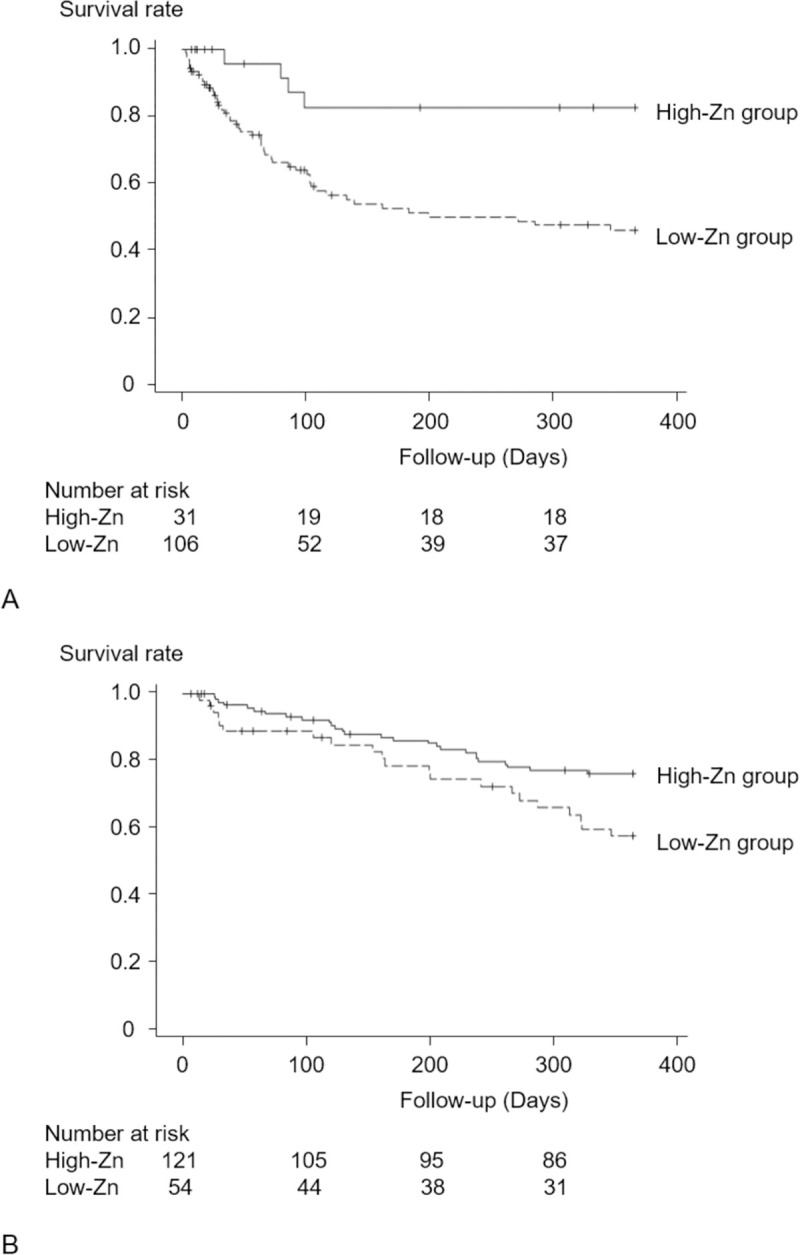
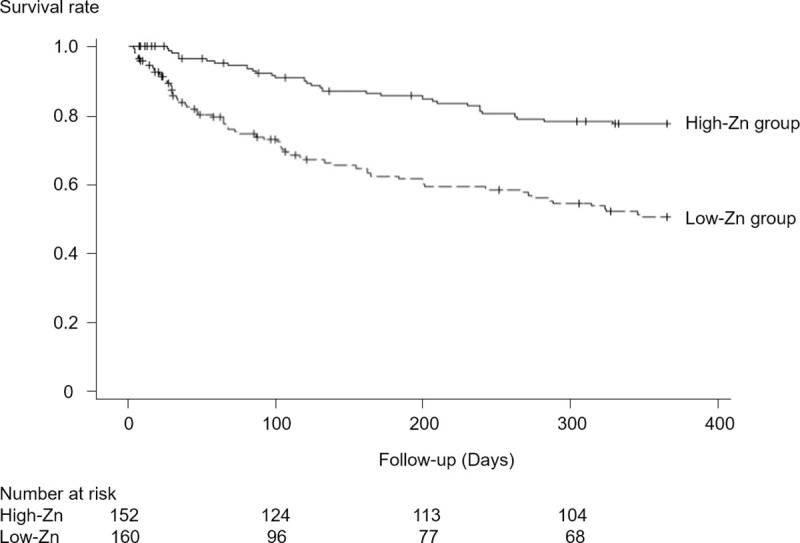
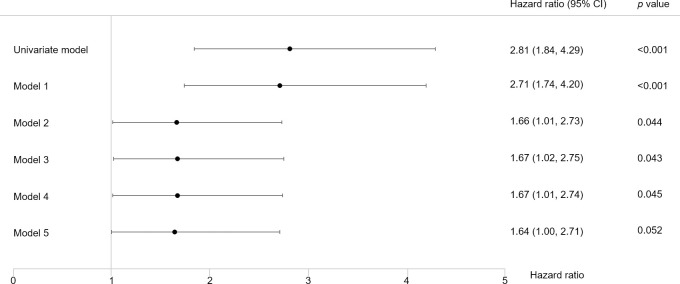
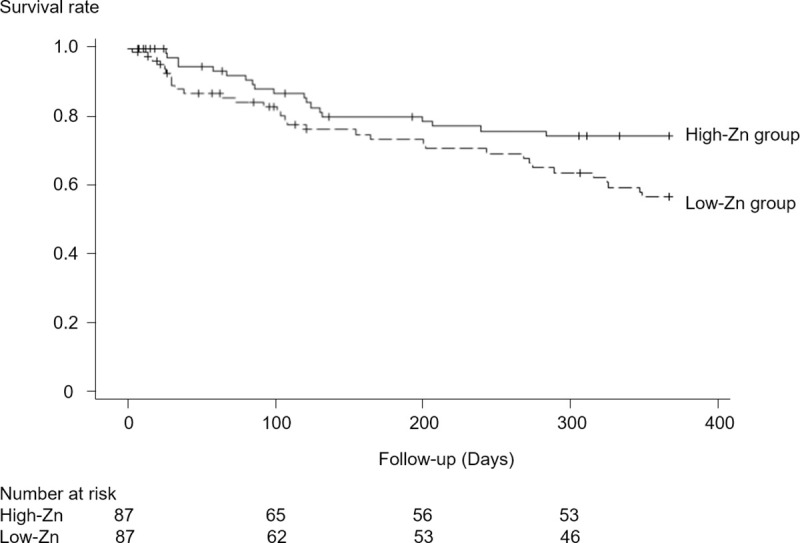
Serum zinc (Zn) levels tend to be low in chronic kidney disease (CKD) patients. This cohort study was conducted to investigate the relationship between zinc deficiency and CKD progression. Patients were classified into two groups based on Zn levels < 60 μg/dl (low-Zn group, n = 160) and ≥ 60 μg/dl (high-Zn group, n = 152). The primary outcome was defined as end-stage kidney disease (ESKD) or death and was examined over a 1-year observation period. Overall, the mean Zn level was 59.6 μg/dl and the median eGFR was 20.3 ml/min/1.73 m2. The incidence of the primary outcome was higher in the low-Zn group (p<0.001). Various Cox proportional hazards models adjusted for baseline characteristics showed higher risks of the primary outcome in the low-Zn group than in the high-Zn group. Competing risks analysis showed that low Zn levels were associated with ESKD but not with death. Moreover, in propensity score-matched analysis, the low-Zn group showed a higher risk of the primary outcome [adjusted hazard ratio 1.81 (95% confidence interval 1.02, 3.24)]. Furthermore, an interaction was observed between Zn and serum albumin levels (interaction p = 0.026). The results of this study indicate that zinc deficiency is a risk factor for CKD progression.
血清锌(Zn)水平在慢性肾脏病(CKD)患者中往往较低。本队列研究旨在探讨锌缺乏与 CKD 进展之间的关系。根据 Zn 水平<60μg/dl(低 Zn 组,n=160)和≥60μg/dl(高 Zn 组,n=152)将患者分为两组。主要结局定义为终末期肾病(ESKD)或死亡,并在 1 年观察期内进行检查。总体而言,平均 Zn 水平为 59.6μg/dl,中位 eGFR 为 20.3ml/min/1.73m2。低 Zn 组的主要结局发生率更高(p<0.001)。调整基线特征的各种 Cox 比例风险模型显示,低 Zn 组的主要结局风险高于高 Zn 组。竞争风险分析表明,低 Zn 水平与 ESKD 相关,但与死亡无关。此外,在倾向评分匹配分析中,低 Zn 组的主要结局风险更高[调整后的危险比 1.81(95%置信区间 1.02,3.24)]。此外,Zn 和血清白蛋白水平之间存在交互作用(交互 p=0.026)。这项研究的结果表明,锌缺乏是 CKD 进展的一个危险因素。