Department of Environmental Engineering, Kumoh National Institute of Technology, Gumi 39177, Republic of Korea; School of Civil, Environmental and Architectural Engineering, Korea University, Seoul 02841, Republic of Korea.
Department of Environmental Engineering, Kumoh National Institute of Technology, Gumi 39177, Republic of Korea; Department of Energy Engineering Convergence, Kumoh National Institute of Technology, Gumi 39177, Republic of Korea.
Ultrason Sonochem. 2021 Jun;74:105574. doi: 10.1016/j.ultsonch.2021.105574. Epub 2021 Apr 25.
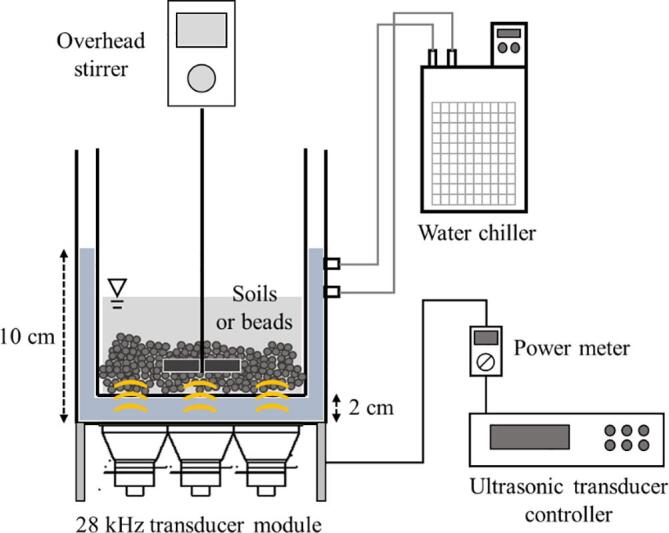
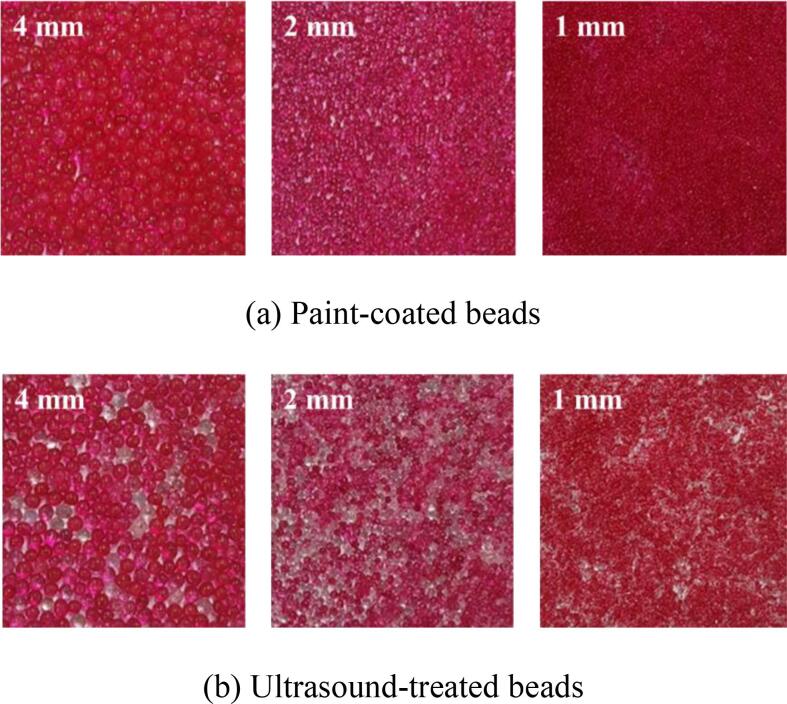
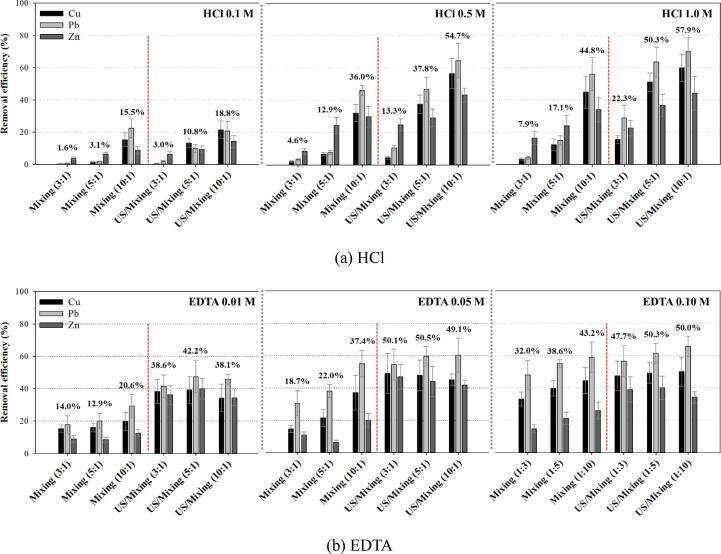
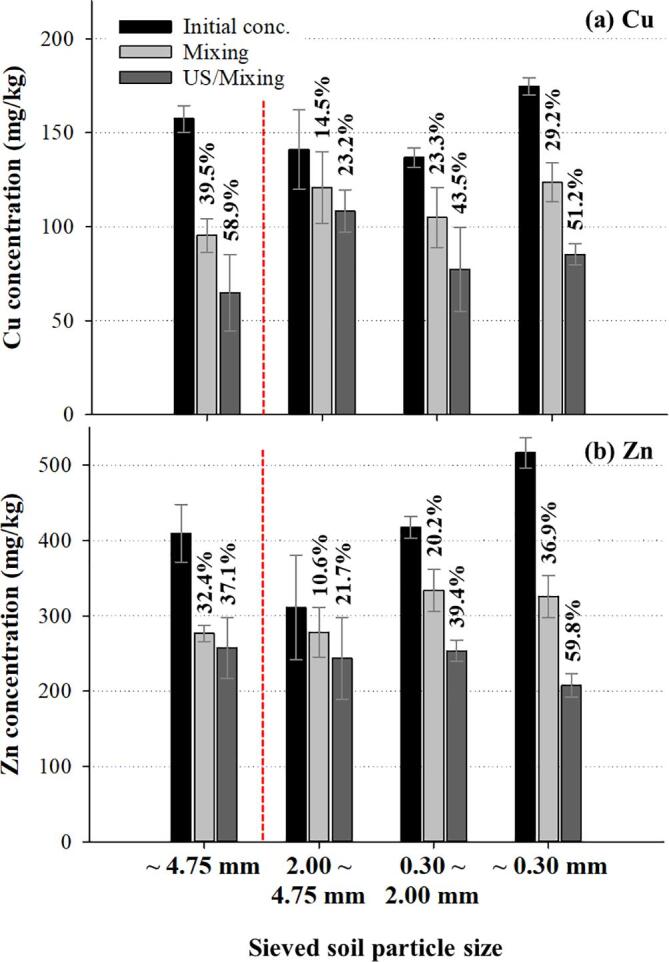
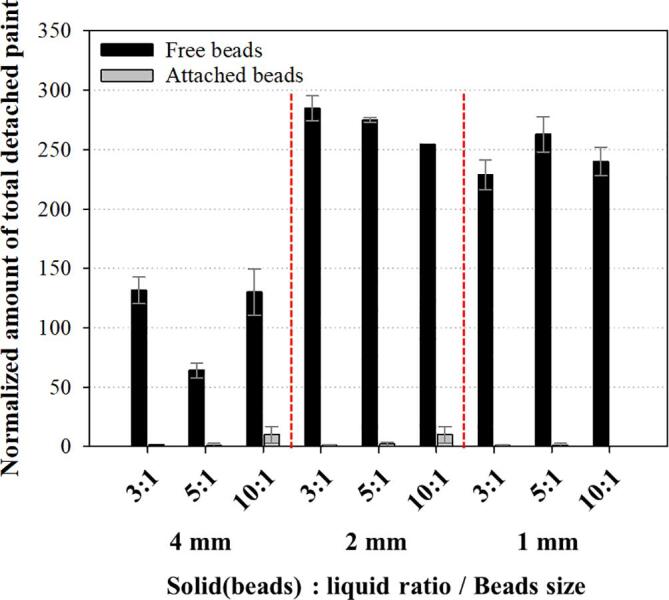
Ultrasound-assisted soil washing processes were investigated for the removal of heavy metals (Cu, Pb, and Zn) in real contaminated soils using HCl and EDTA. The ultrasound-assisted soil washing (US/Mixing) process was compared with the conventional soil washing (Mixing) process based on the mechanical mixing. High removal efficiency (44.8% for HCl and 43.2% for EDTA) for the metals was obtained for the most extreme conditions (HCl 1.0 M or EDTA 0.1 M and L:S = 10:1) in the Mixing process. With the aide of ultrasound, higher removal efficiency (57.9% for HCl and 50.0% for EDTA) was obtained in the same extreme conditions and similar or higher removal efficiency (e.g., 54.7% for HCl 0.5 M and L:S = 10:1 and 50.5% for EDTA 0.05 M and L:S = 5:1) was achieved even in less extreme conditions (lower HCl or EDTA concentration and L:S ratio). Therefore, it was revealed that the US/Mixing was advantageous over the conventional Mixing processes in terms of metal removal efficiency, consumption of chemicals, amount of generated washing leachate, and volume/size of washing reactor. In addition, the heavy metals removal was enhanced for the smaller soil particles in the US/Mixing process. It was due to more violent movement of smaller particles in slurry phase and more violent sonophysical effects. In order to understand the mechanism of ultrasonic desorption, the desorption test was conducted using the paint-coated beads with three sizes (1, 2, and 4 mm) for the free and attached conditions. It was found that no significant desorption/removal of paint from the beads was observed without the movement of beads in the water including floatation, collision, and scrubbing. Thus, it was suggested that the simultaneous application of the ultrasound and mechanical mixing could enhance the physical movement of the particles significantly and the very high removal/desorption could be attained.
超声辅助土壤洗涤工艺用于使用 HCl 和 EDTA 从实际污染土壤中去除重金属(Cu、Pb 和 Zn)。超声辅助土壤洗涤(US/Mixing)工艺与基于机械混合的传统土壤洗涤(Mixing)工艺进行了比较。在混合工艺中,在最极端的条件下(HCl 1.0 M 或 EDTA 0.1 M 和 L:S=10:1),金属的去除效率很高(HCl 为 44.8%,EDTA 为 43.2%)。在超声波的辅助下,在相同的极端条件下,获得了更高的去除效率(HCl 为 57.9%,EDTA 为 50.0%),在不那么极端的条件下(HCl 为 0.5 M 和 L:S=10:1,EDTA 为 0.05 M 和 L:S=5:1),也获得了相似或更高的去除效率。因此,与传统的混合工艺相比,US/Mixing 在金属去除效率、化学品消耗、洗涤浸出液生成量和洗涤反应器体积/尺寸方面具有优势。此外,在 US/Mixing 工艺中,较小的土壤颗粒的重金属去除效果得到了增强。这是由于在浆料相中较小颗粒的更剧烈运动和更剧烈的超声物理效应。为了理解超声解吸的机制,进行了使用三种尺寸(1、2 和 4 毫米)的涂漆珠的解吸试验,用于自由和附着条件。结果发现,在没有珠子在包括漂浮、碰撞和擦洗在内的水中运动的情况下,从珠子上没有观察到油漆的明显解吸/去除。因此,建议同时应用超声波和机械混合可以显著增强颗粒的物理运动,从而达到非常高的去除/解吸效果。