Department of Physiology, Faculty of Medicine, Manipal University College Malaysia, Jalan Batu Hampar, Bukit Baru, 75150, Melaka, Malaysia.
Department of Physiology, Faculty of Medicine, Lincoln University College, Petaling Jaya, Selangor, Malaysia.
Sci Rep. 2021 May 11;11(1):9946. doi: 10.1038/s41598-021-89295-0.
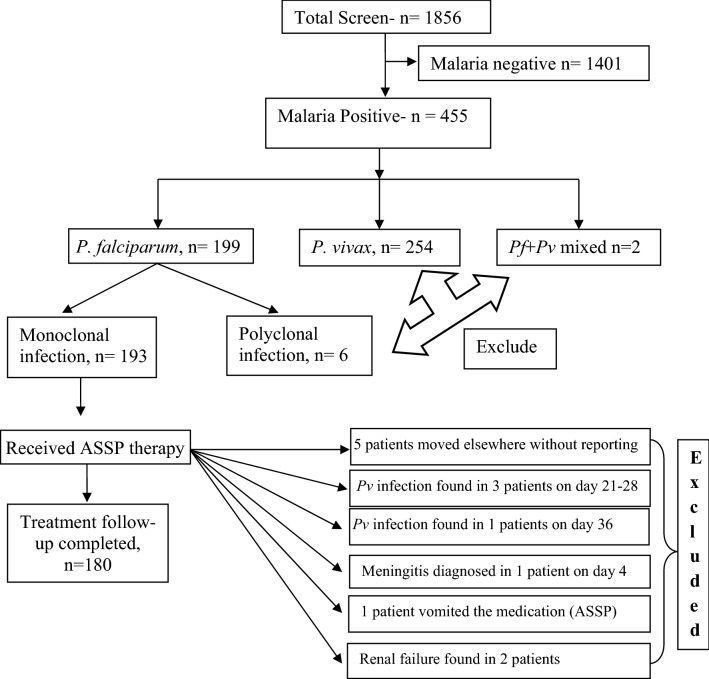
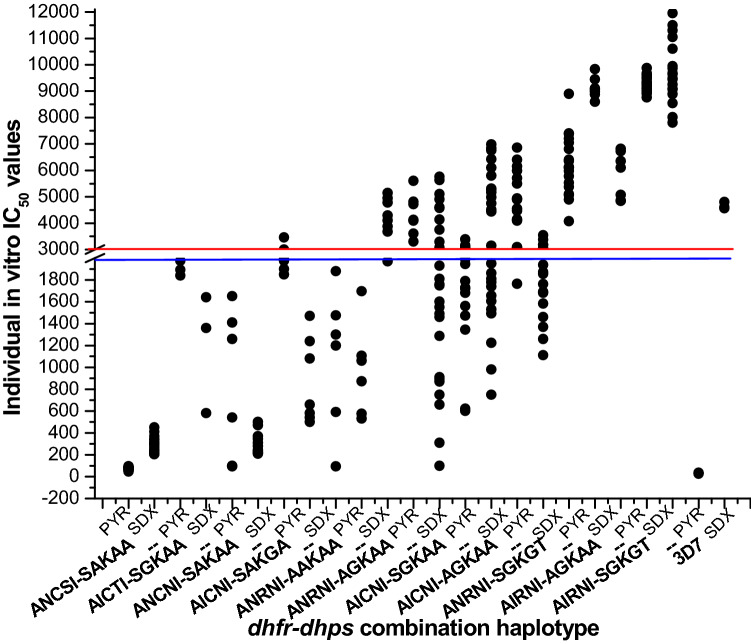
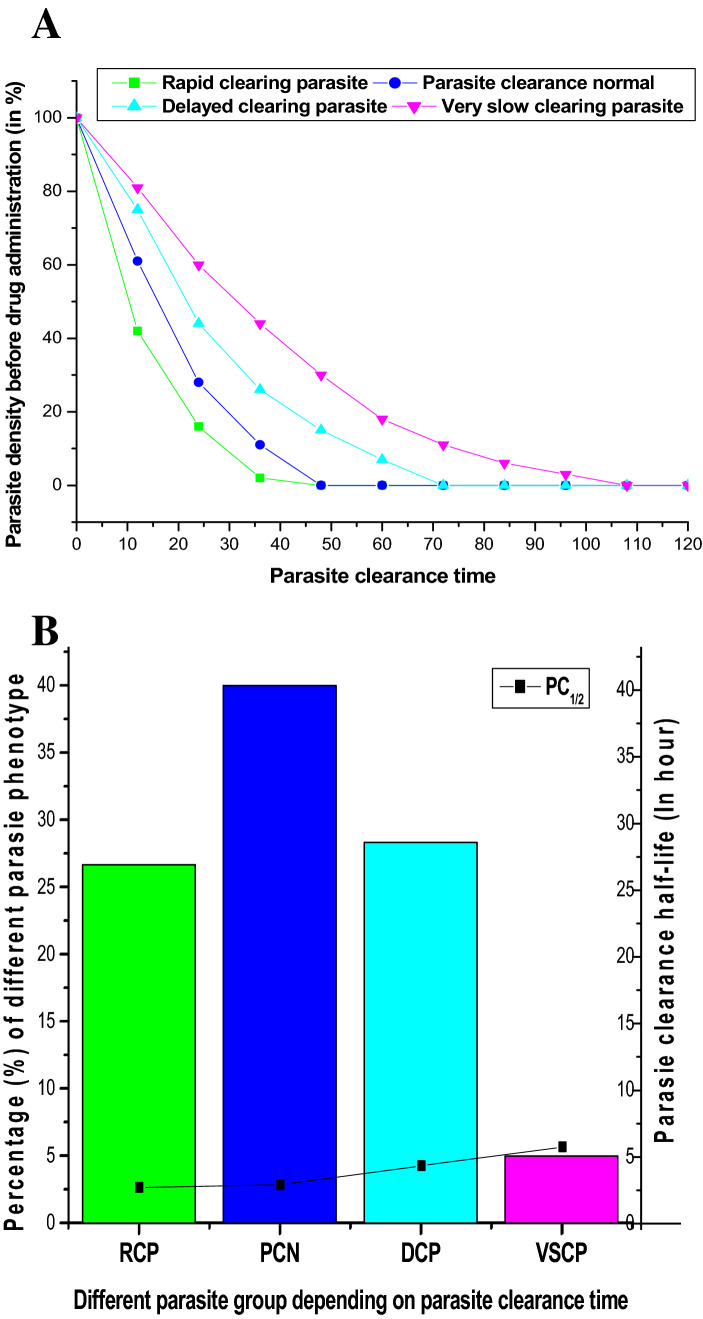
Artemisinin is the frontline fast-acting anti-malarial against P. falciparum. Emergence and spread of resistant parasite in eastern-India poses a threat to national malaria control programs. Therefore, the objective of our study is to evaluate the artesunate-sulfadoxine-pyrimethamine efficacy in Central India. 180 monoclonal P. falciparum-infected patients received standard ASSP therapy during August 2015-January 2017, soon after diagnosis and monitored over next 42-days. Artemisinin-resistance was assessed through in-vivo parasite clearance half-life (PC), ex-vivo ring-stage survivability (RSA), and genome analysis of kelch13 and other candidate gene (pfcrt, pfmdr1, pfatpase 6, pfdhfr and pfdhps). Of 180 P. falciparum positive patients, 9.5% showed increased PC (> 5.5 h), among them eleven isolates (6.1%) showed reduced sensitivity to RSA. In 4.4% of cases, parasites were not cleared by 72 h and showed prolonged PC(5.6 h) (P < 0.005) along with significantly higher RSA (2.2%) than cured patients (0.4%). None of day-3 positive isolates contained the pfkelch13 mutation implicated in artemisinin resistance. Parasite recrudescence was observed in 5.6% patients, which was associated with triple dhfr-dhps (AIRNI-SGKGT) combination mutation. Emergence of reduced sensitivity to artesunate-sulfadoxine-pyrimethamine, in central India highlighted the risk toward spread of resistant parasite across different parts of India. Day-3 positive parasite, featuring the phenotype of artemisinin-resistance without pfkelch13 mutation, suggested kelch13-independent artemisinin-resistance.
青蒿素是针对恶性疟原虫的一线快速抗疟药物。在印度东部,耐药寄生虫的出现和传播对国家疟疾控制规划构成了威胁。因此,我们的研究目的是评估青蒿琥酯-磺胺多辛-乙胺嘧啶在印度中部的疗效。在 2015 年 8 月至 2017 年 1 月期间,180 名患有单克隆恶性疟原虫感染的患者在诊断后不久接受了标准的 ASSP 治疗,并在接下来的 42 天内进行了监测。通过体内寄生虫清除半衰期(PC)、体外环期存活率(RSA)以及kelch13和其他候选基因(pfcrt、pfmdr1、pfatpase 6、pfdhfr 和 pfdhps)的基因组分析来评估青蒿素耐药性。在 180 名疟原虫阳性患者中,有 9.5%的患者 PC 延长(>5.5 小时),其中 11 例(6.1%)对 RSA 的敏感性降低。在 4.4%的病例中,寄生虫在 72 小时内未被清除,并且 PC 延长(5.6 小时)(P<0.005),同时 RSA 显著升高(2.2%),高于治愈患者(0.4%)。没有一个第 3 天阳性的分离株含有与青蒿素耐药性相关的 pfkelch13 突变。在 5.6%的患者中观察到寄生虫复发,这与三重 dhfr-dhps(AIRNI-SGKGT)组合突变有关。青蒿琥酯-磺胺多辛-乙胺嘧啶敏感性降低的出现,突显了印度不同地区耐药寄生虫传播风险的增加。第 3 天阳性的寄生虫,具有青蒿素耐药性的表型,而没有 pfkelch13 突变,提示存在 kelch13 非依赖性的青蒿素耐药性。