• 文献检索
  • 文档翻译
  • 深度研究
  • 学术资讯
  • Suppr Zotero 插件Zotero 插件
  • 邀请有礼
  • 套餐&价格
  • 历史记录
应用&插件
Suppr Zotero 插件Zotero 插件浏览器插件Mac 客户端Windows 客户端微信小程序
定价
高级版会员购买积分包购买API积分包
服务
文献检索文档翻译深度研究API 文档MCP 服务
关于我们
关于 Suppr公司介绍联系我们用户协议隐私条款
关注我们

Suppr 超能文献

核心技术专利:CN118964589B侵权必究
粤ICP备2023148730 号-1Suppr @ 2026

文献检索

告别复杂PubMed语法,用中文像聊天一样搜索,搜遍4000万医学文献。AI智能推荐,让科研检索更轻松。

立即免费搜索

文件翻译

保留排版,准确专业,支持PDF/Word/PPT等文件格式,支持 12+语言互译。

免费翻译文档

深度研究

AI帮你快速写综述,25分钟生成高质量综述,智能提取关键信息,辅助科研写作。

立即免费体验

运用数据挖掘技术抗击和控制流行病:一项范围综述。

Using data mining techniques to fight and control epidemics: A scoping review.

作者信息

Safdari Reza, Rezayi Sorayya, Saeedi Soheila, Tanhapour Mozhgan, Gholamzadeh Marsa

机构信息

Department of Health Information Management, School of Allied Medical Sciences, Tehran University of Medical Sciences, Tehran, Iran.

Ph.D. Student in Medical Informatics, Health Information Management Department, School of Allied Medical Sciences, Tehran University of Medical Sciences, Tehran, Iran.

出版信息

Health Technol (Berl). 2021;11(4):759-771. doi: 10.1007/s12553-021-00553-7. Epub 2021 May 7.

DOI:10.1007/s12553-021-00553-7
PMID:33977022
原文链接:https://pmc.ncbi.nlm.nih.gov/articles/PMC8102070/
Abstract

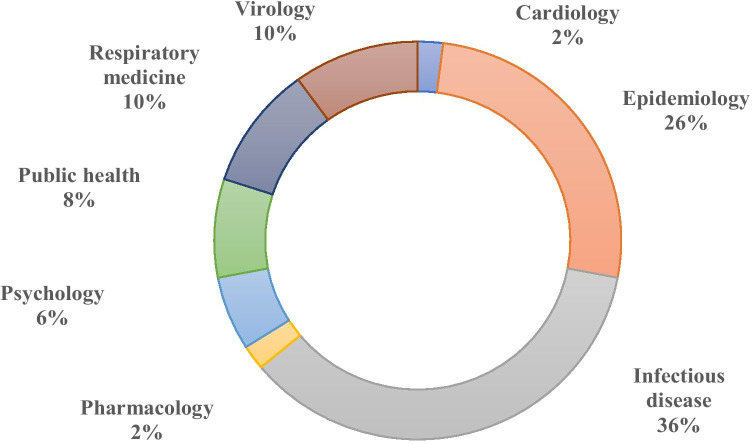
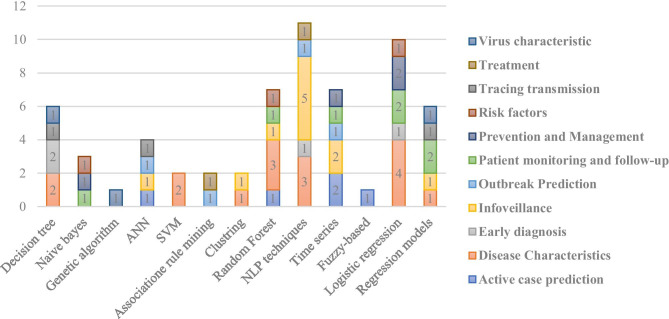
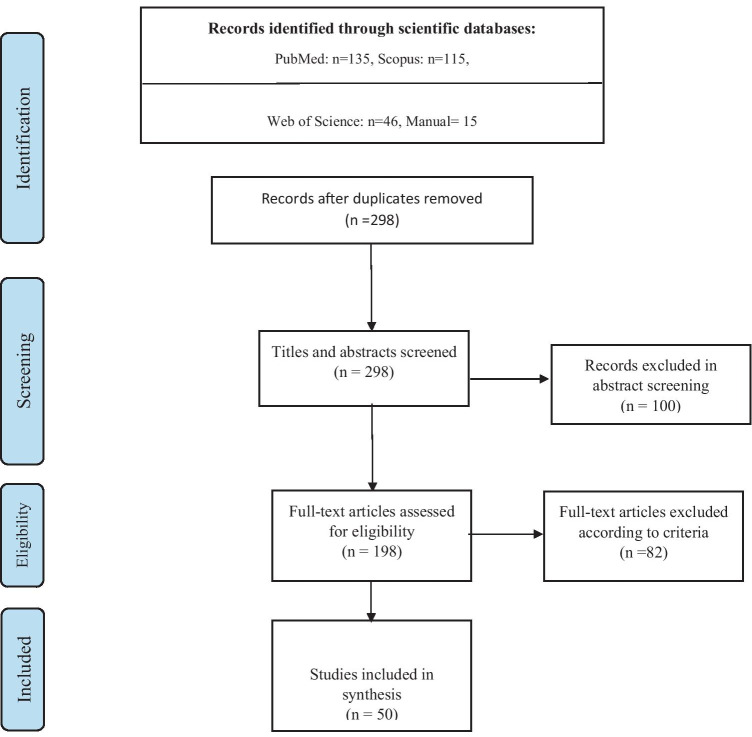
The main objective of this survey is to study the published articles to determine the most favorite data mining methods and gap of knowledge Since the threat of pandemics has raised concerns for public health, data mining techniques were applied by researchers to reveal the hidden knowledge. Web of Science, Scopus, and PubMed databases were selected for systematic searches. Then, all of the retrieved articles were screened in the stepwise process according to the Preferred Reporting Items for Systematic Reviews and Meta-Analyses checklist to select appropriate articles. All of the results were analyzed and summarized based on some classifications. Out of 335 citations were retrieved, 50 articles were determined as eligible articles through a scoping review. The review results showed that the most favorite DM belonged to Natural language processing (22%) and the most commonly proposed approach was revealing disease characteristics (22%). Regarding diseases, the most addressed disease was COVID-19. The studies show a predominance of applying supervised learning techniques (90%). Concerning healthcare scopes, we found that infectious disease (36%) to be the most frequent, closely followed by epidemiology discipline. The most common software used in the studies was SPSS (22%) and R (20%). The results revealed that some valuable researches conducted by employing the capabilities of knowledge discovery methods to understand the unknown dimensions of diseases in pandemics. But most researches will need in terms of treatment and disease control.

摘要

本次调查的主要目的是研究已发表的文章,以确定最受欢迎的数据挖掘方法和知识差距。由于大流行的威胁引发了对公共卫生的关注,研究人员应用数据挖掘技术来揭示隐藏的知识。选择了科学网、Scopus和PubMed数据库进行系统检索。然后,根据系统评价和Meta分析的首选报告项目清单,在逐步筛选过程中对所有检索到的文章进行筛选,以选择合适的文章。所有结果都根据一些分类进行了分析和总结。在检索到的335条引用中,通过范围审查确定了50篇文章为合格文章。审查结果表明,最受欢迎的数据挖掘方法属于自然语言处理(22%),最常提出的方法是揭示疾病特征(22%)。关于疾病,提及最多的疾病是COVID-19。研究表明,应用监督学习技术的占主导地位(90%)。关于医疗保健范围,我们发现传染病(36%)是最常见的,紧随其后的是流行病学学科。研究中最常用的软件是SPSS(22%)和R(20%)。结果表明,一些有价值的研究利用知识发现方法的能力来了解大流行中疾病的未知方面。但大多数研究在治疗和疾病控制方面仍有需求。
https://cdn.ncbi.nlm.nih.gov/pmc/blobs/c468/8102070/7306729d75ae/12553_2021_553_Fig6_HTML.jpg
https://cdn.ncbi.nlm.nih.gov/pmc/blobs/c468/8102070/9f76354ac978/12553_2021_553_Fig1_HTML.jpg
https://cdn.ncbi.nlm.nih.gov/pmc/blobs/c468/8102070/2410d5842426/12553_2021_553_Fig2_HTML.jpg
https://cdn.ncbi.nlm.nih.gov/pmc/blobs/c468/8102070/5c62dc5eeae6/12553_2021_553_Fig3_HTML.jpg
https://cdn.ncbi.nlm.nih.gov/pmc/blobs/c468/8102070/13b93795cdab/12553_2021_553_Fig4_HTML.jpg
https://cdn.ncbi.nlm.nih.gov/pmc/blobs/c468/8102070/650da283fdaf/12553_2021_553_Fig5_HTML.jpg
https://cdn.ncbi.nlm.nih.gov/pmc/blobs/c468/8102070/7306729d75ae/12553_2021_553_Fig6_HTML.jpg
https://cdn.ncbi.nlm.nih.gov/pmc/blobs/c468/8102070/9f76354ac978/12553_2021_553_Fig1_HTML.jpg
https://cdn.ncbi.nlm.nih.gov/pmc/blobs/c468/8102070/2410d5842426/12553_2021_553_Fig2_HTML.jpg
https://cdn.ncbi.nlm.nih.gov/pmc/blobs/c468/8102070/5c62dc5eeae6/12553_2021_553_Fig3_HTML.jpg
https://cdn.ncbi.nlm.nih.gov/pmc/blobs/c468/8102070/13b93795cdab/12553_2021_553_Fig4_HTML.jpg
https://cdn.ncbi.nlm.nih.gov/pmc/blobs/c468/8102070/650da283fdaf/12553_2021_553_Fig5_HTML.jpg
https://cdn.ncbi.nlm.nih.gov/pmc/blobs/c468/8102070/7306729d75ae/12553_2021_553_Fig6_HTML.jpg

相似文献

1
Using data mining techniques to fight and control epidemics: A scoping review.运用数据挖掘技术抗击和控制流行病:一项范围综述。
Health Technol (Berl). 2021;11(4):759-771. doi: 10.1007/s12553-021-00553-7. Epub 2021 May 7.
2
Folic acid supplementation and malaria susceptibility and severity among people taking antifolate antimalarial drugs in endemic areas.在流行地区,服用抗叶酸抗疟药物的人群中,叶酸补充剂与疟疾易感性和严重程度的关系。
Cochrane Database Syst Rev. 2022 Feb 1;2(2022):CD014217. doi: 10.1002/14651858.CD014217.
3
Beyond the black stump: rapid reviews of health research issues affecting regional, rural and remote Australia.超越黑木树:影响澳大利亚地区、农村和偏远地区的健康研究问题的快速综述。
Med J Aust. 2020 Dec;213 Suppl 11:S3-S32.e1. doi: 10.5694/mja2.50881.
4
Data Quality- and Utility-Compliant Anonymization of Common Data Model-Harmonized Electronic Health Record Data: Protocol for a Scoping Review.符合数据质量和效用要求的通用数据模型协调电子健康记录数据匿名化:范围审查方案
JMIR Res Protoc. 2023 Aug 11;12:e46471. doi: 10.2196/46471.
5
Visual Analytic Tools and Techniques in Population Health and Health Services Research: Scoping Review.人群健康与卫生服务研究中的视觉分析工具与技术:范围综述
J Med Internet Res. 2020 Dec 3;22(12):e17892. doi: 10.2196/17892.
6
Artificial Intelligence in the Fight Against COVID-19: Scoping Review.人工智能在抗击 COVID-19 中的应用:范围综述。
J Med Internet Res. 2020 Dec 15;22(12):e20756. doi: 10.2196/20756.
7
Analytical methods for identifying sequences of utilization in health data: a scoping review.用于识别健康数据中利用序列的分析方法:范围综述。
BMC Med Res Methodol. 2023 Sep 27;23(1):212. doi: 10.1186/s12874-023-02019-y.
8
Synchronous Web-Based Psychotherapy for Mental Disorders From a Health Quality Perspective: Scoping Review.基于网络的精神障碍同步心理治疗的健康质量视角:范围综述。
J Med Internet Res. 2023 Nov 3;25:e40710. doi: 10.2196/40710.
9
e-Learning Evaluation Framework and Tools for Global Health and Public Health Education: Protocol for a Scoping Review.全球卫生与公共卫生教育的电子学习评估框架及工具:一项范围综述方案
JMIR Res Protoc. 2023 Oct 24;12:e49955. doi: 10.2196/49955.
10
The development of new remote technologies in disaster medicine education: A scoping review.灾难医学教育中新远程技术的发展:范围综述。
Front Public Health. 2023 Mar 24;11:1029558. doi: 10.3389/fpubh.2023.1029558. eCollection 2023.

引用本文的文献

1
Analysis of the most influential factors affecting outcomes of lung transplant recipients: a multivariate prediction model based on UNOS Data.影响肺移植受者结局的最具影响力因素分析:基于器官共享联合网络(UNOS)数据的多变量预测模型
BMJ Open. 2025 May 16;15(5):e089796. doi: 10.1136/bmjopen-2024-089796.
2
Artificial intelligence-enhanced biosurveillance for antimicrobial resistance in sub-Saharan Africa.人工智能助力撒哈拉以南非洲地区抗菌药物耐药性的生物监测
Int Health. 2024 Nov 15. doi: 10.1093/inthealth/ihae081.
3
Text and data mining in health research: reflections on copyright.

本文引用的文献

1
Enhanced Gaussian process regression-based forecasting model for COVID-19 outbreak and significance of IoT for its detection.基于增强高斯过程回归的COVID-19疫情预测模型及其物联网检测的意义。
Appl Intell (Dordr). 2021;51(3):1492-1512. doi: 10.1007/s10489-020-01889-9. Epub 2020 Sep 28.
2
Suggesting a framework for preparedness against the pandemic outbreak based on medical informatics solutions: a thematic analysis.基于医学信息学解决方案的大流行爆发防范框架建议:主题分析。
Int J Health Plann Manage. 2021 May;36(3):754-783. doi: 10.1002/hpm.3106. Epub 2021 Jan 27.
3
Data mining and model-predicting a global disease reservoir for low-pathogenic Avian Influenza (A) in the wider pacific rim using big data sets.
健康研究中的文本与数据挖掘:关于版权的思考
Cad Saude Publica. 2024 May 20;40(5):e00169023. doi: 10.1590/0102-311XPT169023. eCollection 2024.
4
Artificial Intelligence and COVID-19: A Systematic umbrella review and roads ahead.人工智能与2019冠状病毒病:系统综合评价及未来展望
J King Saud Univ Comput Inf Sci. 2022 Sep;34(8):5898-5920. doi: 10.1016/j.jksuci.2021.07.010. Epub 2021 Jul 15.
5
Text mining in mosquito-borne disease: A systematic review.基于文本挖掘的蚊媒传染病研究: 系统综述
Acta Trop. 2022 Jul;231:106447. doi: 10.1016/j.actatropica.2022.106447. Epub 2022 Apr 14.
利用大数据集对大太平洋地区低致病性禽流感(A)的全球疾病储存库进行数据挖掘和模型预测。
Sci Rep. 2020 Oct 8;10(1):16817. doi: 10.1038/s41598-020-73664-2.
4
Characteristic of 523 COVID-19 in Henan Province and a Death Prediction Model.河南省523例新型冠状病毒肺炎病例特征及死亡预测模型
Front Public Health. 2020 Sep 8;8:475. doi: 10.3389/fpubh.2020.00475. eCollection 2020.
5
Risk factors for myocardial injury in patients with coronavirus disease 2019 in China.中国2019冠状病毒病患者心肌损伤的危险因素
ESC Heart Fail. 2020 Dec;7(6):4108-4117. doi: 10.1002/ehf2.13022. Epub 2020 Oct 2.
6
Can medical practitioners rely on prediction models for COVID-19? A systematic review.医疗从业者能否依赖新冠病毒预测模型?一项系统综述。
Evid Based Dent. 2020 Sep;21(3):84-86. doi: 10.1038/s41432-020-0115-5.
7
Derivation and validation of the clinical prediction model for COVID-19.临床预测模型对 COVID-19 的推导和验证。
Intern Emerg Med. 2020 Nov;15(8):1409-1414. doi: 10.1007/s11739-020-02480-3. Epub 2020 Sep 15.
8
Predicting Health Care Workers' Tolerance of Personal Protective Equipment: An Observational Simulation Study.预测医护人员对个人防护装备的耐受性:一项观察性模拟研究。
Clin Simul Nurs. 2020 Oct;47:65-72. doi: 10.1016/j.ecns.2020.07.005. Epub 2020 Sep 2.
9
Extending the identification of structural features responsible for anti-SARS-CoV activity of peptide-type compounds using QSAR modelling.使用 QSAR 建模技术扩展鉴定具有抗 SARS-CoV 活性的肽类化合物的结构特征。
SAR QSAR Environ Res. 2020 Sep;31(9):643-654. doi: 10.1080/1062936X.2020.1784271. Epub 2020 Aug 27.
10
A machine learning model to identify early stage symptoms of SARS-Cov-2 infected patients.一种用于识别新冠病毒感染患者早期症状的机器学习模型。
Expert Syst Appl. 2020 Dec 1;160:113661. doi: 10.1016/j.eswa.2020.113661. Epub 2020 Jun 20.