Department of Endocrine and Breast Surgery, The First Affiliated Hospital of Chongqing Medical University, No.1 Youyi Road, Yuzhong District, Chongqing, 400016, China.
Department of Thyroid and Breast Surgery, The Affiliated Hospital of Zunyi Medical University, Zunyi, 563000, Guizhou Province, China.
BMC Cancer. 2021 May 12;21(1):542. doi: 10.1186/s12885-021-08284-8.
The aim of this study was to evaluate the relationship between pre-treatment plasma fibrinogen (Fib) level and pathological complete response (pCR) to neoadjuvant chemotherapy (NAC) in breast cancer patients and to assess the role of plasma Fib as a predictive factor.
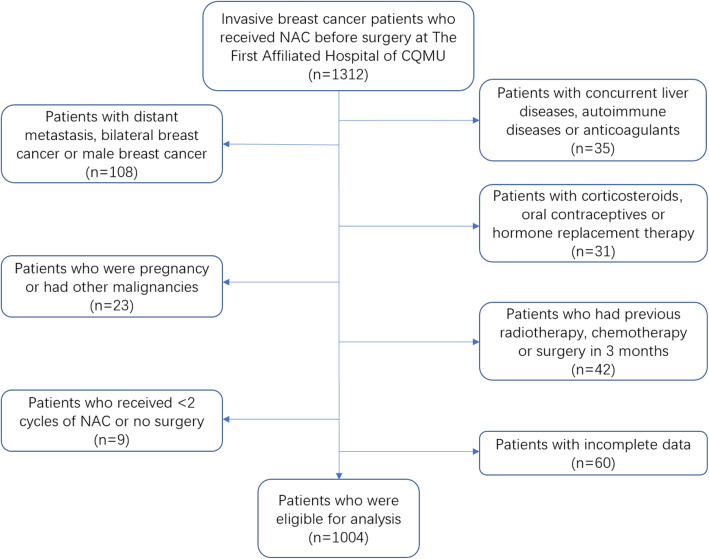
Data from 1004 consecutive patients with invasive breast cancer who received NAC and subsequent surgery were retrospectively analysed. Both univariate and multivariate analyses based on logistic regression model were performed to identify clinicopathological factors associated with pCR to NAC. Cox regression model was used to determine the correlation between clinical or pathological parameters and recurrence-free survival (RFS). The Kaplan-Meier method and the log-rank test were applied in the survival analysis.
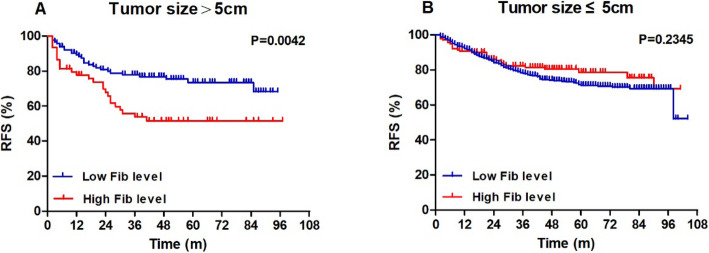
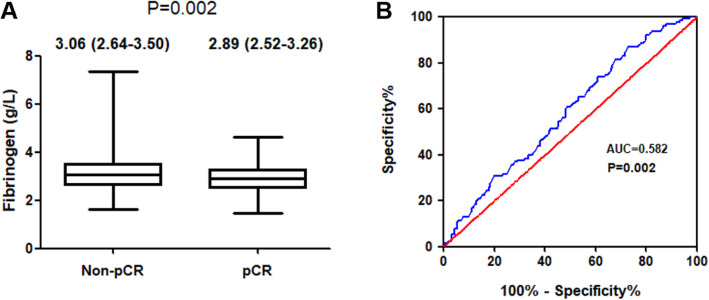
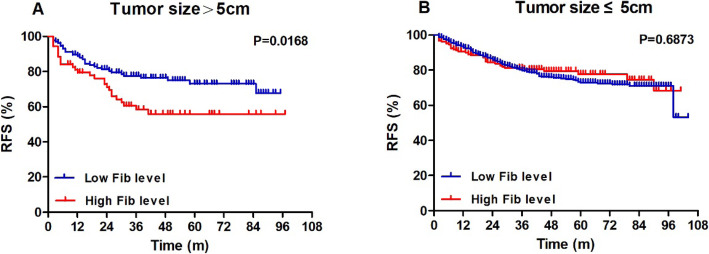
The median value of Fib, rather than other plasma coagulation parameters, was significantly increased in non-pCR patients compared with pCR patients (P = 0.002). Based on the cut-off value estimated by the receiver operating characteristic (ROC) curve analysis, patients were divided into low or high Fib groups (Fib < 3.435 g/L or ≥ 3.435 g/L). Low Fib levels were significantly associated with premenopausal or perimenopausal status (P < 0.001), tumour size ≤5 cm (P = 0.002), and positive hormone receptor status (P = 0.002). After adjusted for other clinicopathological factors in the multivariate logistic regression model, low Fib status was strongly associated with pCR to NAC (OR = 3.038, 95% CI 1.667-5.537, P < 0.001). Survival analysis showed that patients with low Fib levels exhibited better 3-year RFS compared with patients with high Fib levels in the tumour size>5 cm group (77.5% vs 58.4%, log-rank, P = 0.0168).
This study demonstrates that low pre-treatment plasma Fib (Fib < 3.435 g/L) is an independent predictive factor for pCR to NAC in breast cancer patients. Moreover, T3-featured breast cancer patients with lower Fib level exhibit better RFS outcomes after NAC compared with high Fib status.
本研究旨在评估乳腺癌患者治疗前血浆纤维蛋白原(Fib)水平与新辅助化疗(NAC)病理完全缓解(pCR)之间的关系,并评估血浆 Fib 作为预测因子的作用。
回顾性分析了 1004 例接受 NAC 及后续手术的浸润性乳腺癌患者的数据。基于逻辑回归模型进行单因素和多因素分析,以确定与 NAC 病理完全缓解相关的临床病理因素。Cox 回归模型用于确定临床或病理参数与无复发生存(RFS)之间的相关性。采用 Kaplan-Meier 法和对数秩检验进行生存分析。
与 pCR 患者相比,非 pCR 患者的 Fib 中位数(而非其他血浆凝血参数)明显升高(P=0.002)。根据受试者工作特征(ROC)曲线分析估计的截断值,将患者分为低 Fib 或高 Fib 组(Fib<3.435 g/L 或≥3.435 g/L)。低 Fib 水平与绝经前或围绝经期状态显著相关(P<0.001)、肿瘤大小≤5 cm(P=0.002)和阳性激素受体状态显著相关(P=0.002)。在多因素逻辑回归模型中调整其他临床病理因素后,低 Fib 状态与 NAC 的 pCR 显著相关(OR=3.038,95%CI 1.667-5.537,P<0.001)。生存分析显示,在肿瘤大小>5 cm 组中,低 Fib 水平的患者与高 Fib 水平的患者相比,3 年 RFS 更好(77.5%比 58.4%,log-rank,P=0.0168)。
本研究表明,治疗前低血浆 Fib(Fib<3.435 g/L)是乳腺癌患者 NAC 病理完全缓解的独立预测因子。此外,NAC 后 Fib 水平较低的 T3 特征性乳腺癌患者与高 Fib 状态相比,RFS 结果更好。