Immunoregulation Section, Autoimmunity Branch, National Institute of Arthritis and Musculoskeletal and Skin Diseases (NIAMS), National Institutes of Health, Bethesda, MD, USA.
Department of Biochemistry and Immunology, Trinity Biomedical Science Institute (TBSI), Trinity College Dublin, Dublin, Ireland.
Nat Commun. 2021 May 12;12(1):2745. doi: 10.1038/s41467-021-22961-z.
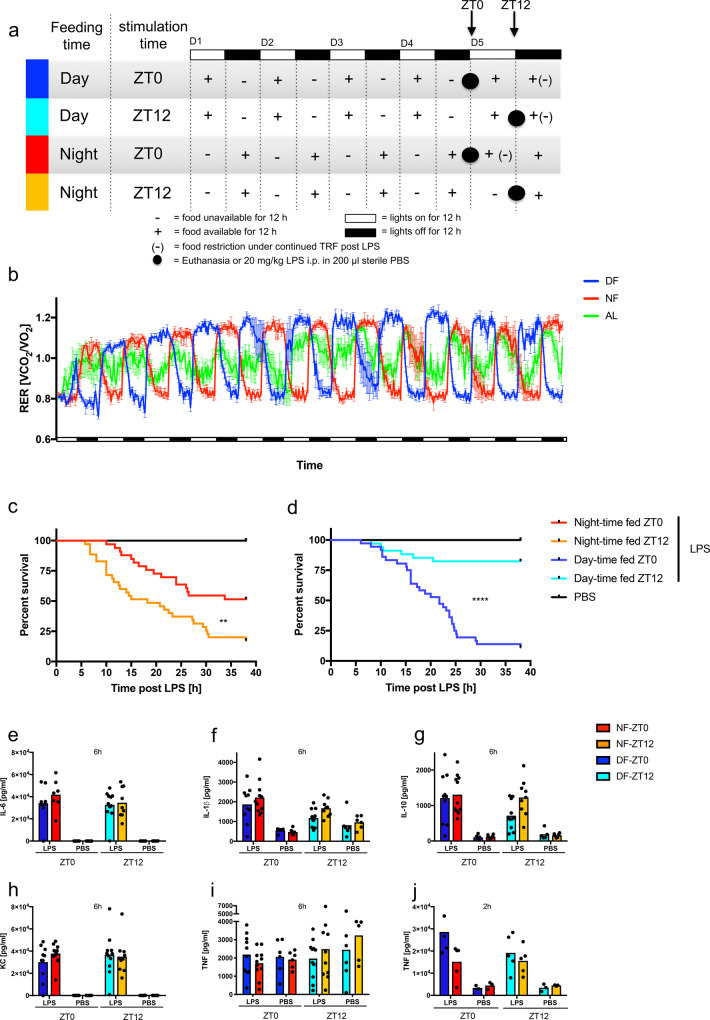
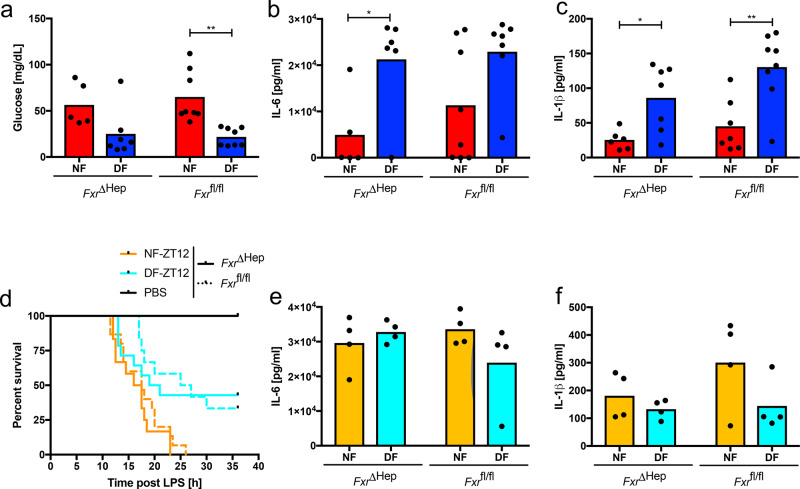
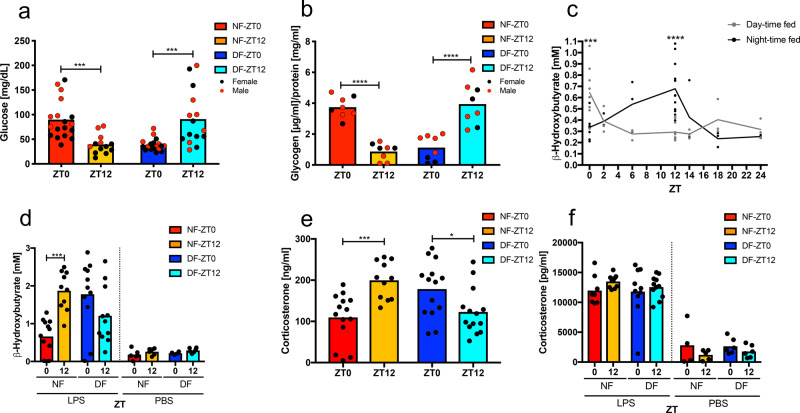
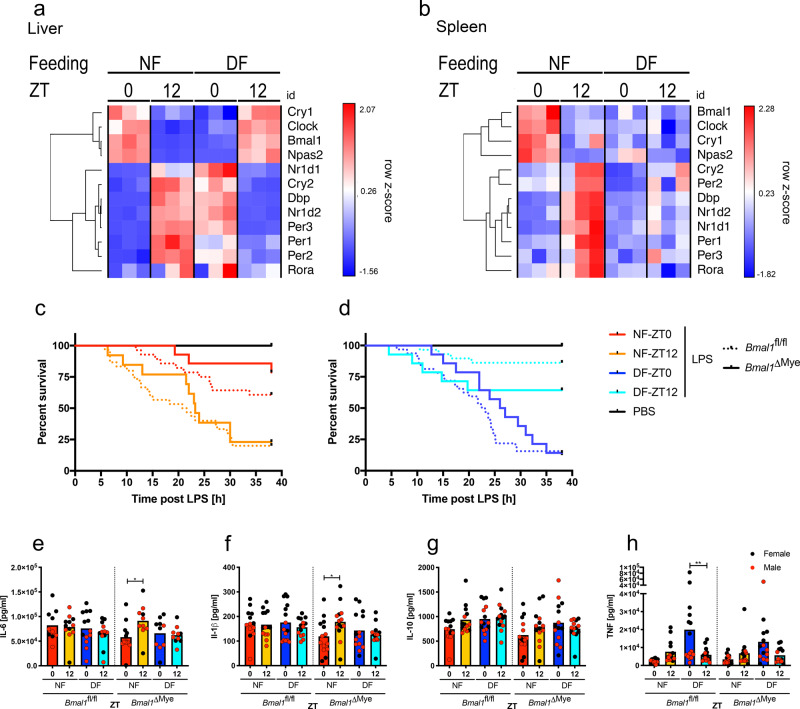
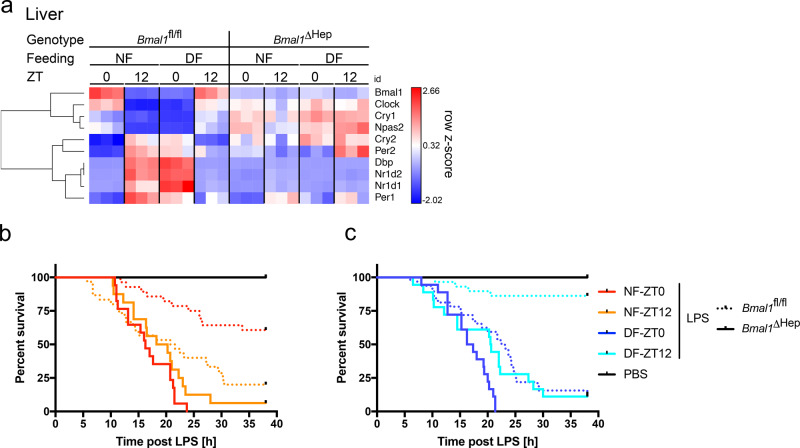
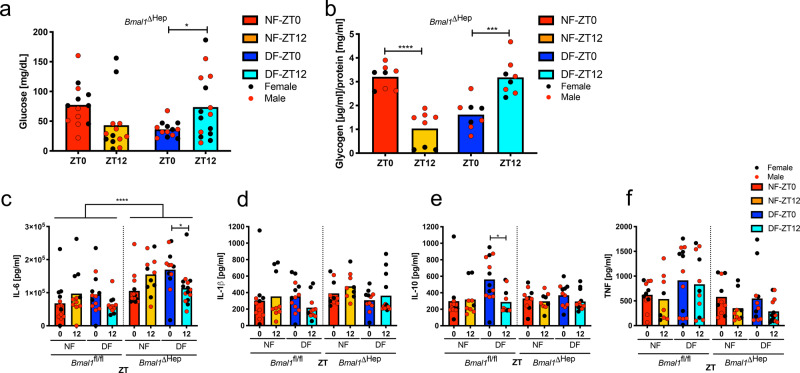
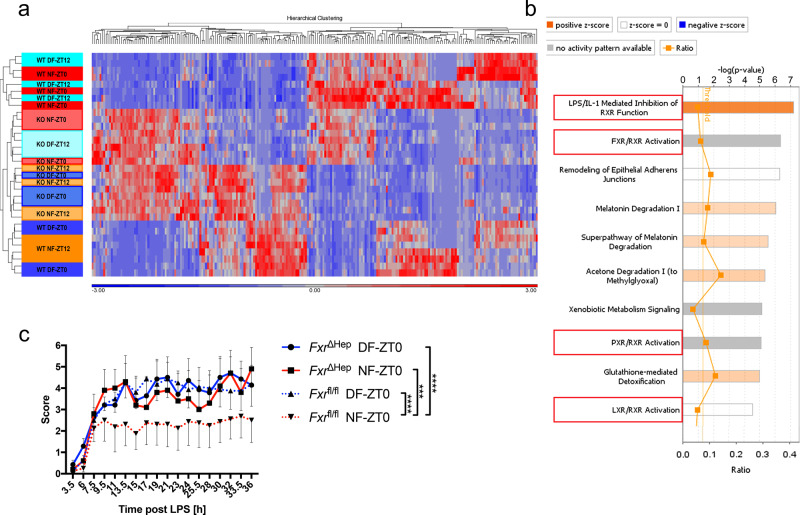
In mice, time of day strongly influences lethality in response to LPS, with survival greatest at the beginning compared to the end of the light cycle. Here we show that feeding, rather than light, controls time-of-day dependent LPS sensitivity. Mortality following LPS administration is independent of cytokine production and the clock regulator BMAL1 expressed in myeloid cells. In contrast, deletion of BMAL1 in hepatocytes globally disrupts the transcriptional response to the feeding cycle in the liver and results in constitutively high LPS sensitivity. Using RNAseq and functional validation studies we identify hepatic farnesoid X receptor (FXR) signalling as a BMAL1 and feeding-dependent regulator of LPS susceptibility. These results show that hepatocyte-intrinsic BMAL1 and FXR signalling integrate nutritional cues to regulate survival in response to innate immune stimuli. Understanding hepatic molecular programmes operational in response to these cues could identify novel pathways for targeting to enhance endotoxemia resistance.
在小鼠中,一天中的时间强烈影响 LPS 反应的致死率,与光照周期结束时相比,开始时的存活率最高。在这里,我们表明,进食而不是光照控制着时间依赖的 LPS 敏感性。LPS 给药后的死亡率与细胞因子产生和骨髓细胞中表达的时钟调节因子 BMAL1 无关。相比之下,肝细胞中 BMAL1 的缺失会全局破坏肝脏对进食周期的转录反应,并导致 LPS 敏感性持续升高。通过 RNAseq 和功能验证研究,我们确定了肝法尼醇 X 受体 (FXR) 信号作为 BMAL1 和进食依赖性 LPS 敏感性调节剂。这些结果表明,肝内源性 BMAL1 和 FXR 信号整合营养线索,调节对先天免疫刺激的存活反应。了解肝脏对这些线索做出反应的分子程序可能会确定新的靶向途径,以增强对内毒素血症的抵抗力。