Watanabe Ken, Saijo Naoki, Minami Sorato, Kashino Makio
Kashino Diverse Brain Research Laboratory, NTT Communication Science Laboratories, Atsugi-shi, Kanagawa, Japan.
Heliyon. 2021 Apr 20;7(4):e06844. doi: 10.1016/j.heliyon.2021.e06844. eCollection 2021 Apr.
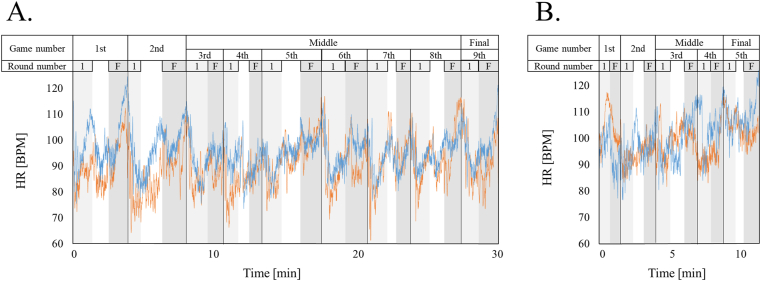
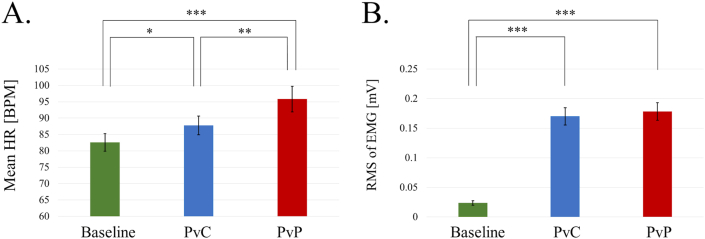
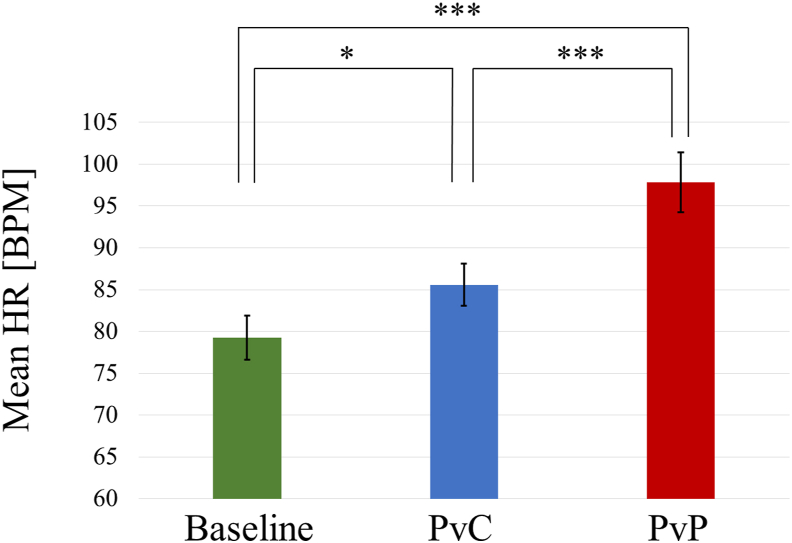
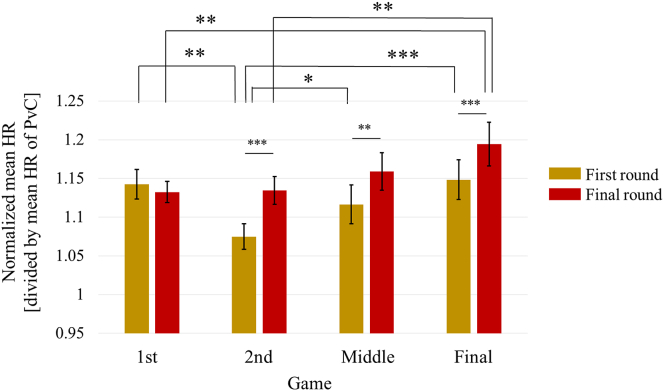
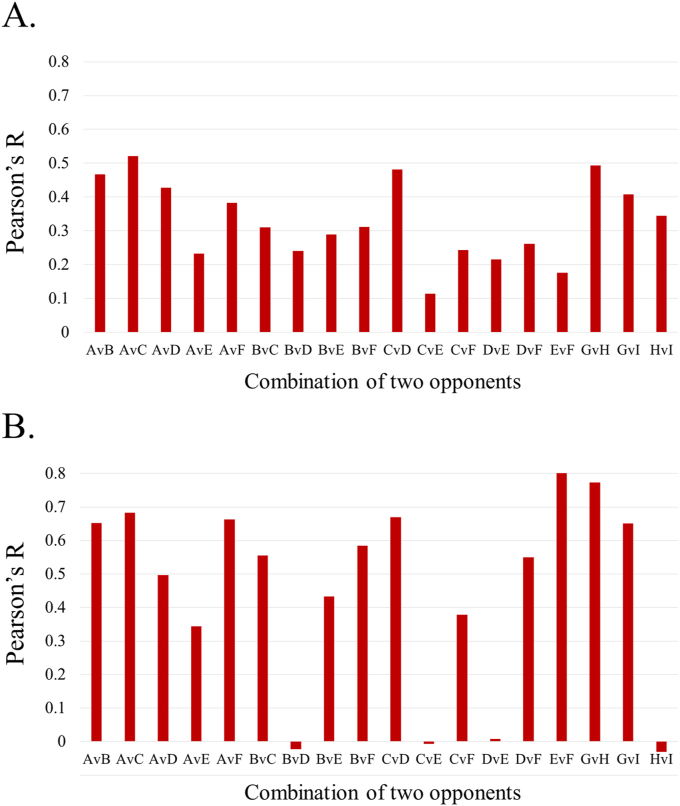
In esports competitions, both motor skills used to manipulate an avatar and psychological skills are important to achieve optimal performance. Previous studies have investigated the role of psychological skill on computer game performance by observing the modulation of physiological state. However, how physiological state is modulated in esports athletes during an esports match is unclear. In this study, we examined two hypotheses to clarify the effects of competitive and interactive play on the physiological state of esports professionals: (1) the sympathetic nervous system of esports players is activated by competitive play and modulated by the game situation, and (2) the autonomic nervous system activities of players in dyads are synchronized positively/negatively by interpersonal interaction. We measured electrocardiograms (ECGs) in nine professional esports players while they played a fighting video game to investigate changes in physiological state. We compared ECGs collected in the resting state, while playing against a computer, and while playing against other players. We calculated the mean heart rate (HR), temporal pattern of HR, and correlation of temporal HR patterns of the pairs in the player-versus-player condition. The results showed that mean HR was elevated by the presence of a human opponent compared with a computer opponent, and an increase in mean HR was also observed in specific game situations (beginning of the match, toward the end of a game or match). These results suggest that the sympathetic nervous system in esports players is activated by competitive play and is modulated by the game situation. In addition, the temporal HR patterns in the opponent pairs were synchronized, suggesting that autonomic nervous system activity is synchronized in player dyads via interpersonal interaction during competitive play. Our results provide insight regarding the relationship between physiological state and psychological skill in esports professionals during esports competitions.
在电子竞技比赛中,用于操控虚拟角色的运动技能和心理技能对于实现最佳表现都很重要。以往的研究通过观察生理状态的调节来探究心理技能对电脑游戏表现的作用。然而,电子竞技运动员在比赛期间生理状态是如何调节的尚不清楚。在本研究中,我们检验了两个假设,以阐明竞技性和互动性游戏对电子竞技职业选手生理状态的影响:(1)电子竞技选手的交感神经系统通过竞技性游戏被激活,并受游戏情境调节;(2)双人组合中选手的自主神经系统活动通过人际互动正向/负向同步。我们在九名职业电子竞技选手玩格斗类电子游戏时测量了心电图(ECG),以研究生理状态的变化。我们比较了在静息状态、与电脑对战以及与其他选手对战时收集的心电图。我们计算了平均心率(HR)、心率的时间模式以及选手对战情况下双人组合心率时间模式的相关性。结果表明,与电脑对手相比,有人类对手时平均心率升高,并且在特定游戏情境(比赛开始、接近一局游戏或一场比赛结束时)也观察到平均心率增加。这些结果表明,电子竞技选手的交感神经系统通过竞技性游戏被激活,并受游戏情境调节。此外,对手双人组合的心率时间模式是同步的,这表明在竞技性游戏期间,自主神经系统活动通过人际互动在选手双人组合中实现同步。我们的结果为电子竞技比赛期间电子竞技职业选手生理状态与心理技能之间的关系提供了见解。