Key Laboratory of Marine Biotechnology of Fujian Province, Institute of Oceanology, Fujian Agriculture and Forestry University, Fuzhou, Fujian, China.
Shenzhen Key Lab of Marine Genomics, Guangdong Provincial Key Lab of Molecular Breeding in Economic Animals, BGI Academy of Marine Sciences, BGI Marine, Shenzhen, Guangdong, China.
PLoS Genet. 2021 May 13;17(5):e1009530. doi: 10.1371/journal.pgen.1009530. eCollection 2021 May.
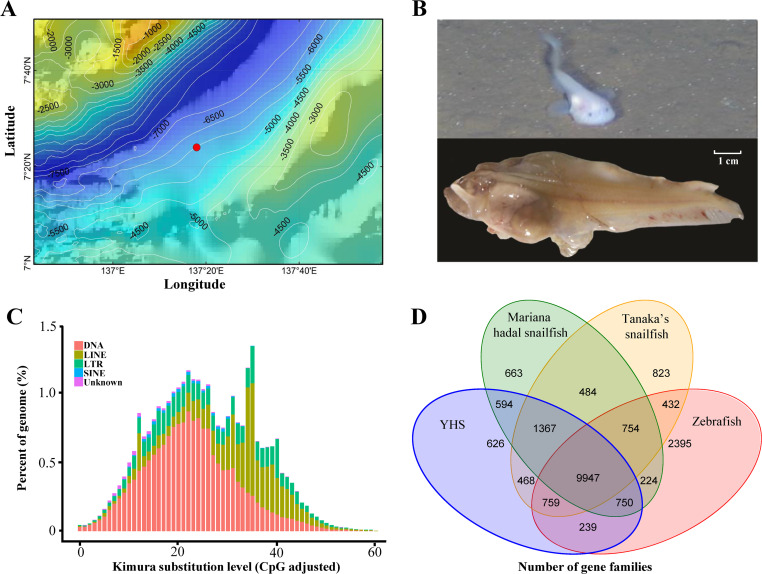
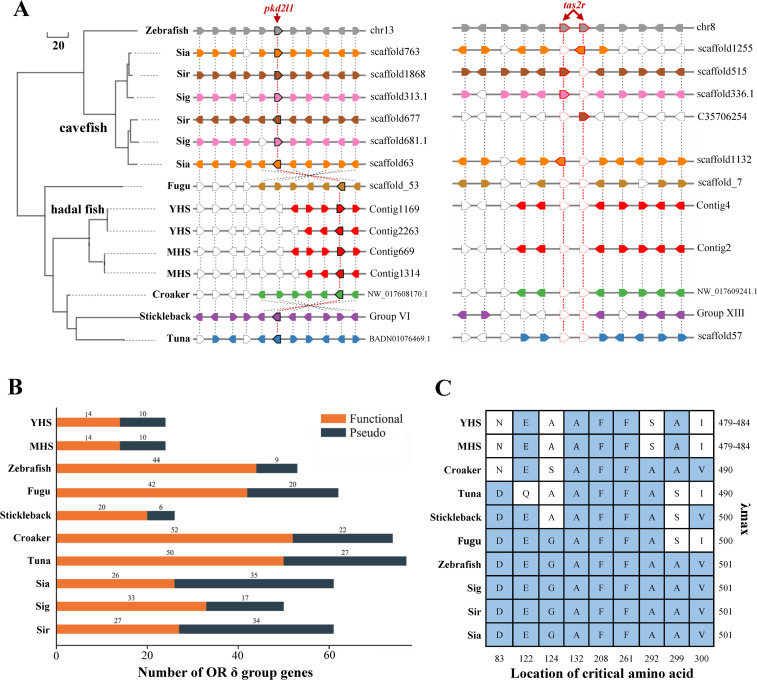
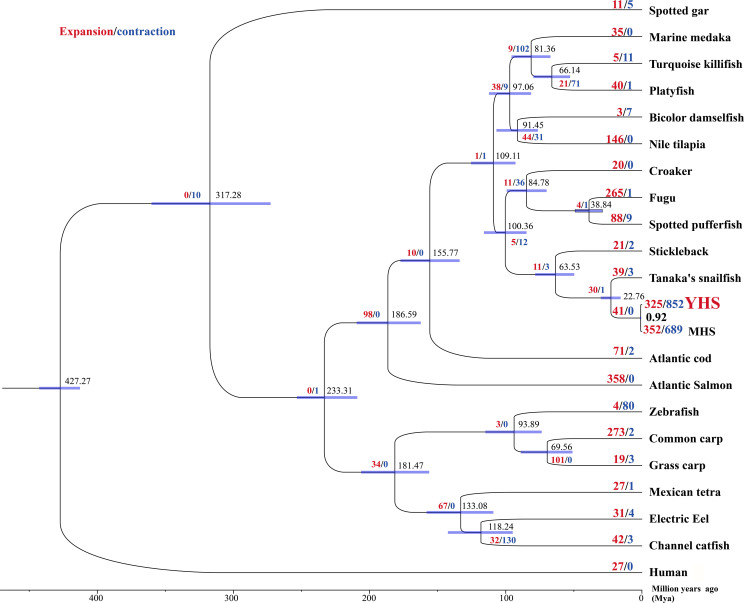
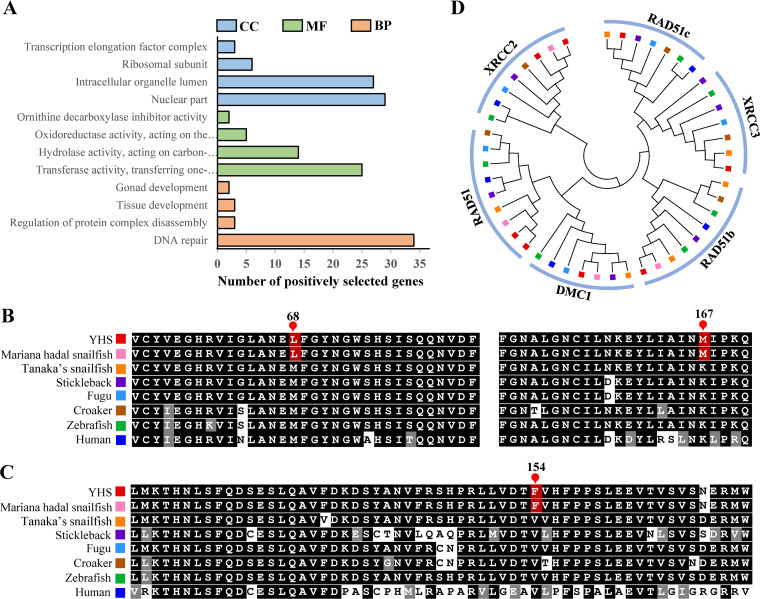
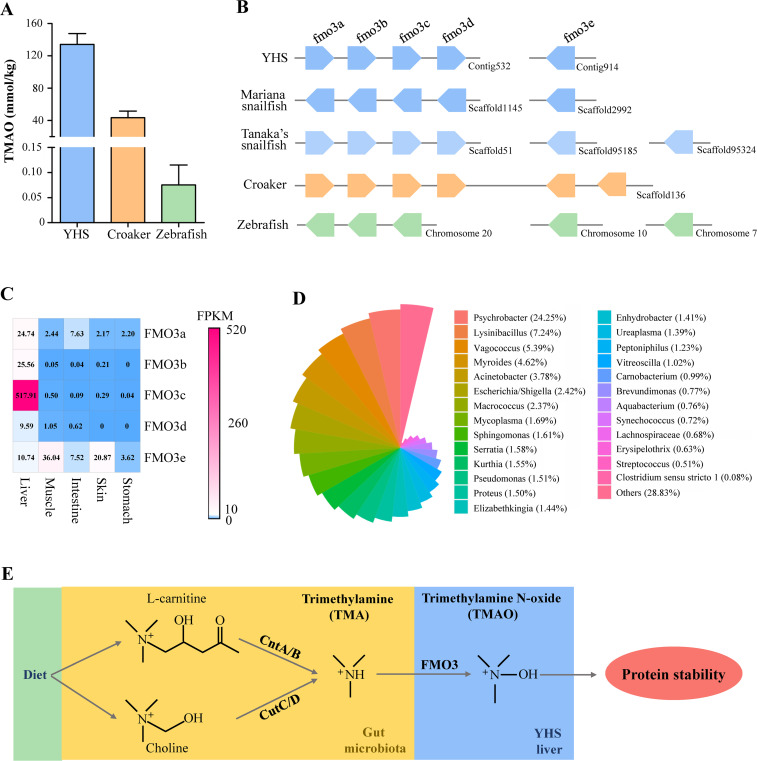
Hadal environments (depths below 6,000 m) are characterized by extremely high hydrostatic pressures, low temperatures, a scarce food supply, and little light. The evolutionary adaptations that allow vertebrates to survive in this extreme environment are poorly understood. Here, we constructed a high-quality reference genome for Yap hadal snailfish (YHS), which was captured at a depth of ~7,000 m in the Yap Trench. The final YHS genome assembly was 731.75 Mb, with a contig N50 of 0.75 Mb and a scaffold N50 of 1.26 Mb. We predicted 24,329 protein-coding genes in the YHS genome, and 24,265 of these genes were successfully functionally annotated. Phylogenetic analyses suggested that YHS diverged from a Mariana Trench snailfish approximately 0.92 million years ago. Many genes associated with DNA repair show evidence of positive selection and have expanded copy numbers in the YHS genome, possibly helping to maintain the integrity of DNA under increased hydrostatic pressure. The levels of trimethylamine N-oxide (TMAO), a potent protein stabilizer, are much higher in the muscles of YHS than in those of shallow-water fish. This difference is perhaps due to the five copies of the TMAO-generating enzyme flavin-containing monooxygenase-3 gene (fmo3) in the YHS genome and the abundance of trimethylamine (TMA)-generating bacteria in the YHS gut. Thus, the high TMAO content might help YHS adapt to high hydrostatic pressure by improving protein stability. Additionally, the evolutionary features of the YHS genes encoding sensory-related proteins are consistent with the scarce food supply and darkness in the hadal environments. These results clarify the molecular mechanisms underlying the adaptation of hadal organisms to the deep-sea environment and provide valuable genomic resources for in-depth investigations of hadal biology.
深渊环境(水深 6000 米以下)的特点是极高的静水压力、低温、食物供应匮乏和光照微弱。允许脊椎动物在这种极端环境中生存的进化适应机制还了解甚少。在这里,我们构建了一种高质量的雅浦深渊蜗牛鱼(YHS)参考基因组,该鱼是在雅浦海沟约 7000 米深处捕获的。最终的 YHS 基因组组装大小为 731.75 Mb,其 contig N50 为 0.75 Mb,scaffold N50 为 1.26 Mb。我们预测了 YHS 基因组中的 24329 个蛋白质编码基因,其中 24265 个基因成功地进行了功能注释。系统发育分析表明,YHS 与马里亚纳海沟蜗牛鱼大约在 92 万年前分化。许多与 DNA 修复相关的基因显示出正选择的证据,并且在 YHS 基因组中扩大了拷贝数,这可能有助于在静水压力增加的情况下维持 DNA 的完整性。三甲胺氧化物(TMAO)的水平,一种有效的蛋白质稳定剂,在 YHS 的肌肉中比在浅水区鱼类中的水平高得多。这种差异可能是由于 YHS 基因组中含有 5 个 TMAO 生成酶黄素单加氧酶-3 基因(fmo3)的拷贝,以及 YHS 肠道中含有大量产生三甲胺(TMA)的细菌。因此,高 TMAO 含量可能通过提高蛋白质稳定性帮助 YHS 适应高静水压力。此外,YHS 编码感觉相关蛋白的基因的进化特征与深渊环境中食物匮乏和黑暗相一致。这些结果阐明了深渊生物适应深海环境的分子机制,并为深入研究深渊生物学提供了有价值的基因组资源。