Jaseng Spine and Joint Research Institute, Jaseng Medical Foundation, Seoul, Republic of Korea.
PLoS One. 2021 May 13;16(5):e0251464. doi: 10.1371/journal.pone.0251464. eCollection 2021.
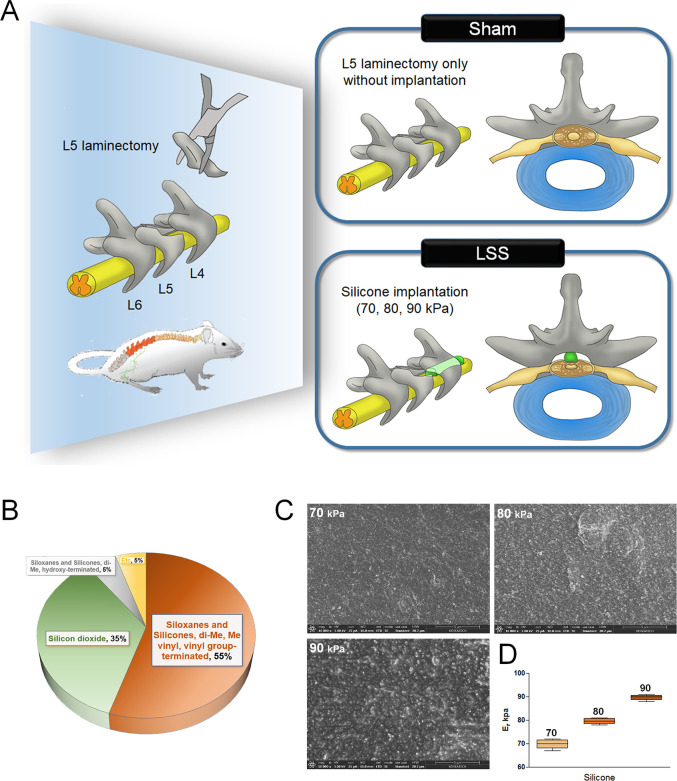
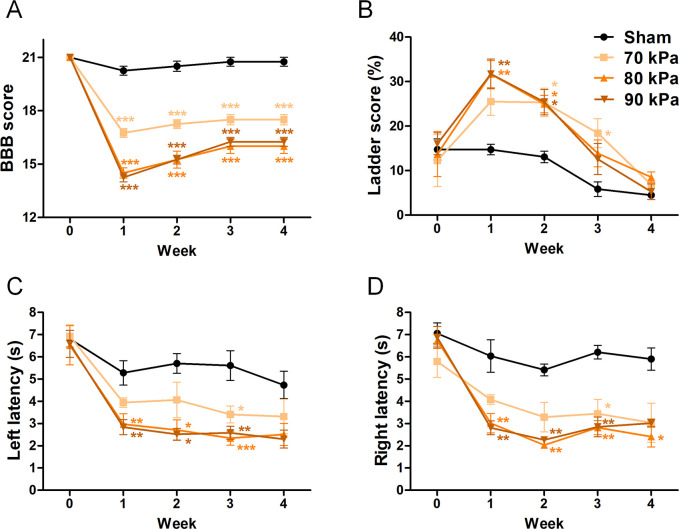
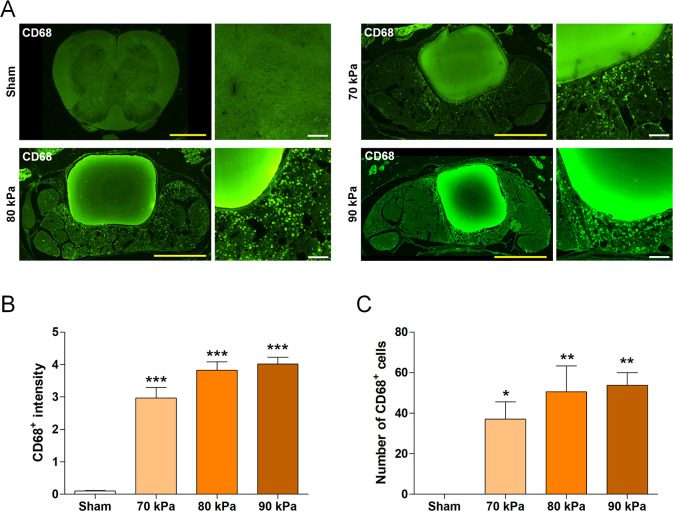
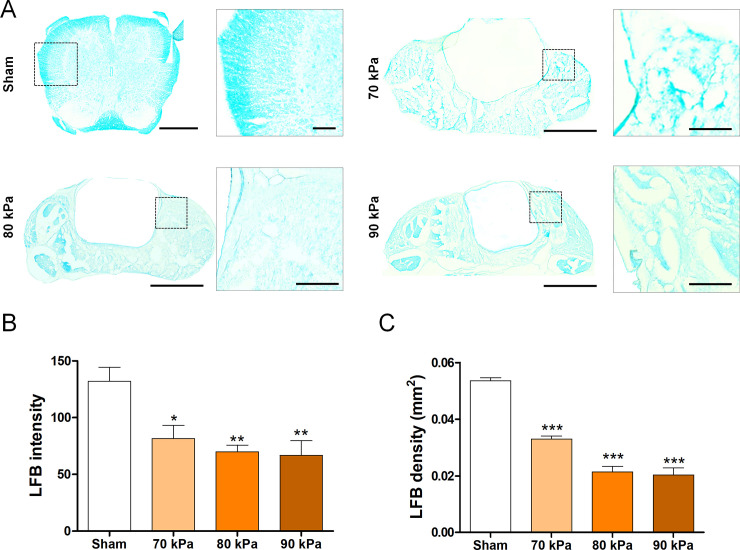
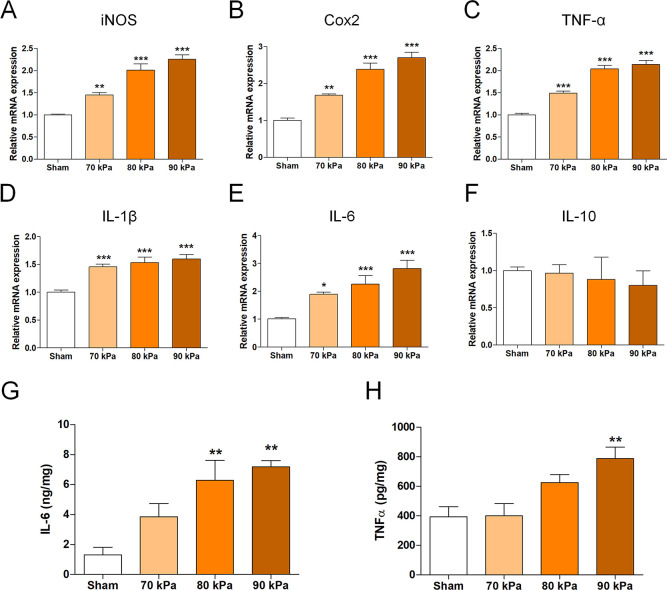
Lumbar spinal stenosis (LSS), one of the most commonly reported spinal disorders, can cause loss of sensation and dyskinesia. In currently used animal models of LSS, the spinal cord is covered entirely with a silicone sheet, or block-shaped silicone is inserted directly into the spinal canal after laminectomy. However, the effects of differences between these implant materials have not been studied. We assessed the degree of damage and locomotor function of an LSS model in Sprague-Dawley rats using silicone blocks of varying hardness (70, 80, and 90 kPa) implanted at the L4 level. In sham rats, the spinal cord remained intact; in LSS rats, the spinal cord was increasingly compressed by the mechanical pressure of the silicone blocks as hardness increased. Inflammatory cells were not evident in sham rats, but numerous inflammatory cells were observed around the implanted silicone block in LSS rats. CD68+ cell quantification revealed increases in the inflammatory response in a hardness-dependent manner in LSS rats. Compared with those in sham rats, proinflammatory cytokine levels were significantly elevated in a hardness-dependent manner, and locomotor function was significantly decreased, in LSS rats. Overall, this study showed that hardness could be used as an index to control the severity of nerve injury induced by silicone implants.
腰椎管狭窄症(LSS)是最常见的脊柱疾病之一,可导致感觉丧失和运动障碍。在目前使用的 LSS 动物模型中,脊髓完全被硅胶片覆盖,或者在椎板切除术后直接将块状硅胶插入椎管。然而,这些植入材料之间的差异的影响尚未得到研究。我们使用硬度为 70、80 和 90 kPa 的不同硬度的硅胶块在 L4 水平植入 Sprague-Dawley 大鼠中评估 LSS 模型的损伤程度和运动功能。在假手术大鼠中,脊髓保持完整;在 LSS 大鼠中,随着硬度的增加,硅胶块的机械压力对脊髓的压迫越来越严重。在假手术大鼠中没有观察到炎症细胞,但在 LSS 大鼠中观察到大量炎症细胞围绕着植入的硅胶块。CD68+细胞定量显示 LSS 大鼠的炎症反应呈硬度依赖性增加。与假手术大鼠相比,LSS 大鼠的促炎细胞因子水平也呈硬度依赖性显著升高,运动功能显著降低。总的来说,这项研究表明,硬度可以作为控制硅胶植入物引起的神经损伤严重程度的指标。