Department of Public Health Analysis and Data Management, Public Health Agency of Sweden, Solna, Sweden.
School of Public Health and Community Medicine, Institute of Medicine, University of Gothenburg, Göteborg, Sweden.
PLoS One. 2021 May 13;16(5):e0251644. doi: 10.1371/journal.pone.0251644. eCollection 2021.
Comprehensive cost-effectiveness analyses of introducing varicella and/or herpes zoster vaccination in the Swedish national vaccination programme.
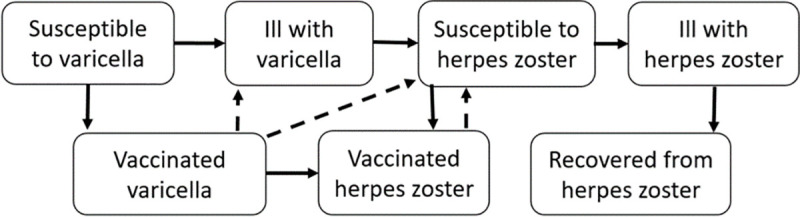
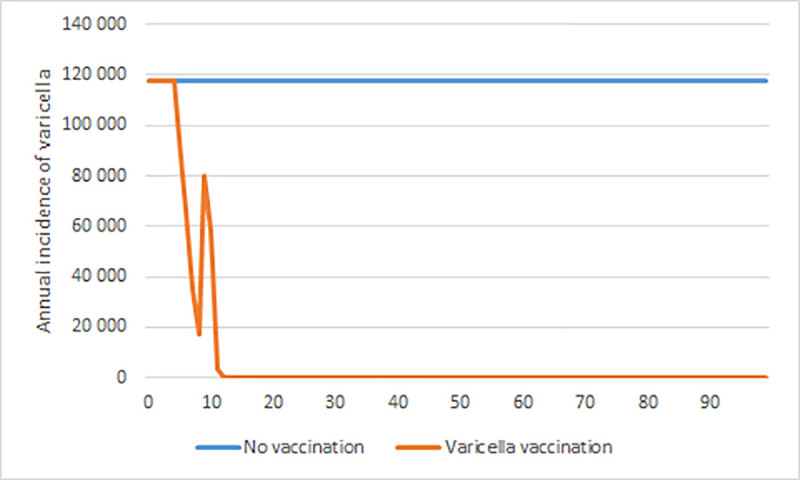
Cost-effectiveness analyses based on epidemiological results from a specifically developed transmission model.
National vaccination programme in Sweden, over an 85- or 20-year time horizon depending on the vaccination strategy.
Hypothetical cohorts of people aged 12 months and 65-years at baseline.
Four alternative vaccination strategies; 1, not to vaccinate; 2, varicella vaccination with one dose of the live attenuated vaccine at age 12 months and a second dose at age 18 months; 3, herpes zoster vaccination with one dose of the live attenuated vaccine at 65 years of age; and 4, both vaccine against varicella and herpes zoster with the before-mentioned strategies.
Accumulated cost and quality-adjusted life years (QALY) for each strategy, and incremental cost-effectiveness ratios (ICER).
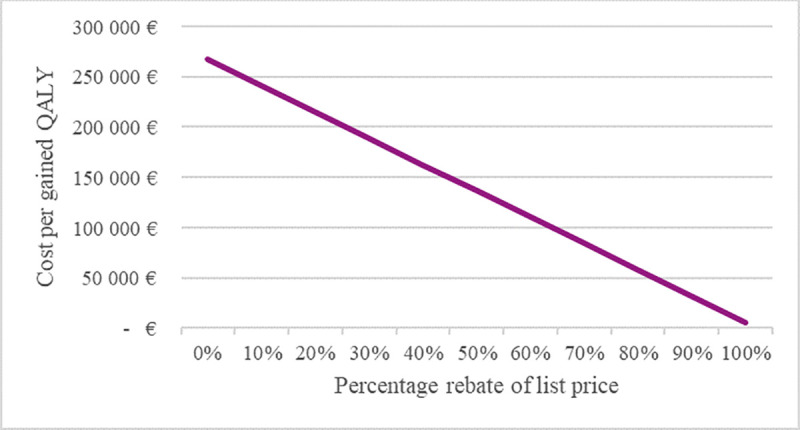
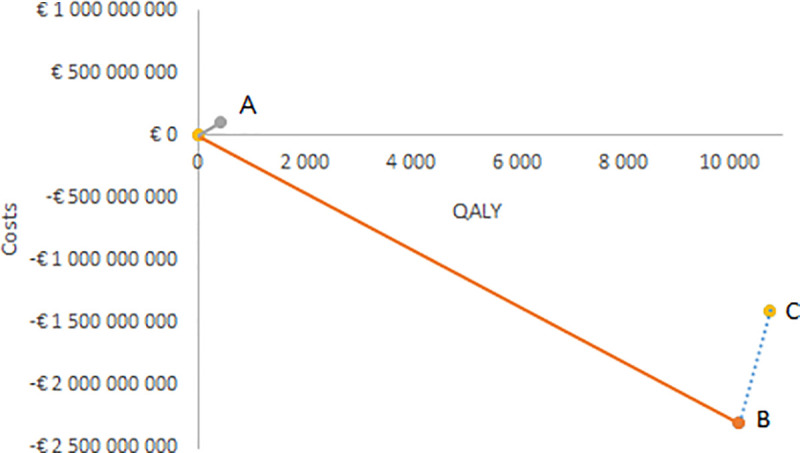
It would be cost-effective to vaccinate against varicella (dominant), but not to vaccinate against herpes zoster (ICER of EUR 200,000), assuming a cost-effectiveness threshold of EUR 50,000 per QALY. The incremental analysis between varicella vaccination only and the combined programme results in a cost per gained QALY of almost EUR 1.6 million.
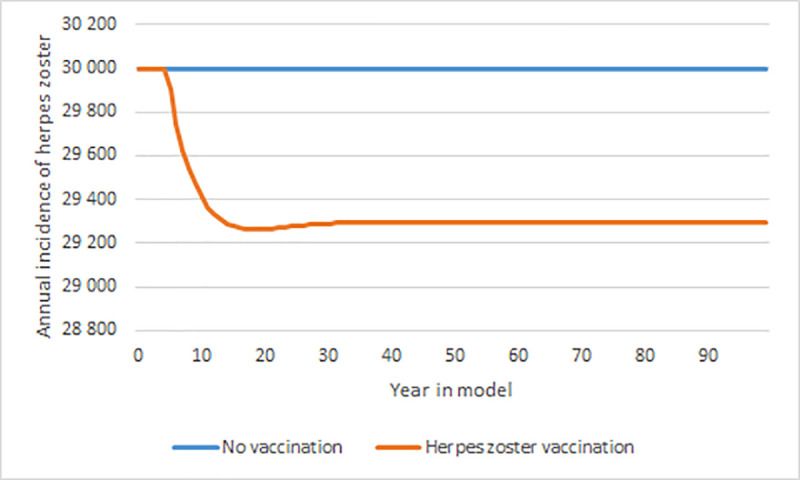
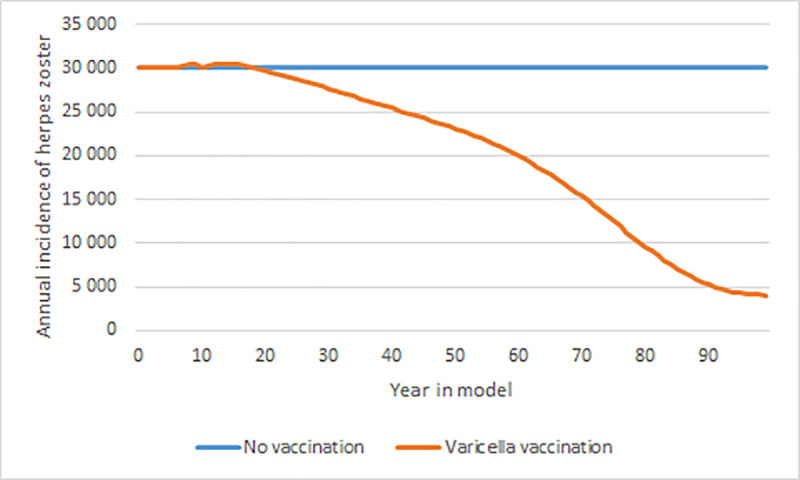
The results from this study are central components for policy-relevant decision-making, and suggest that it was cost-effective to introduce varicella vaccination in Sweden, whereas herpes zoster vaccination with the live attenuated vaccine for the elderly was not cost-effective-the health effects of the latter vaccination cannot be considered reasonable in relation to its costs. Future observational and surveillance studies are needed to make reasonable predictions on how boosting affects the herpes zoster incidence in the population, and thus the cost-effectiveness of a vaccination programme against varicella. Also, the link between herpes zoster and sequelae need to be studied in more detail to include it suitably in health economic evaluations.
对在瑞典国家免疫规划中引入水痘和/或带状疱疹疫苗进行全面的成本效益分析。
基于专门开发的传播模型的流行病学结果进行成本效益分析。
瑞典国家免疫规划,在 85 年或 20 年的时间范围内取决于接种策略。
在基线时年龄为 12 个月和 65 岁的假设队列。
四种替代疫苗接种策略;1. 不接种;2. 在 12 个月大时接种一剂减毒活疫苗,在 18 个月大时接种第二剂;3. 在 65 岁时接种一剂减毒活疫苗预防带状疱疹;4. 同时接种水痘和带状疱疹疫苗,采用上述策略。
每种策略的累计成本和质量调整生命年(QALY)以及增量成本效益比(ICER)。
假设成本效益阈值为每 QALY50000 欧元,接种水痘疫苗具有成本效益(占主导地位),但接种带状疱疹疫苗不具有成本效益(ICER 为 200000 欧元)。水痘疫苗单独接种与联合方案的增量分析结果表明,每获得一个 QALY 的成本接近 160 万欧元。
本研究的结果是政策相关决策的核心组成部分,表明在瑞典引入水痘疫苗接种具有成本效益,而对于老年人使用减毒活疫苗接种带状疱疹疫苗则不具有成本效益-后者的疫苗接种效果与其成本相比不能被认为是合理的。需要进行未来的观察性和监测研究,以便对加强疫苗接种如何影响人群中带状疱疹的发病率,从而对水痘疫苗接种规划的成本效益做出合理预测。此外,还需要更详细地研究带状疱疹与后遗症之间的联系,以便在健康经济评估中适当地将其纳入。