Giudice Antonino Lo, Rustico Lorenzo, Longo Miriam, Oteri Giacomo, Papadopoulos Moschos A, Nucera Riccardo
Department of Medical-Surgical Specialties, Section of Orthodontics, School of Dentistry, University of Catania, Policlinico Universitario V. Emanuele, Catania, Italy.
Department of Biomedical and Dental Sciences and Morphofunctional Imaging, Section of Orthodontics, School of Dentistry, University of Messina, Policlinico Universitario G. Martino, Messina, Italy.
Korean J Orthod. 2021 May 25;51(3):199-216. doi: 10.4041/kjod.2021.51.3.199.
The aim of this systematic review was to evaluate the complications and side effects associated with the clinical use of orthodontic miniscrews by systematically reviewing the best available evidence.
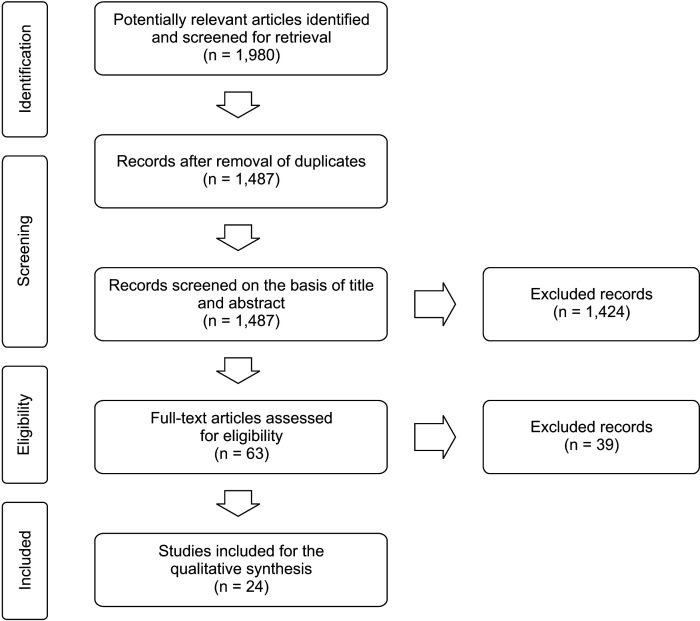
A survey of articles published up to March 2020 investigating the complications associated with miniscrew insertion, in both the maxilla and mandible, was performed using 7 electronic databases. Clinical studies, case reports, and case series reporting complications associated with the use of orthodontic miniscrew implants were included. Two authors independently performed study selection, data extraction, and risk-of-bias assessment.
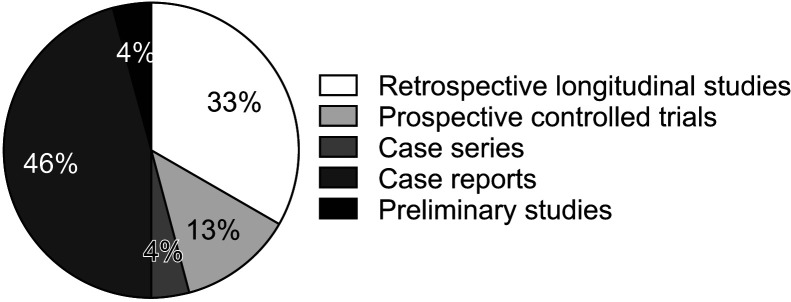
The database survey yielded 24 articles. The risk-of-bias assessment revealed low methodological quality for the included studies. The most frequent adverse event reported was root injury with an associated periradicular lesion, vitality loss, pink discoloration of the tooth, and transitory loss of pulp sensitivity. Chronic inflammation of the soft tissue surrounding the miniscrew with mucosal overgrowth was also reported. The other adverse events reported were lesion of the buccal mucosa at the insertion site, soft-tissue necrosis, and perforation of the floor of the nasal cavity and maxillary sinus. Adverse events were also reported after miniscrew removal and included secondary bleeding, miniscrew fracture, scars, and exostosis.
These findings highlight the need for clinicians to preliminarily assess generic and specific insertion site complications and side effects.
本系统评价旨在通过系统回顾现有最佳证据,评估正畸微螺钉临床应用相关的并发症和副作用。
使用7个电子数据库,对截至2020年3月发表的有关上颌骨和下颌骨微螺钉植入相关并发症的文章进行了调查。纳入了报告正畸微螺钉种植体使用相关并发症的临床研究、病例报告和病例系列。两位作者独立进行研究选择、数据提取和偏倚风险评估。
数据库检索得到24篇文章。偏倚风险评估显示纳入研究的方法学质量较低。报告的最常见不良事件是牙根损伤伴根尖周病变、活力丧失、牙齿变色和牙髓敏感性短暂丧失。还报告了微螺钉周围软组织的慢性炎症伴黏膜增生。报告的其他不良事件包括植入部位颊黏膜损伤、软组织坏死以及鼻腔和上颌窦底穿孔。微螺钉取出后也报告了不良事件,包括继发性出血、微螺钉断裂、瘢痕和骨赘。
这些发现强调临床医生需要初步评估一般和特定植入部位的并发症及副作用。