Lo Giudice Antonino, Quinzi Vincenzo, Ronsivalle Vincenzo, Martina Stefano, Bennici Orazio, Isola Gaetano
Department of General Surgery and Surgical-Medical Specialties, University of Catania, 95124 Via S. Sofia 78, 95123 Catania, Italy.
Department of Life, Health and Environmental Sciences, University of L'Aquila, Piazzale Salvatore Tommasi 1, 67100 Coppito, L'Aquila, Italy.
Materials (Basel). 2020 Apr 12;13(8):1815. doi: 10.3390/ma13081815.
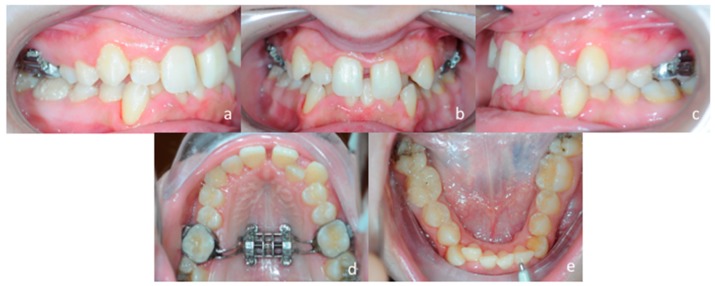
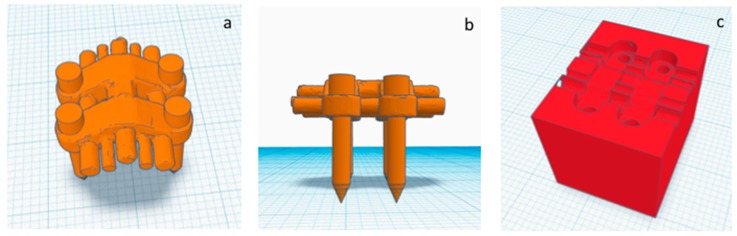
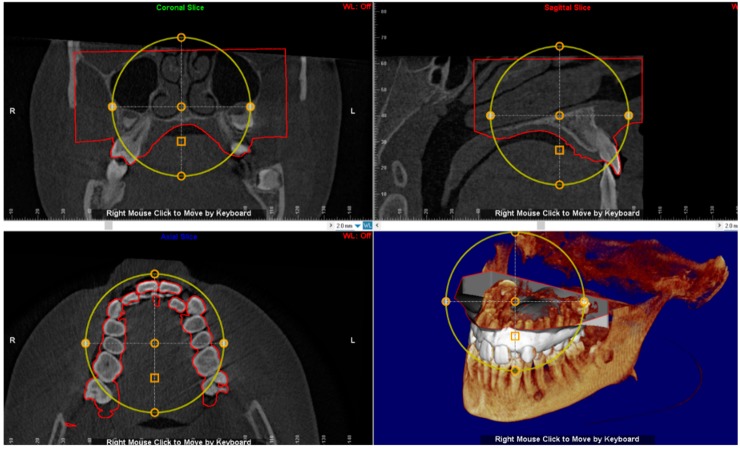
The introduction of miniscrew-assisted rapid palatal expansion (MARPE) has widened the boundaries of orthodontic skeletal correction of maxillary transversal deficiency to late adolescence and adult patients. In this respect, Maxillary Skeletal Expander (MSE) is a particular device characterized by the engagement of four miniscrews in the palatal and nasal cortical bone layers. Thus, the availability of sufficient supporting bone and the perforation of both cortical laminas (bi-corticalism) are two mandatory parameters for mini-screw stability, especially when orthopedic forces are used. Virtual planning and construction of MSE based on cone-beam computed tomography (CBCT)-derived stereolithography (.stl) files have been recently described in the literature. In this manuscript we described: (a) a user-friendly digital workflow which can provide a predictable placement of maxillary skeletal expander (MSE) appliance according to the patient's anatomical characteristics, (b) the construction of a positional template of the MSE that allows lab technician to construct the MSE appliance in a reliable and accurate position, according to the virtual project planned by the orthodontist on the patient CBCT scans. We also described a case report of an adult female patient affected by skeletal transversal maxillary deficiency treated with MSE appliance that was projected according to the described workflow.
微螺钉辅助快速上颌扩弓(MARPE)技术的引入,将上颌横向发育不足的正畸骨骼矫正范围扩大到了青少年晚期和成年患者。在这方面,上颌骨扩弓器(MSE)是一种特殊的装置,其特点是在腭部和鼻皮质骨层中植入四个微螺钉。因此,充足的支持骨以及两层皮质骨的穿孔(双皮质固定)是微螺钉稳定性的两个必要参数,尤其是在使用矫形力时。最近文献中描述了基于锥形束计算机断层扫描(CBCT)衍生的立体光刻(.stl)文件进行MSE的虚拟规划和构建。在本手稿中,我们描述了:(a)一种用户友好的数字工作流程,可根据患者的解剖特征提供可预测的上颌骨扩弓器(MSE)矫治器放置位置;(b)构建MSE的定位模板,使实验室技术人员能够根据正畸医生在患者CBCT扫描上规划的虚拟方案,在可靠且准确的位置构建MSE矫治器。我们还描述了一例成年女性患者的病例报告,该患者患有上颌横向骨骼发育不足,采用了根据所述工作流程设计的MSE矫治器进行治疗。