Division of Basic Science, Fred Hutchinson Cancer Research Center, Seattle, WA, United States.
Clinical Research Division, Fred Hutchinson Cancer Research Center, Seattle, WA, United States.
Front Immunol. 2021 Apr 23;12:658372. doi: 10.3389/fimmu.2021.658372. eCollection 2021.
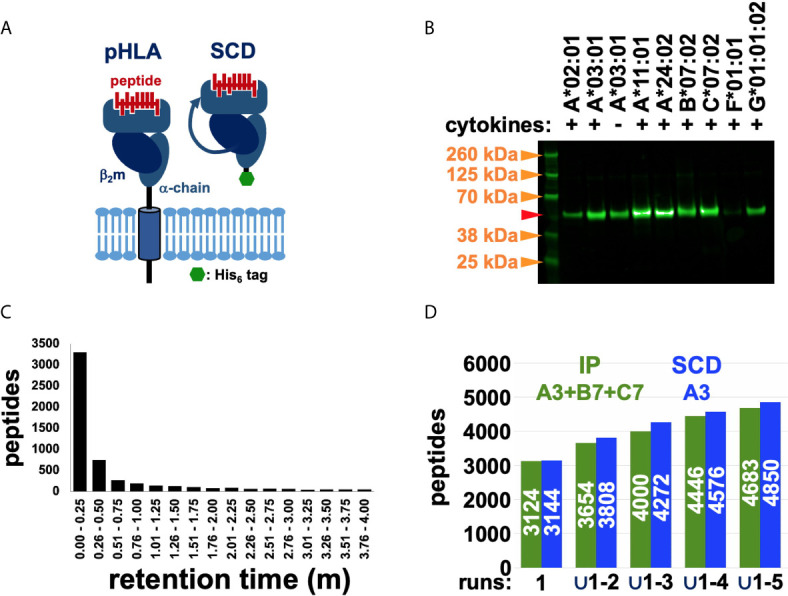
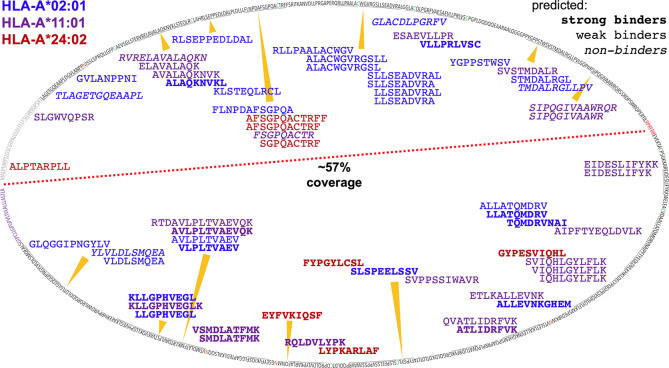
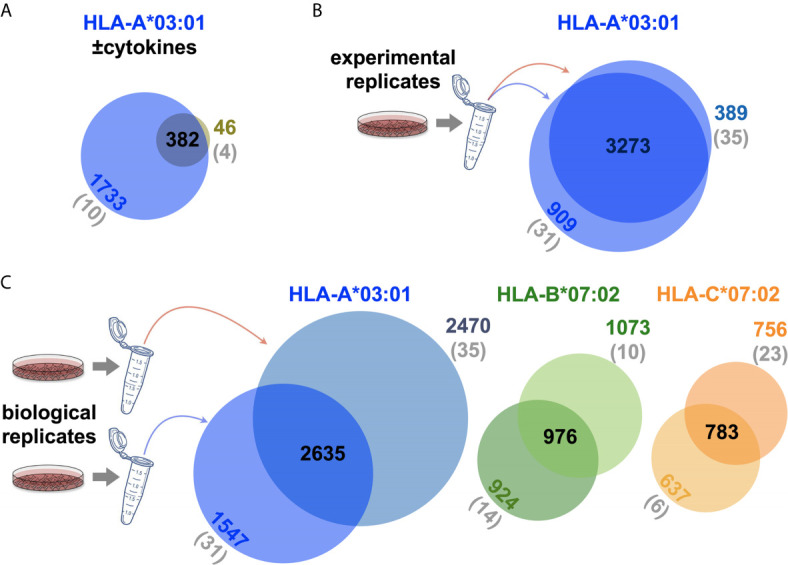
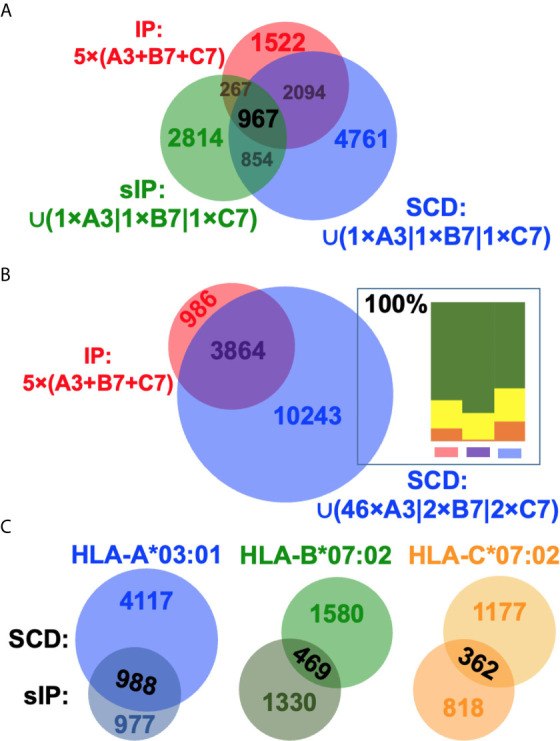
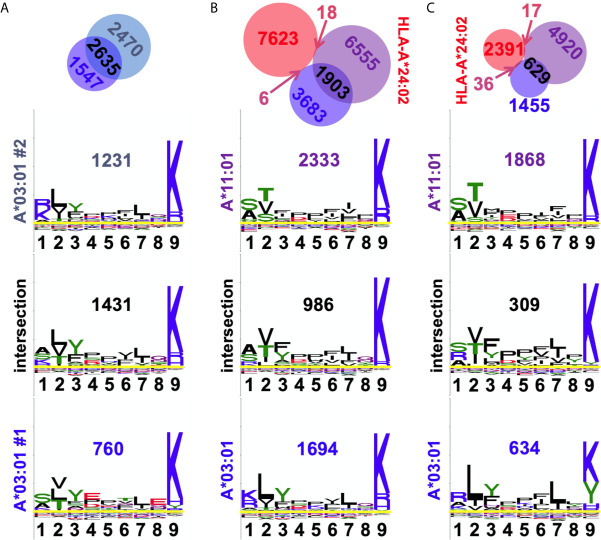
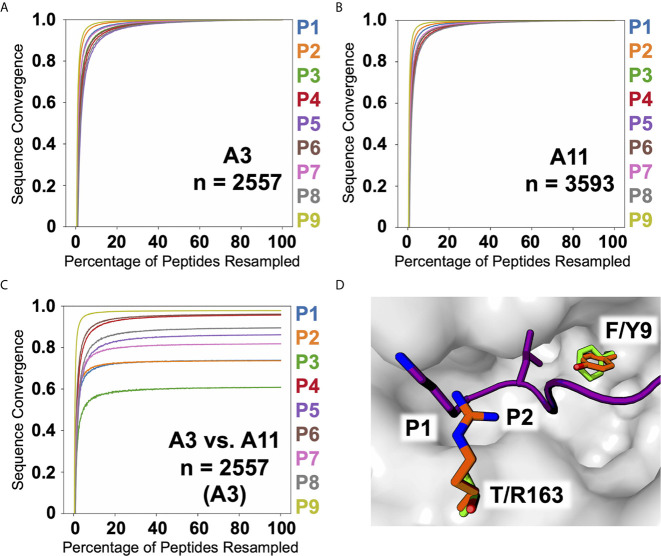
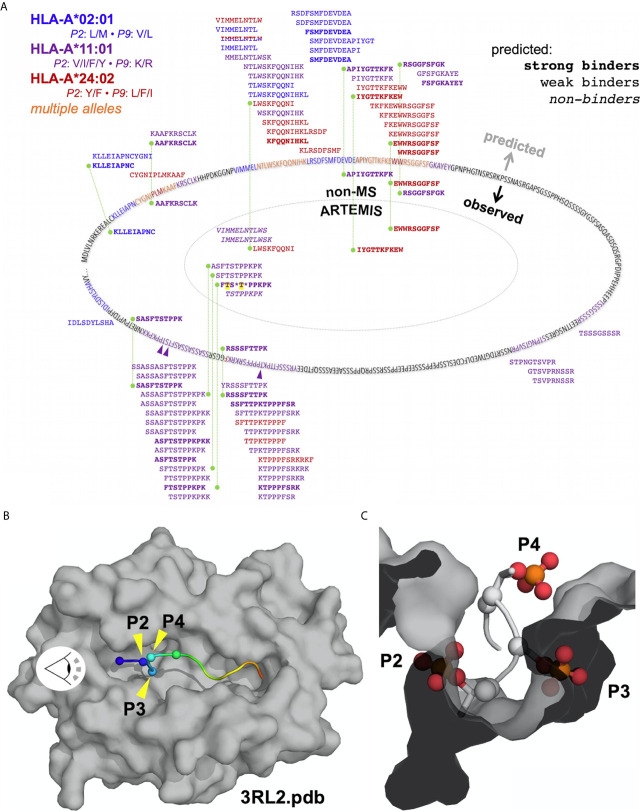
Conventional immunoprecipitation/mass spectroscopy identification of HLA-restricted peptides remains the purview of specializing laboratories, due to the complexity of the methodology, and requires computational post-analysis to assign peptides to individual alleles when using pan-HLA antibodies. We have addressed these limitations with ARTEMIS: a simple, robust, and flexible platform for peptide discovery across ligandomes, optionally including specific proteins-of-interest, that combines novel, secreted HLA-I discovery reagents spanning multiple alleles, optimized lentiviral transduction, and streamlined affinity-tag purification to improve upon conventional methods. This platform fills a middle ground between existing techniques: sensitive and adaptable, but easy and affordable enough to be widely employed by general laboratories. We used ARTEMIS to catalog allele-specific ligandomes from HEK293 cells for seven classical HLA alleles and compared results across replicates, against computational predictions, and against high-quality conventional datasets. We also applied ARTEMIS to identify potentially useful, novel HLA-restricted peptide targets from oncovirus oncoproteins and tumor-associated antigens.
常规的 HLA 限制性肽段的免疫沉淀/质谱分析仍然是专门实验室的研究领域,这是由于该方法的复杂性,并且在使用泛 HLA 抗体时需要进行计算分析,以将肽段分配给各个等位基因。我们使用 ARTEMIS 解决了这些限制:这是一个简单、稳健且灵活的配体肽段发现平台,可选地包括特定的感兴趣的蛋白质,它结合了新型的、跨多个等位基因的分泌 HLA-I 发现试剂,优化的慢病毒转导,以及简化的亲和标签纯化,以改进传统方法。该平台填补了现有技术之间的空白:敏感且适应性强,但又足够简单和经济实惠,可被普通实验室广泛采用。我们使用 ARTEMIS 从 HEK293 细胞中对七个经典 HLA 等位基因进行了等位基因特异性配体组学分析,并对重复实验、计算预测和高质量的传统数据集进行了比较。我们还将 ARTEMIS 应用于鉴定来自肿瘤病毒致癌蛋白和肿瘤相关抗原的潜在有用的新型 HLA 限制性肽段靶标。