Dan Yuanyuan, Niu Yuan, Wang Chunlei, Yan Mei, Liao Weibiao
College of Horticulture, Gansu Agricultural University, Lanzhou, China.
PeerJ. 2021 Apr 30;9:e11398. doi: 10.7717/peerj.11398. eCollection 2021.
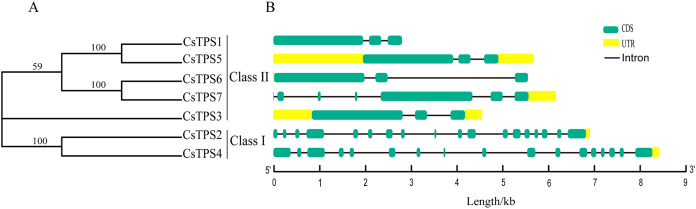
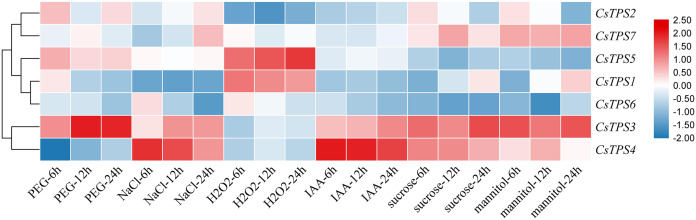
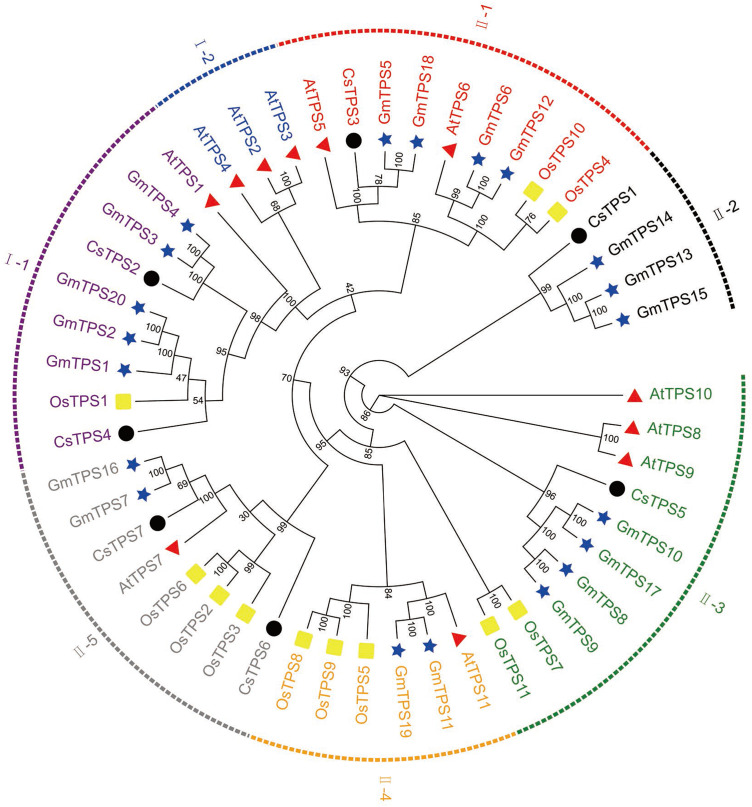
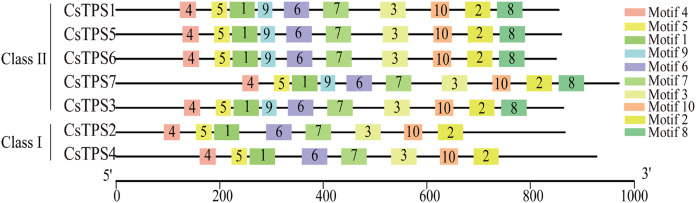
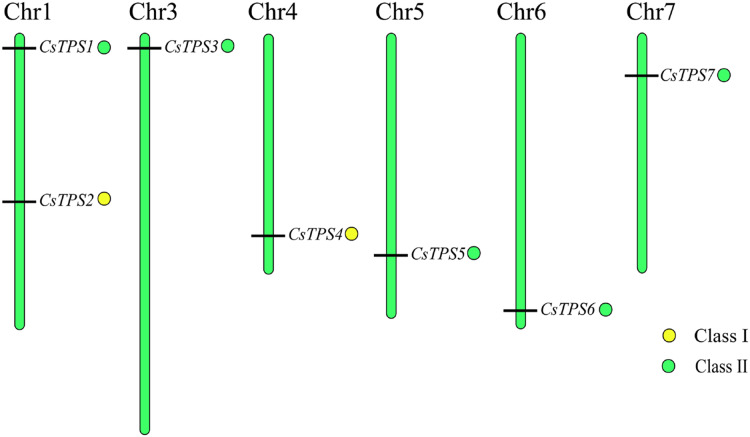
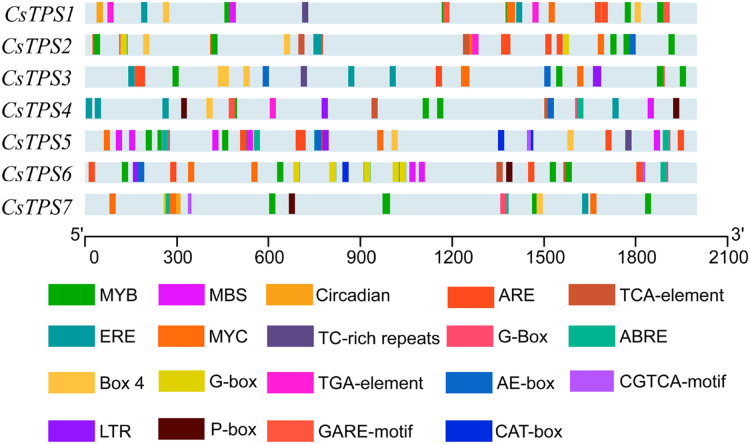
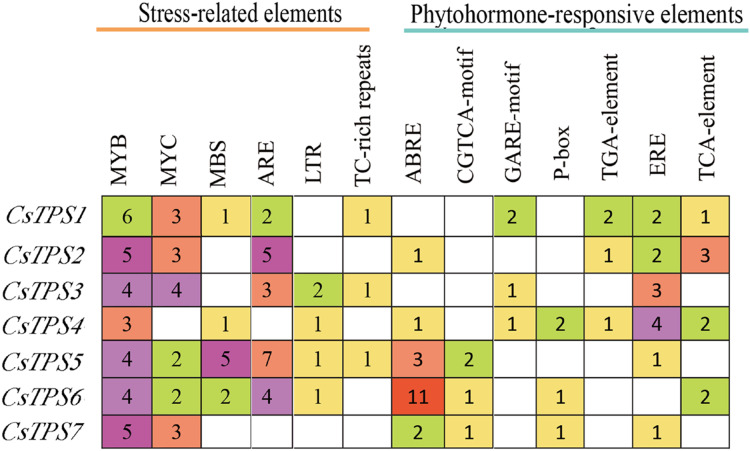
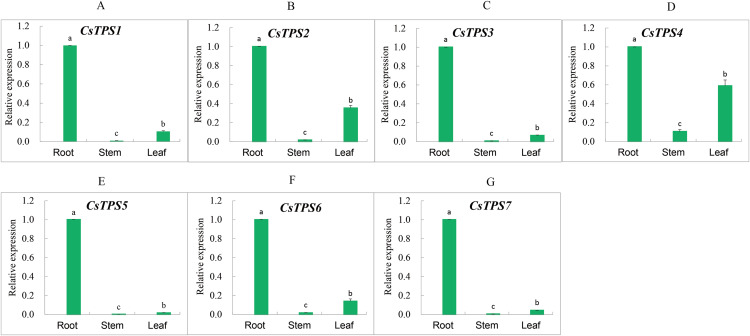
Trehalose-6-phosphate synthase (TPS) is significant in the growth, development and stress resistance of plants. We identified the cucumber family and its physicochemical properties, domains, gene structures, evolutionary relationships, gene locations, -acting elements, conserved motifs, and expression patterns using bioinformatics. Our results uncovered seven genes in the cucumber genome and named according to their locations in the chromosomes. Seven genes were randomly distributed in six cucumber chromosomes. Domain analysis showed that the TPS and TPP domains exist in all CsTPSs, and an additional hydrolase-3 domain exist in CsTPS3, CsTPS5 and CsTPS6. Phylogenetic analysis showed that TPS proteins from , rice, soybean, and cucumber were divided into two subfamilies (Class I and Class II) and they were further divided into seven subgroups. TPS proteins from and cucumber were grouped together, suggesting a close evolutionary relationship. Gene structure analysis indicated that most Class I genes contained 16-17 introns, while Class II genes (except ) had two introns. Motif analysis showed that Class II genes had 10 complete conserved motifs, while Class I genes lacked motif 8 and motif 9. Furthermore, genes possessed numerous -acting elements related to stress, hormone, and light response in the promoter regions. GO analysis indicated multiple functions for the CsTPS proteins. Expression analysis of genes in different tissues found that they were expressed in roots, stems and leaves, with the highest expression levels in roots. The expression analysis of under different treatments showed that genes may participate in the response to abiotic stress, plant hormones and sugar treatments.
海藻糖-6-磷酸合酶(TPS)在植物的生长、发育和抗逆性方面具有重要意义。我们利用生物信息学方法鉴定了黄瓜家族及其理化性质、结构域、基因结构、进化关系、基因定位、顺式作用元件、保守基序和表达模式。我们的研究结果在黄瓜基因组中发现了7个基因,并根据它们在染色体上的位置进行了命名。7个基因随机分布在6条黄瓜染色体上。结构域分析表明,所有黄瓜TPS(CsTPS)中均存在TPS和TPP结构域,且CsTPS3、CsTPS5和CsTPS6中还存在一个额外的水解酶-3结构域。系统发育分析表明,来自拟南芥、水稻、大豆和黄瓜的TPS蛋白分为两个亚家族(I类和II类),并进一步分为7个亚组。来自拟南芥和黄瓜的TPS蛋白聚在一起,表明它们具有密切的进化关系。基因结构分析表明,大多数I类基因含有16-17个内含子,而II类基因(除CsTPS7外)有两个内含子。基序分析表明,II类基因有10个完整的保守基序,而I类基因缺少基序8和基序9。此外,CsTPS基因在启动子区域拥有大量与胁迫、激素和光响应相关的顺式作用元件。基因本体(GO)分析表明CsTPS蛋白具有多种功能。对CsTPS基因在不同组织中的表达分析发现,它们在根、茎和叶中均有表达,其中在根中的表达水平最高。对CsTPS基因在不同处理下的表达分析表明,CsTPS基因可能参与对非生物胁迫、植物激素和糖处理的响应。