• 文献检索
  • 文档翻译
  • 深度研究
  • 学术资讯
  • Suppr Zotero 插件Zotero 插件
  • 邀请有礼
  • 套餐&价格
  • 历史记录
应用&插件
Suppr Zotero 插件Zotero 插件浏览器插件Mac 客户端Windows 客户端微信小程序
定价
高级版会员购买积分包购买API积分包
服务
文献检索文档翻译深度研究API 文档MCP 服务
关于我们
关于 Suppr公司介绍联系我们用户协议隐私条款
关注我们

Suppr 超能文献

核心技术专利:CN118964589B侵权必究
粤ICP备2023148730 号-1Suppr @ 2026

文献检索

告别复杂PubMed语法,用中文像聊天一样搜索,搜遍4000万医学文献。AI智能推荐,让科研检索更轻松。

立即免费搜索

文件翻译

保留排版,准确专业,支持PDF/Word/PPT等文件格式,支持 12+语言互译。

免费翻译文档

深度研究

AI帮你快速写综述,25分钟生成高质量综述,智能提取关键信息,辅助科研写作。

立即免费体验

基于主体的演化网络建模:一种用于模拟低流行传染病的新仿真方法。

Agent-based evolving network modeling: a new simulation method for modeling low prevalence infectious diseases.

机构信息

Mechanical and Industrial Engineering, University of Massachusetts Amherst, Amherst, MA, 01003, USA.

出版信息

Health Care Manag Sci. 2021 Sep;24(3):623-639. doi: 10.1007/s10729-021-09558-0. Epub 2021 May 15.

DOI:10.1007/s10729-021-09558-0
PMID:33991293
原文链接:https://pmc.ncbi.nlm.nih.gov/articles/PMC8459606/
Abstract

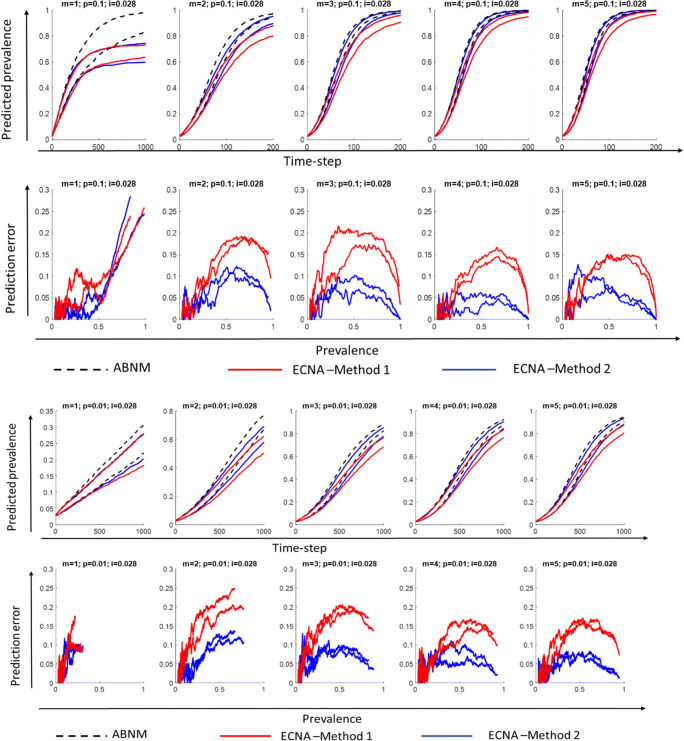
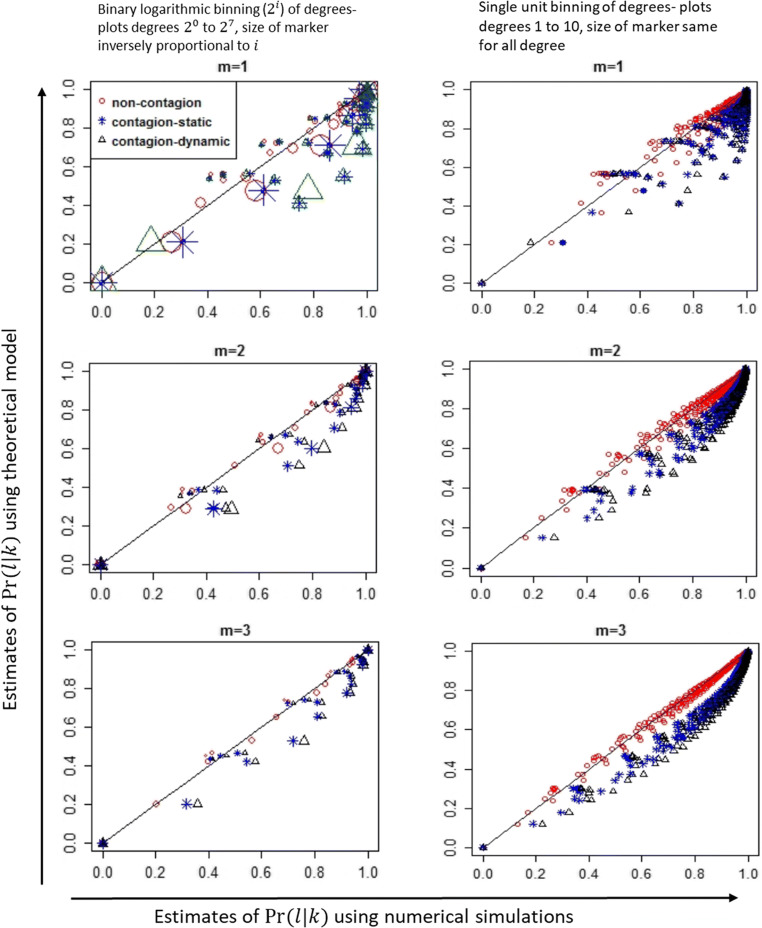
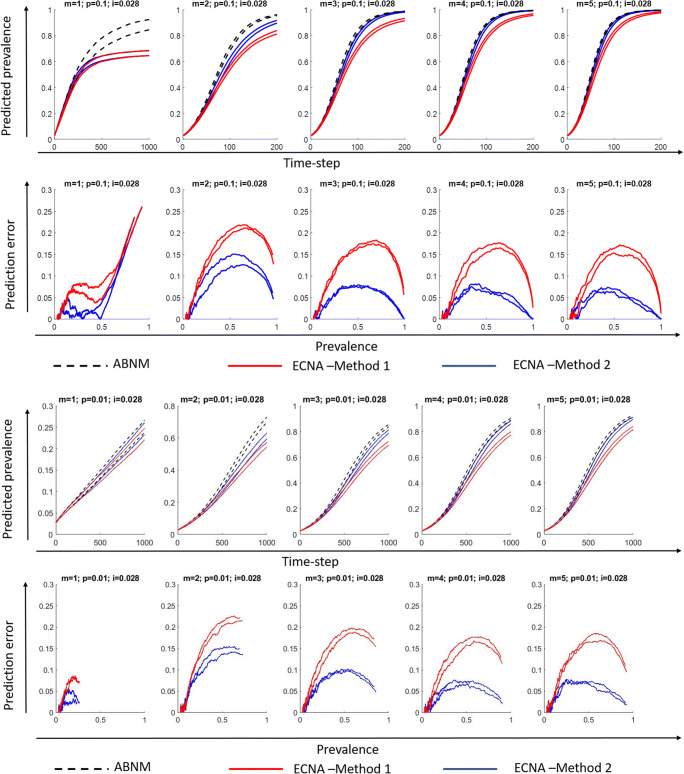
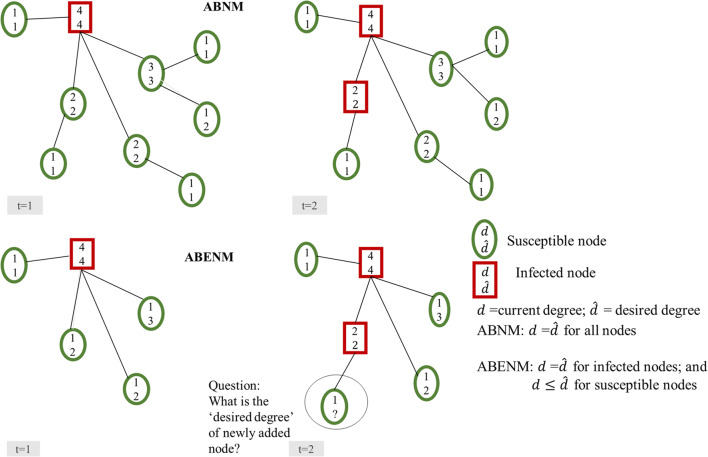
Agent-based network modeling (ABNM) simulates each person at the individual-level as agents of the simulation, and uses network generation algorithms to generate the network of contacts between individuals. ABNM are suitable for simulating individual-level dynamics of infectious diseases, especially for diseases such as HIV that spread through close contacts within intricate contact networks. However, as ABNM simulates a scaled-version of the full population, consisting of all infected and susceptible persons, they are computationally infeasible for studying certain questions in low prevalence diseases such as HIV. We present a new simulation technique, agent-based evolving network modeling (ABENM), which includes a new network generation algorithm, Evolving Contact Network Algorithm (ECNA), for generating scale-free networks. ABENM simulates only infected persons and their immediate contacts at the individual-level as agents of the simulation, and uses the ECNA for generating the contact structures between these individuals. All other susceptible persons are modeled using a compartmental modeling structure. Thus, ABENM has a hybrid agent-based and compartmental modeling structure. The ECNA uses concepts from graph theory for generating scale-free networks. Multiple social networks, including sexual partnership networks and needle sharing networks among injecting drug-users, are known to follow a scale-free network structure. Numerical results comparing ABENM with ABNM estimations for disease trajectories of hypothetical diseases transmitted on scale-free contact networks are promising for application to low prevalence diseases.

摘要

基于代理的网络建模 (ABNM) 将模拟中的每个个体作为代理进行模拟,并使用网络生成算法生成个体之间的接触网络。ABNM 适用于模拟传染病的个体动态,特别是对于通过复杂接触网络中密切接触传播的疾病,如 HIV。然而,由于 ABNM 模拟了由所有感染者和易感者组成的全部人口的比例版本,因此对于研究 HIV 等低流行疾病中的某些问题,它们在计算上是不可行的。我们提出了一种新的仿真技术,基于代理的演化网络建模 (ABENM),它包括一种新的网络生成算法,演化接触网络算法 (ECNA),用于生成无标度网络。ABENM 仅模拟感染者及其个体层面的直接接触者作为模拟的代理,并使用 ECNA 生成这些个体之间的接触结构。所有其他易感者都使用房室建模结构进行建模。因此,ABENM 具有混合基于代理和房室建模结构。ECNA 使用图论的概念来生成无标度网络。包括性伙伴网络和注射吸毒者之间的共用针具网络在内的多个社交网络,都呈现出无标度网络结构。在无标度接触网络上传播的假设疾病的轨迹方面,将 ABENM 与 ABNM 估计值进行比较的数值结果对应用于低流行疾病很有希望。
https://cdn.ncbi.nlm.nih.gov/pmc/blobs/11d0/9039030/f18de94e3127/10729_2021_9558_Fig4_HTML.jpg
https://cdn.ncbi.nlm.nih.gov/pmc/blobs/11d0/9039030/2e9bcd87c781/10729_2021_9558_Fig1_HTML.jpg
https://cdn.ncbi.nlm.nih.gov/pmc/blobs/11d0/9039030/77b2efb9f4f0/10729_2021_9558_Fig2_HTML.jpg
https://cdn.ncbi.nlm.nih.gov/pmc/blobs/11d0/9039030/ab8a6d48a9d7/10729_2021_9558_Fig3_HTML.jpg
https://cdn.ncbi.nlm.nih.gov/pmc/blobs/11d0/9039030/f18de94e3127/10729_2021_9558_Fig4_HTML.jpg
https://cdn.ncbi.nlm.nih.gov/pmc/blobs/11d0/9039030/2e9bcd87c781/10729_2021_9558_Fig1_HTML.jpg
https://cdn.ncbi.nlm.nih.gov/pmc/blobs/11d0/9039030/77b2efb9f4f0/10729_2021_9558_Fig2_HTML.jpg
https://cdn.ncbi.nlm.nih.gov/pmc/blobs/11d0/9039030/ab8a6d48a9d7/10729_2021_9558_Fig3_HTML.jpg
https://cdn.ncbi.nlm.nih.gov/pmc/blobs/11d0/9039030/f18de94e3127/10729_2021_9558_Fig4_HTML.jpg

相似文献

1
Agent-based evolving network modeling: a new simulation method for modeling low prevalence infectious diseases.基于主体的演化网络建模:一种用于模拟低流行传染病的新仿真方法。
Health Care Manag Sci. 2021 Sep;24(3):623-639. doi: 10.1007/s10729-021-09558-0. Epub 2021 May 15.
2
Progression and transmission of HIV (PATH 4.0)-A new agent-based evolving network simulation for modeling HIV transmission clusters.HIV 的进展和传播(PATH 4.0)-一种用于建模 HIV 传播集群的新基于代理的进化网络模拟。
Math Biosci Eng. 2021 Mar 3;18(3):2150-2181. doi: 10.3934/mbe.2021109.
3
A new mixed agent-based network and compartmental simulation framework for joint modeling of related infectious diseases- application to sexually transmitted infections.一种基于主体网络和房室模型的新型混合模拟框架,用于相关传染病的联合建模——在性传播感染中的应用
Infect Dis Model. 2022 Dec 23;8(1):84-100. doi: 10.1016/j.idm.2022.12.003. eCollection 2023 Mar.
4
sispread: A software to simulate infectious diseases spreading on contact networks.Sispread:一款用于模拟传染病在接触网络中传播的软件。
Methods Inf Med. 2007;46(1):19-26.
5
Spatial approximations of network-based individual level infectious disease models.基于网络的个体层面传染病模型的空间近似
Spat Spatiotemporal Epidemiol. 2013 Sep;6:59-70. doi: 10.1016/j.sste.2013.07.001. Epub 2013 Jul 22.
6
Systematic Approximations to Susceptible-Infectious-Susceptible Dynamics on Networks.网络上易感-感染-易感动力学的系统近似
PLoS Comput Biol. 2016 Dec 20;12(12):e1005296. doi: 10.1371/journal.pcbi.1005296. eCollection 2016 Dec.
7
An exact relationship between invasion probability and endemic prevalence for Markovian SIS dynamics on networks.网络上马尔可夫 SIS 动力学的入侵概率与地方病流行率之间的精确关系。
PLoS One. 2013 Jul 30;8(7):e69028. doi: 10.1371/journal.pone.0069028. Print 2013.
8
The large graph limit of a stochastic epidemic model on a dynamic multilayer network.动态多层网络上随机流行病模型的大图极限
J Biol Dyn. 2018 Dec;12(1):746-788. doi: 10.1080/17513758.2018.1515993.
9
A motif-based approach to network epidemics.基于模式的网络传染病方法。
Bull Math Biol. 2009 Oct;71(7):1693-706. doi: 10.1007/s11538-009-9420-z. Epub 2009 Apr 25.
10
Epidemic spreading in annealed directed networks: susceptible-infected-susceptible model and contact process.退火有向网络中的流行病传播:易感-感染-易感模型与接触过程。
Phys Rev E Stat Nonlin Soft Matter Phys. 2013 Jan;87(1):012813. doi: 10.1103/PhysRevE.87.012813. Epub 2013 Jan 25.

引用本文的文献

1
Modeling the formation of a worldwide health network fighting TBC: Key drivers in policy, management and governance in developing countries and global health institutions.构建一个抗击结核病的全球卫生网络模型:发展中国家及全球卫生机构在政策、管理和治理方面的关键驱动因素
PLoS One. 2025 Aug 21;20(8):e0330538. doi: 10.1371/journal.pone.0330538. eCollection 2025.
2
Mechanistic modeling of social conditions in disease-prediction simulations via copulas and probabilistic graphical models: HIV case study.通过连接函数和概率图形模型在疾病预测模拟中对社会状况进行机理建模:以艾滋病为例
Health Care Manag Sci. 2025 Mar;28(1):28-49. doi: 10.1007/s10729-024-09694-3. Epub 2024 Dec 2.
3

本文引用的文献

1
Progression and transmission of HIV (PATH 4.0)-A new agent-based evolving network simulation for modeling HIV transmission clusters.HIV 的进展和传播(PATH 4.0)-一种用于建模 HIV 传播集群的新基于代理的进化网络模拟。
Math Biosci Eng. 2021 Mar 3;18(3):2150-2181. doi: 10.3934/mbe.2021109.
2
SimpactCyan 1.0: An Open-source Simulator for Individual-Based Models in HIV Epidemiology with R and Python Interfaces.SimpactCyan 1.0:一款具有 R 和 Python 接口的用于 HIV 流行病学个体模型的开源模拟器。
Sci Rep. 2019 Dec 17;9(1):19289. doi: 10.1038/s41598-019-55689-4.
3
FAVITES: simultaneous simulation of transmission networks, phylogenetic trees and sequences.
COVID-19 outbreaks in residential aged care facilities: an agent-based modeling study.
基于代理的建模研究:老年人护理设施中的 COVID-19 疫情爆发。
Front Public Health. 2024 May 21;12:1344916. doi: 10.3389/fpubh.2024.1344916. eCollection 2024.
4
Joint modeling HIV and HPV using a new hybrid agent-based network and compartmental simulation technique.联合使用新型混合基于代理的网络和房室仿真技术对 HIV 和 HPV 进行建模。
PLoS One. 2023 Nov 3;18(11):e0288141. doi: 10.1371/journal.pone.0288141. eCollection 2023.
5
Understanding the Impact of Social Networks on the Spread of Obesity.理解社交网络对肥胖传播的影响。
Int J Environ Res Public Health. 2023 Jul 26;20(15):6451. doi: 10.3390/ijerph20156451.
6
A new mixed agent-based network and compartmental simulation framework for joint modeling of related infectious diseases- application to sexually transmitted infections.一种基于主体网络和房室模型的新型混合模拟框架,用于相关传染病的联合建模——在性传播感染中的应用
Infect Dis Model. 2022 Dec 23;8(1):84-100. doi: 10.1016/j.idm.2022.12.003. eCollection 2023 Mar.
7
Progression and transmission of HIV (PATH 4.0)-A new agent-based evolving network simulation for modeling HIV transmission clusters.HIV 的进展和传播(PATH 4.0)-一种用于建模 HIV 传播集群的新基于代理的进化网络模拟。
Math Biosci Eng. 2021 Mar 3;18(3):2150-2181. doi: 10.3934/mbe.2021109.
FAVITES:传输网络、系统发生树和序列的同步模拟。
Bioinformatics. 2019 Jun 1;35(11):1852-1861. doi: 10.1093/bioinformatics/bty921.
4
Identifying Clusters of Recent and Rapid HIV Transmission Through Analysis of Molecular Surveillance Data.通过分子监测数据分析识别近期和快速 HIV 传播簇。
J Acquir Immune Defic Syndr. 2018 Dec 15;79(5):543-550. doi: 10.1097/QAI.0000000000001856.
5
Development of an Agent-Based Model to Investigate the Impact of HIV Self-Testing Programs on Men Who Have Sex With Men in Atlanta and Seattle.开发基于主体的模型以研究艾滋病毒自我检测项目对亚特兰大和西雅图男男性行为者的影响。
JMIR Public Health Surveill. 2018 Jun 29;4(2):e58. doi: 10.2196/publichealth.9357.
6
Social and Genetic Networks of HIV-1 Transmission in New York City.纽约市HIV-1传播的社会与基因网络
PLoS Pathog. 2017 Jan 9;13(1):e1006000. doi: 10.1371/journal.ppat.1006000. eCollection 2017 Jan.
7
Progression and Transmission of HIV/AIDS (PATH 2.0).艾滋病毒/艾滋病的进展与传播(路径2.0)
Med Decis Making. 2017 Feb;37(2):224-233. doi: 10.1177/0272989X16668509. Epub 2016 Sep 26.
8
Development, calibration and performance of an HIV transmission model incorporating natural history and behavioral patterns: application in South Africa.发展、校准和评估包含自然史和行为模式的 HIV 传播模型:在南非的应用。
PLoS One. 2014 May 27;9(5):e98272. doi: 10.1371/journal.pone.0098272. eCollection 2014.
9
The global transmission network of HIV-1.HIV-1 的全球传播网络。
J Infect Dis. 2014 Jan 15;209(2):304-13. doi: 10.1093/infdis/jit524. Epub 2013 Oct 22.
10
Mathematical modeling of infectious disease dynamics.传染病动力学的数学建模。
Virulence. 2013 May 15;4(4):295-306. doi: 10.4161/viru.24041. Epub 2013 Apr 3.